
Pistachio Cake
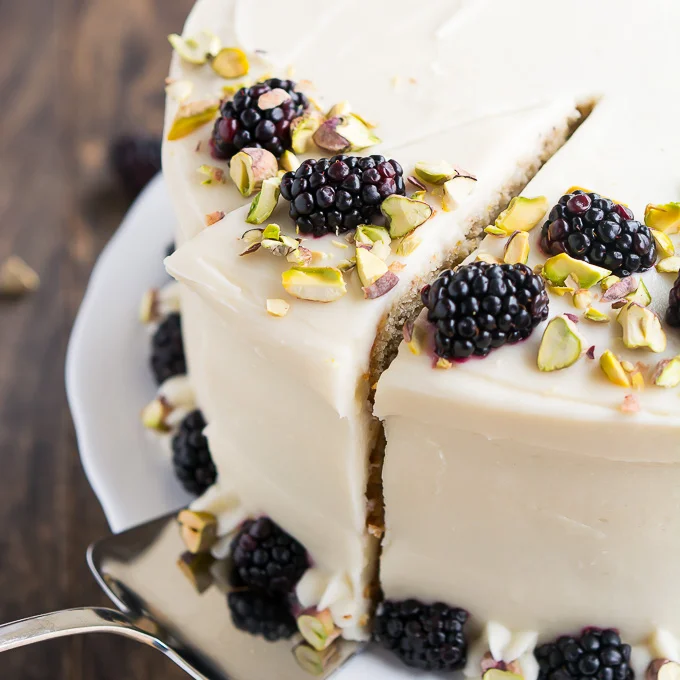
A three-layer pistachio cake with a tender, nutty crumb and a smooth honey and cream cheese frosting. Whipped egg whites help keep the layers light, while blackberries and extra pistachios make a simple finishing touch.
Ingredients
- 125 g (1 cup)shelled roasted and salted pistachios
- 375 g (3 cups)plain flour
- 32 g (1/4 cup)cornflour
- 15 ml (1 tablespoon)baking powder
- 5 ml (1 teaspoon)bicarbonate of soda
- 2.5 ml (1/2 teaspoon)salt
- 227 g (1 cup; 2 sticks)butter
- 350 g (1 3/4 cups)granulated sugar
- 1whole egg
- 15 ml (1 tablespoon)vanilla extract
- 360 ml (1 1/2 cups)milk
- 3egg whites
- 1.25 ml (1/4 teaspoon)cream of tartar
- 300 g (1 1/2 cups)granulated sugar
- 43 g (1/3 cup)plain flour
- 360 ml (1 1/2 cups)milk
- 80 ml (1/3 cup)double cream
- 170 g (3/4 cup; 1 1/2 sticks), at room temperaturebutter
- 170 g (6 ounces), at room temperaturecream cheese
- 45 ml (3 tablespoons)honey
- 5 ml (1 teaspoon)vanilla extract
- to tasteblackberries
- to tastepistachios
Instructions
- 1
Prepare the pans
Heat the oven to 177°C (350°F), or 163°C (325°F) if using dark-coloured pans. Grease the base and sides of three 20 cm (8-inch) cake pans with shortening, then dust with flour.
- 2
Mix dry ingredients
Combine the flour, cornflour, baking powder, bicarbonate of soda and salt in a mixing bowl. Set aside.
- 3
Grind the pistachios
Pulse the pistachios in a food processor or blender until coarsely chopped. Set aside 2 tablespoons for the dry ingredients, then continue grinding the rest until powdery and mix it into the dry ingredients.
- 4
Cream butter and sugar
Using a paddle attachment, beat the butter for 2 minutes. Add the sugar and beat until pale and fluffy, then mix in the whole egg and vanilla just until combined.
- 5
Add milk and flour
Add the dry mixture and milk to the butter mixture in three batches, alternating between them. Mix each addition in fully before adding the next, scraping down the bowl as needed.
- 6
Whip the egg whites
In a separate bowl, whip the egg whites and cream of tartar to soft peaks. Fold them into the cake batter until combined.
- 7
Bake the layers
Divide the batter between the three pans and smooth the tops. Bake for 28–32 minutes, or until a toothpick inserted in the centre comes out clean. Leave the cakes in their pans for 10 minutes, then turn them out and cool completely on a wire rack.
- 8
Cook the frosting base
In a saucepan, mix the sugar and flour, then whisk in the milk and cream. Cook over medium heat, stirring often, until very thick and beginning to boil; this takes about 15 minutes from start to finish. Transfer to a bowl or container, cover the surface directly with cling film and chill until no longer warm. If chilled overnight, bring it to room temperature on the counter before continuing.
- 9
Finish the frosting
Beat the cooled mixture on low speed in a stand mixer. Add the butter a tablespoon at a time, then the cream cheese about 28 g (1 ounce) at a time. Increase the speed and beat until smooth, then mix in the honey and vanilla.
- 10
Level the cakes
Use a large serrated knife to trim the tops of the cooled cakes so each layer is flat.
- 11
Stack and frost
Set one cake layer on a plate or cake stand and spread frosting over the top. Add the second layer and frost its top, then place the final layer on top. Spread a thin crumb coat over the top and sides, then refrigerate for 30 minutes. Cover with the remaining frosting, reserving some in a piping bag if desired, and decorate with extra frosting, pistachios and/or berries.
- 12
Chill before serving
Keep the finished cake in the fridge until ready to serve.
What is pistachio cake?
Pistachio cake is a celebration-style layer cake flavoured with ground pistachios, a nut used widely in sweets across the Middle East and the Mediterranean. This version builds its flavour into a soft, pale cake and pairs it with a cooked milk-and-flour frosting enriched with butter, cream cheese and honey.
The method makes three separate layers and adds whipped egg whites for a lighter crumb. A coating of frosting and a few berries or nuts finish it without needing elaborate decoration.
Nutrition and macros by portion
The nutrition label shows one serving as written: 870 calories, 13g protein, 112g carbs, 44g fat.
| Portion | Adjustment | kcal | Protein | Carbs | Fat |
|---|---|---|---|---|---|
| Lighter | Smaller cake slice | 609 kcal | 9g | 78g | 31g |
| This serving | As written | 870 kcal | 13g | 112g | 44g |
| Hungry | Larger cake slice | 1305 kcal | 20g | 168g | 66g |
The cake’s carbohydrates mainly come from the flour and sugar, while butter, cream and cream cheese contribute much of the fat. Pistachios, eggs, milk and cream cheese provide some protein. Serve a slice with fresh blackberries or other fruit for a fresher, more balanced plate.
Choosing and grinding the pistachios
Salted nuts: the recipe calls for roasted, salted pistachios, so taste one before adding the extra salt to the dry ingredients. The small amount of reserved chopped nuts adds texture as well as flavour.
Fine grind: process most of the nuts until powdery, but stop before they turn oily or form a paste. A finer grind distributes the pistachio flavour through the cake batter.
Building a tender cake batter
Creaming: beat the butter for the full 2 minutes before adding the sugar, then continue until the mixture looks light and fluffy. This step helps give the layers their soft texture.
Alternating additions: add the dry mixture and milk in three alternating batches, mixing each in before the next. Scrape the bowl so no dry flour or butter mixture is left at the sides.
Folding in the egg whites
Soft peaks: stop whipping when the egg whites hold a soft peak that bends over, rather than becoming stiff and dry. Cream of tartar helps the whites hold their whipped structure.
Gentle fold: use a spatula to fold the whites into the batter until no large streaks remain. Mixing too forcefully can knock out some of the air.
Getting the layers baked evenly
Oven setting: use 177°C for standard pans, or 163°C if the pans are dark-coloured. The lower setting helps avoid over-browning the edges.
Doneness: begin checking at 28 minutes; the cakes are ready when a toothpick in the centre comes out clean. Cool them fully before trimming or frosting, or the frosting may soften and slide.
Making the cooked frosting
Thick base: cook the flour, sugar, milk and cream until the mixture is considerably thick and just beginning to boil, stirring frequently. Chill it until it is no longer warm before adding the butter and cream cheese.
Smooth finish: add the butter gradually, followed by the cream cheese in small portions. Bringing the chilled base to room temperature first helps the ingredients blend smoothly.
Serving and decorating
Crumb coat: cover the stacked cake with a thin layer of frosting and chill it for 30 minutes before applying the rest. This sets the loose crumbs so they are less likely to show in the final coat.
To serve: blackberries bring a tart contrast to the sweet frosting, while extra pistachios echo the flavour of the sponge. Slice with a clean, sharp knife for neater portions.
Recipe notes & tips
- Use room-temperature butter and cream cheese for a smoother frosting.
- Measure the flour without packing it into the cup, or weigh it for better consistency.
- Stop processing the pistachios when they are powdery so they do not turn into a paste.
- Let the cake layers cool completely before trimming and frosting them.
- Chill the crumb-coated cake for the full 30 minutes before adding the final frosting layer.
Variations
- Berry topping: finish with blackberries just before serving for a tart contrast.
- Extra pistachio: scatter chopped pistachios over the frosting for added crunch.
- Citrus note: add a little finely grated lemon zest to the cake batter for a brighter flavour.
- Plain finish: leave off the berries and use only pistachios for a simple decoration.
- Single-layer bake: bake the batter in one suitable pan, adjusting the baking time and checking for doneness rather than using the layer-cake timing.
Common mistakes to avoid
- Over-grinding the nuts: they can turn oily, so stop once most are powdery.
- Stiff egg whites: they are harder to fold in evenly, so stop at soft peaks.
- Overmixing the batter: this can make the crumb dense, so mix only until each addition is incorporated.
- Frosting warm cake: it can soften and slip, so cool the layers completely first.
- Adding warm frosting base: it can make the frosting soft, so chill it until no longer warm before beating in the butter and cream cheese.
- Skipping the crumb coat chill: crumbs can streak the final finish, so refrigerate the thinly coated cake for 30 minutes.
How to store
Keep the cake covered in the fridge until serving; it is best eaten within 3 days. Let slices sit briefly at room temperature before serving for a softer texture. Avoid leaving the frosted cake out for extended periods because the frosting contains cream cheese and dairy.
Frequently asked questions
Can I make the cake layers ahead?
Yes. Once completely cool, wrap the layers well and keep them in the fridge until you are ready to assemble. Bring them back to a manageable temperature before frosting.
How can I tell when the cakes are done?
Start checking at 28 minutes. A toothpick inserted in the centre should come out clean.
Can I use unsalted pistachios?
Yes. The recipe specifies salted pistachios, so if you use unsalted ones, you can keep the listed salt in the dry ingredients and adjust to taste.
Why does the frosting need to cool?
The cooked flour-and-milk mixture must no longer be warm before you beat in the butter and cream cheese. If it is still warm, the finished frosting may become too soft.
Can I decorate the cake in advance?
You can frost the cake ahead and keep it chilled. Add fresh blackberries close to serving time so they stay at their best.
What size cake pans does this recipe use?
The recipe uses three 20 cm (8-inch) cake pans.
Cook it from the original
This recipe comes from garnishandglaze.com. Their page has the author’s own photos, notes and tips — the best place to cook it from.
Open the recipe on garnishandglaze.com