
Creamy Stovetop Macaroni and Cheese
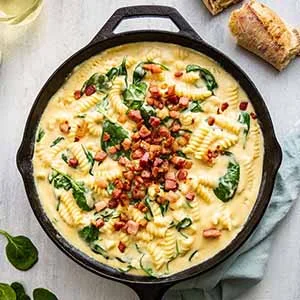
This American-style macaroni and cheese pairs a smooth, creamy cheddar sauce with crisp pancetta and wilted spinach. It makes a generous one-pot-style dinner, with the pasta cooked separately before being stirred into the sauce.
Ingredients
- 454 g (1 pound)uncooked pasta, such as fusilli, gemelli, cavatappi or rotini
- 142 g (5 ounces)diced pancetta
- 43 g (3 tablespoons)unsalted butter
- 60 g (½ cup)plain flour
- 1.2 litres (5 cups)milk
- 1 teaspoonsalt
- 1 teaspoon, plus extra for toppingpepper
- 226 g (2 cups)shredded sharp white Cheddar
- 226 g (2 cups)shredded mild Cheddar
- 120 g (4 packed cups)baby spinach leaves
Instructions
- 1
Cook the pasta
Cook the pasta according to the packet instructions, then drain it.
- 2
Brown the pancetta
Meanwhile, set a large cast-iron skillet, Dutch oven or other heavy-based saucepan over medium heat. Cook the pancetta for 5–7 minutes, until browned and crisp. Lift it out with a slotted spoon into a small bowl, leaving the rendered fat in the pan. Add the butter and stir until melted over medium heat.
- 3
Make the sauce
Gradually whisk in the flour until it forms a smooth, lightly browned paste, about 1 minute. Slowly whisk in 2 cups of the milk until smooth and lump-free, then gradually pour in the remaining 3 cups, whisking constantly. Cook for 8–10 minutes, whisking often, until thickened.
- 4
Add cheese and spinach
Whisk in the salt, pepper and both cheeses until the sauce is smooth and creamy. Take the pan off the heat, then stir in the drained pasta and spinach until the pasta is coated and the leaves have wilted. Scatter the pancetta and a little extra pepper over the top, then serve immediately.
What is stovetop macaroni and cheese?
Macaroni and cheese is an American comfort-food classic: pasta coated in a rich cheese sauce, often served as a main or a side. This stovetop version skips baking, so the sauce stays creamy and the meal comes together quickly.
Pancetta brings savoury, crisp bites, while spinach adds a fresh, tender contrast. A blend of sharp white and mild Cheddar gives the sauce both a pronounced cheese flavour and a mellow finish.
Nutrition and macros by portion
The nutrition label shows one serving as written: 541 calories, 23g protein, 46g carbs, 29g fat.
| Portion | Adjustment | kcal | Protein | Carbs | Fat |
|---|---|---|---|---|---|
| Lighter | Less cheese, more spinach | 379 kcal | 16g | 32g | 20g |
| This serving | As written | 541 kcal | 23g | 46g | 29g |
| Hungry | Larger pasta portion | 812 kcal | 35g | 69g | 44g |
Most of the carbohydrates come from the pasta and flour, while the butter, milk, cheese and pancetta contribute much of the fat. The cheese, pancetta, milk and pasta also supply protein. Serve a portion with a generous side of vegetables or salad for a more balanced plate.
Choosing the pasta and cheese
Pasta shape: Fusilli, gemelli, cavatappi and rotini all have twists or curves that catch the sauce. Cook whichever shape you choose according to its packet instructions and drain it before adding it to the sauce.
Cheddar: Shred both cheeses yourself if practical, as freshly grated cheese tends to blend smoothly into the warm sauce. The sharp variety brings more tang, while mild Cheddar softens the overall flavour.
Build a smooth sauce
Flour paste: Whisk the flour into the melted butter and pancetta fat until smooth, then cook it for about 1 minute to form a lightly browned base.
Milk: Add the first 2 cups gradually and whisk until smooth before pouring in the remaining 3 cups. Keep whisking as it thickens over 8–10 minutes; a steady pace helps prevent lumps.
When to add the cheese
Cheese melts best when the sauce is hot but no longer bubbling hard. The recipe takes the pan off the heat before the Cheddar goes in, which helps keep the sauce creamy.
Texture cue: The finished sauce should look smooth and thick enough to coat the pasta. Stir in the spinach at the same time as the pasta so the residual heat wilts the leaves without prolonged cooking.
Timing and serving
Pasta timing: Get the pasta cooking first, then make the sauce while it boils. The sauce needs 8–10 minutes to thicken, so have the drained pasta ready when it is time to combine everything.
Serving: Bring the pan to the table while the sauce is at its creamiest, with the pancetta and extra pepper on top. A crisp green salad or simply dressed vegetables make a fresh contrast to the rich sauce.
Pancetta and spinach
Pancetta: Cook it until crisp, then lift it out and leave the rendered fat in the pan for the sauce base. Add the pancetta back only at the end so it keeps some of its texture.
Spinach: Four packed cups may look like a lot, but the leaves wilt as they are stirred through the hot pasta and sauce. Fold them in just until tender.
Recipe notes & tips
- Use a heavy-based pan so the sauce heats evenly as it thickens.
- Whisk continuously while adding the milk to help keep the sauce lump-free.
- Drain the pasta thoroughly so excess water does not thin the cheese sauce.
- Take the pan off the heat before stirring in the cheeses.
- Serve straight away for the creamiest texture.
Variations
- Add mustard: Whisk a little mustard into the cheese sauce for a sharper savoury note.
- Use another cheese: Replace some of the Cheddar with a good-melting cheese such as Gruyère.
- Make it meat-free: Leave out the pancetta and melt the butter on its own before adding flour.
- Add a crunchy topping: Sprinkle toasted breadcrumbs over each serving just before eating.
- Change the greens: Swap the baby spinach for chopped kale, cooking it until tender before serving.
Common mistakes to avoid
- Adding milk too quickly: Whisk in the first 2 cups gradually until smooth before adding the rest.
- Stopping the whisking: Stir often as the sauce thickens to prevent lumps or sticking.
- Boiling the cheese sauce: Remove the pan from the heat before adding the Cheddar to help it stay smooth.
- Overcooking the pancetta: Take it off the heat when browned and crisp so it does not turn tough.
- Adding spinach too early: Stir it in with the pasta at the end so it only wilts.
How to store
Refrigerate leftovers in a covered container and use within 3 days. Reheat gently in a saucepan or microwave, stirring in a splash of milk if the sauce has thickened; the pancetta may lose some crispness.
Frequently asked questions
Can I use a different pasta shape?
Yes. Fusilli, gemelli, cavatappi and rotini are suggested, but another short pasta shape will work. Cook it according to its packet instructions.
Can I make this without pancetta?
Yes. Leave it out and melt the butter in the pan before whisking in the flour. The dish will no longer have the pancetta's savoury flavour.
Why add the milk in stages?
Adding it gradually and whisking well helps the flour mixture loosen smoothly and reduces the chance of lumps.
How do I know when the sauce is thick enough?
After 8–10 minutes of cooking, it should look smooth and thickened. It will coat the pasta when stirred through.
Can I prepare it ahead?
It is best served as soon as the pasta and sauce are combined. If you make it ahead, refrigerate it promptly and reheat gently with a splash of milk.
Cook it from the original
This recipe comes from girlversusdough.com. Their page has the author’s own photos, notes and tips — the best place to cook it from.
Open the recipe on girlversusdough.com