
Slow Cooked Lamb Knuckes
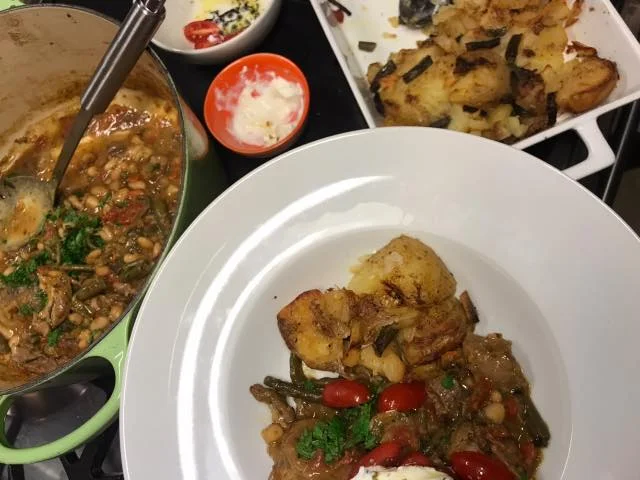
Slow-cooked lamb knuckles simmer with vegetables, white wine, rosemary and cannellini beans, then are served alongside crisp-topped potatoes. The long oven braise gives the lamb time to become tender while the potatoes make the meal hearty and comforting.
Ingredients
- 800 g (about 200 g bone-in per person)lamb knuckles
- 30 ml (2 tbsp)olive oil
- 30 ml (2 tbsp)plain flour
- 20 ml (4 tsp)dried oregano
- 1onion
- 2celery sticks, with leaves
- 3 clovesgarlic
- 4 mediumcarrots
- 15 ml (1 tbsp)chicken stock concentrate
- 125 mlwhite wine
- 150 ggreen beans
- 4 sprigsrosemary
- 10 gflat-leaf parsley
- 2Roma tomatoes
- 1 tincannellini beans
- 4 largepotatoes
- 80 ggreen beans
- 1 clovegarlic
- 20 gbutter
- 30 ml (2 tbsp)olive oil
- 2.5 ml (½ tsp)salt
- to tasteblack pepper
- 120 ml (½ cup)water, plus 480 ml (2 cups) for the braise and ½ tin for the final addition
Instructions
- 1
Season the flour
Pour a generous splash of olive oil into a heavy-based, ovenproof pot and heat it. In a bowl, mix the flour with ½ tsp salt, a good crack of black pepper and 1 tsp oregano.
- 2
Coat the lamb
Coat both sides of the lamb knuckles in the seasoned flour.
- 3
Brown the meat
Add the lamb to the hot oil and brown it for 2–3 minutes on each side. Lift it out and set it aside.
- 4
Start the potatoes
Put the scrubbed potatoes in a pan of salted water and boil for about 25 minutes.
- 5
Prepare the vegetables
Chop the celery and onion. Grate 2 carrots and finely slice the other 2.
- 6
Soften the onion
In the pot used to brown the lamb, fry the onion for 2 minutes.
- 7
Add the garlic
Add 3 crushed garlic cloves and fry for 1 minute.
- 8
Add the vegetables
Stir in the celery and carrots.
- 9
Season with oregano
Add 2 tsp dried oregano.
- 10
Add the stock
If the pan looks too dry, add more olive oil. Stir in 1 tbsp chicken stock concentrate.
- 11
Measure the wine
Measure out the white wine.
- 12
Deglaze the pot
Pour in ½ cup white wine and scrape the base of the pot to release the browned bits. Let the alcohol cook off.
- 13
Add the herbs
Add 4 sprigs of fresh rosemary and the chopped parsley.
- 14
Add green beans
Add 150 g green beans, trimmed at both ends.
- 15
Pour in water
Add 1 cup water.
- 16
Return the lamb
Put the lamb knuckles back in the pot.
- 17
Begin the braise
Turn the lamb to coat it with the vegetable mixture. Cover the pot and place it in an oven preheated to 150°C for 1 hour.
- 18
Finish cooking beans
After the potatoes have boiled for 25 minutes, add 70–80 g trimmed green beans and cook for a further 8–10 minutes.
- 19
Check the lamb
After 1 hour in the oven, check the lamb. It will still be fairly firm, and most of the liquid will have evaporated.
- 20
Continue the braise
Add another cup of water, cover the pot again and cook for a further hour.
- 21
Add cannellini beans
After 2 hours in the oven, return the pot to the hob. Just before serving, add the tin of cannellini beans.
- 22
Add tomatoes
Add 2 chopped fresh tomatoes and 1 tsp oregano.
- 23
Add more water
Pour in ½ tin of water.
- 24
Prepare the potatoes
Halve the potatoes, arrange them in an ovenproof dish and press them down with a potato masher.
- 25
Top and crisp
Cut the green beans into smaller pieces and tuck them among the potatoes. Slice 1 garlic clove into 4–5 pieces and dot it between the potatoes. Splash olive oil over the top and add a few knobs of butter. Bake in an oven preheated to 180°C for 1 hour, or until golden and crisp.
What are lamb knuckles?
Lamb knuckles are bone-in cuts from the lower leg, suited to slow, moist cooking that softens their connective tissue. This is a homely braise rather than a dish tied to one particular regional tradition.
This version builds flavour by browning the lamb first, then cooking it with vegetables, wine and herbs. Cannellini beans add substance, while crisped potatoes provide a contrasting finish.
Nutrition and macros by portion
The nutrition label shows one serving as written: 850 calories, 45g protein, 92g carbs, 34g fat.
| Portion | Adjustment | kcal | Protein | Carbs | Fat |
|---|---|---|---|---|---|
| Lighter | Less butter and oil | 595 kcal | 31g | 64g | 24g |
| This serving | As written | 850 kcal | 45g | 92g | 34g |
| Hungry | Extra potatoes and beans | 1275 kcal | 68g | 138g | 51g |
The potatoes, carrots and beans provide most of the carbohydrates, while the lamb contributes most of the protein and a substantial share of the fat. Olive oil and butter add further fat, and the flour contributes a smaller amount of carbohydrate. Serve a moderate helping of potatoes with extra green vegetables to balance the plate.
Why brown the lamb first?
Browning: coat the lamb in seasoned flour and brown it on both sides before starting the vegetables. The browned surface and the residue left in the pot give the braising liquid a deeper savoury flavour.
Flour: the light coating also helps the juices cling to the meat and vegetables. Shake off any heavy excess so it does not form a thick paste in the pot.
Building the braising base
Vegetables: the recipe uses both grated and sliced carrots, along with onion and celery. The grated carrot softens into the base, while the slices remain more distinct.
Wine: add it after the stock concentrate and scrape the pot as it bubbles. This lifts the browned flavour from the base before the lamb goes back in.
Slow-cooking cues
First hour: the lamb may still feel firm, and the liquid may have reduced considerably. Add the second cup of water as directed, cover the pot and continue cooking for another hour.
Doneness: the recipe gives a two-hour braising time, but lamb knuckles can vary in size. Check that the meat has softened; if it is still tough, continue cooking gently until tender.
Getting crisp potato tops
Potatoes: boil them first, then halve and press them into an ovenproof dish. The rough, broken surface helps create golden edges in the oven.
Finish: tuck the beans and garlic between the potatoes, then add olive oil and butter. Bake at 180°C for about 1 hour, checking towards the end for a browned, crisp surface.
Timing the green beans
Braising beans: the 150 g portion goes into the pot before the long oven cook, so it becomes soft and takes on the cooking juices.
Potato-side beans: the separate 70–80 g portion cooks briefly with the potatoes before being added to the baking dish. Keeping these batches separate follows the recipe and gives them different textures.
What to serve with it
Serve a knuckle with plenty of the vegetable and bean mixture, alongside the crisp potatoes. The lamb and braising liquid bring rich, savoury flavours, while the beans and vegetables round out the plate.
A simple green salad or additional steamed vegetables can make the meal feel fresher without competing with the rosemary and wine in the braise.
Recipe notes & tips
- Use a heavy-based ovenproof pot with a lid so you can brown the lamb and braise it in the same vessel.
- Trim the ends from the green beans before adding them to either part of the recipe.
- Keep the pot covered during the oven braise to limit further evaporation.
- Check the potatoes with a fork after boiling; they should be tender enough to press down but still hold together.
- If the lamb remains firm after the stated cooking time, continue the covered braise until it softens.
- Give the potatoes space in their ovenproof dish so more of their surface can turn golden.
Variations
- Fresh oregano: use fresh oregano in place of dried, adjusting the amount to taste.
- Root vegetables: replace some of the carrots with parsnip, cut into similar-sized pieces.
- Different beans: use another cooked white bean instead of cannellini beans.
- No wine: replace the white wine with stock, keeping the deglazing step.
- Herb change: add thyme alongside or instead of some of the rosemary.
Common mistakes to avoid
- Crowding the pot: brown the lamb in batches if the pieces do not fit in a single layer.
- Skipping the browning: brown both sides first to build flavour in the pot.
- Letting the braise dry out: add the second cup of water after the first hour, as directed.
- Expecting tender lamb too soon: check after 2 hours and continue cooking if it is still firm.
- Mashing the potatoes too smoothly: press them down while leaving an uneven surface for crisp edges.
- Overlooking the second batch of beans: add the 70–80 g to the potatoes after their first 25 minutes of boiling.
How to store
Cool leftovers promptly and store the lamb and potatoes separately in airtight containers in the fridge for up to 3 days. Reheat thoroughly in the oven or on the hob; the potato topping is best reheated in the oven to help it crisp again.
Frequently asked questions
Can I make the lamb ahead?
Yes. Cook the braise ahead and chill it once cooled, then reheat it gently until piping hot. Make the crisp potato topping closer to serving for the best texture.
How do I know when the lamb is tender?
It should soften after the two-hour braise and yield easily when tested. If it still feels firm, cover it and continue cooking until tender.
Can I use a different cut of lamb?
Another bone-in cut suitable for slow braising can work, but size and cooking time may differ. Check for tenderness rather than relying only on the clock.
What if I do not have an ovenproof pot?
Brown the meat and cook the vegetables in a pan, then transfer everything to a covered ovenproof casserole for the braise.
Can I use dried rosemary?
Yes, though the recipe specifies fresh sprigs. Use a smaller amount of dried rosemary and remove any woody pieces before serving.
Can I freeze leftovers?
The lamb and bean braise can be frozen in an airtight container. The potatoes may lose their crispness after freezing, so reheat them separately in the oven.
Cook it from the original
This recipe comes from freshkitchen.co.za. Their page has the author’s own photos, notes and tips — the best place to cook it from.
Open the recipe on freshkitchen.co.za