
Italian Lasagne
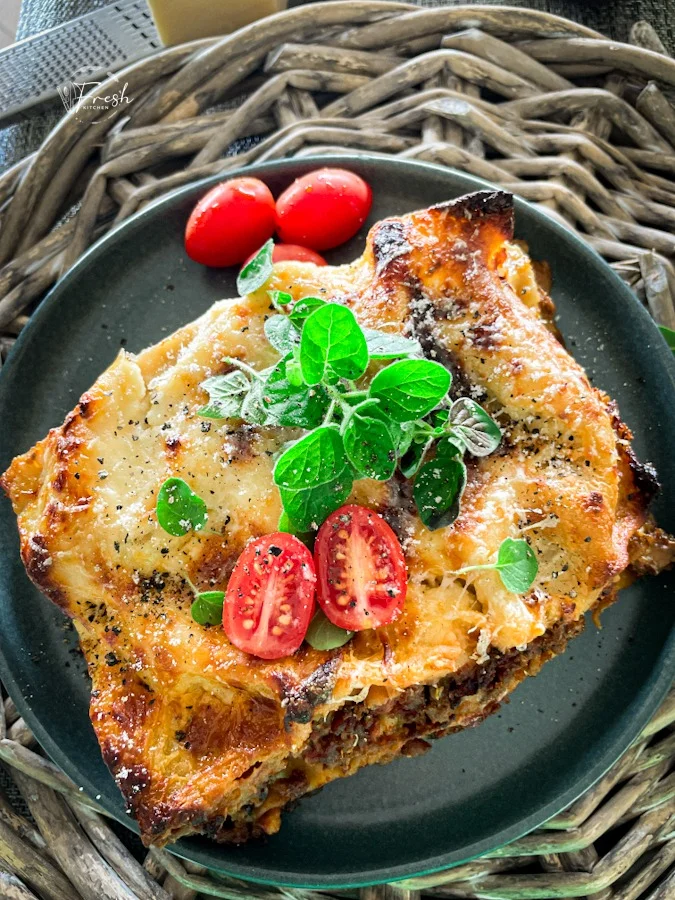
This Italian lasagne layers a slow-simmered beef and pork ragù with pasta sheets, béchamel and grated cheese. Browning the meat in batches and letting the tomato paste caramelise build a deep, savoury base for a generous family-style bake.
Ingredients
- 25 gbutter
- 30 ml (2 tbsp)olive oil
- 250 gbacon
- 2 (about 270 g)onions
- 2 (130 g)carrots
- 2 (100 g)celery stalks
- 3 cloves (15 g)garlic
- 1.5 kgmince, half beef and half pork
- 150 mldry white wine
- 45 ml (3 tbsp)tomato paste
- 4bay leaves
- 300 ml, hotstock of choice
- ½ tspground nutmeg
- 18 sheetslasagne
- to finishgrated Parmesan or hard cheese
Instructions
- 1
Cook the vegetables
Melt the butter with the olive oil in a large pot. Add the bacon, onions, carrots, celery and garlic, then cook for 6–8 minutes.
- 2
Brown the mince
Add the mince in 250 g batches, browning each batch evenly. Let the juices evaporate before adding the next batch, and continue until all the mince is browned.
- 3
Reduce the wine
Pour in the white wine and cook until it has almost evaporated.
- 4
Add tomato paste
Stir in the tomato paste and bay leaves, coating the mince evenly.
- 5
Caramelise the base
Cook until you hear a crackling sound at the bottom of the pot, stirring occasionally to prevent burning. This signals that the mince and tomato paste are caramelising.
- 6
Simmer the ragù
Pour in the hot stock, cover the pot and simmer gently for 45 minutes.
- 7
Season the ragù
Taste to check the salt level, then add salt and pepper to taste, along with the nutmeg.
- 8
Layer the lasagne
Heat the oven to 180°C. In a large ovenproof dish (265 × 375 × 55 mm or 4 litres), spread tomato sauce over the base and cover with lasagne sheets. Add meat ragù and béchamel, then repeat to make 3 layers, finishing with béchamel. Grate Parmesan over the top and bake for 1 hour.
What is Italian lasagne?
Lasagne is an Italian baked pasta dish made by layering sheets of pasta with sauce and baking them together. This version pairs a beef-and-pork ragù with béchamel and a hard-cheese topping.
The slow-cooked meat sauce and creamy layers make it a hearty centrepiece. The recipe’s batch-browning and caramelised tomato paste give the ragù a particularly savoury foundation.
Nutrition and macros by portion
The nutrition label shows one serving as written: 770 calories, 42g protein, 45g carbs, 44g fat.
| Portion | Adjustment | kcal | Protein | Carbs | Fat |
|---|---|---|---|---|---|
| Lighter | Smaller slice, extra salad | 539 kcal | 29g | 31g | 31g |
| This serving | As written | 770 kcal | 42g | 45g | 44g |
| Hungry | Larger slice | 1155 kcal | 63g | 68g | 66g |
The pasta sheets and vegetables contribute most of the carbohydrates, while the mince and bacon provide much of the protein and fat; butter, oil, béchamel and cheese also add fat. Serve a measured slice with salad or vegetables to balance the richness, noting that the supplied ingredient list does not give quantities for the tomato sauce, béchamel or finishing cheese.
Building flavour in the ragù
Vegetable base: Cooking the bacon with onion, carrot, celery and garlic for 6–8 minutes starts the sauce with a softened, aromatic mixture.
Browned mince: Adding the meat in 250 g batches helps it brown rather than release its juices all at once. Allow each batch’s liquid to evaporate before continuing.
Why the crackle matters
Tomato paste: Once stirred through the meat, it cooks against the bottom of the pot and begins to caramelise. Listen for the stated crackling cue, and stir now and then so the mixture does not catch or burn.
Wine and stock: Let the wine reduce almost completely before adding the stock. The covered, gentle 45-minute simmer then gives the ragù time to meld.
Layering the dish
Base layer: The method starts with tomato sauce in the ovenproof dish, followed by pasta sheets. It then adds ragù and béchamel, repeating for 3 layers.
Top layer: Finish with béchamel and grated cheese, as directed. The listed ingredients do not specify quantities for the tomato sauce or béchamel, so have those ready before assembling.
Baking and doneness
Oven: Bake in a preheated oven at 180°C for 1 hour. Use an ovenproof dish measuring 265 × 375 × 55 mm, or one with a 4-litre capacity.
Check the centre: The recipe gives baking time and temperature but no separate visual doneness cue. If the top is browning quickly, keep an eye on it for the remainder of the bake.
Serving the lasagne
Resting: Allow the baked lasagne to settle briefly before cutting so the layers are easier to serve. Keep portions even to make the 10 servings go further.
On the side: A crisp green salad or simply cooked vegetables make a fresh contrast to the rich ragù and béchamel. Bread is another option for catching any sauce on the plate.
Recipe notes & tips
- Have the vegetables chopped before starting, since the mince is browned in successive batches.
- Let the liquid evaporate between batches so the mince can brown properly.
- Keep the heat gentle during the covered 45-minute simmer.
- Stir occasionally when the tomato paste is caramelising to reduce the chance of scorching.
- Prepare the tomato sauce and béchamel before you begin assembling the layers.
Variations
- Use another stock: Choose your preferred stock for the 300 ml added to the ragù.
- Change the cheese: Finish with grated hard cheese instead of Parmesan, as the recipe allows.
- Adjust the seasoning: Add salt and pepper to taste after checking the ragù.
- Choose the meat ratio: Keep the stated half-beef, half-pork balance or adjust that split to suit your preference.
Common mistakes to avoid
- Adding all the mince at once: Work in 250 g batches and let the juices evaporate between additions so the meat browns.
- Skipping the wine reduction: Cook it until almost evaporated before adding the tomato paste.
- Burning the tomato paste: Stir occasionally once the mixture starts crackling at the bottom of the pot.
- Boiling the ragù hard: Cover it and simmer gently for the specified 45 minutes.
- Starting without the sauces: The method uses tomato sauce and béchamel, so prepare both even though their quantities are not listed among the ingredients.
How to store
Refrigerate leftovers in a covered container and eat within 3 days. Reheat portions until piping hot throughout; add a splash of water and cover loosely if the pasta seems dry.
Frequently asked questions
How long does the ragù simmer?
Cover the pot and simmer gently for 45 minutes after adding the hot stock.
Why brown the mince in batches?
The recipe adds it 250 g at a time and waits for the juices to evaporate before the next addition. This gives the meat a chance to brown evenly.
What size dish should I use?
Use a large ovenproof dish measuring 265 × 375 × 55 mm or with a capacity of 4 litres.
What temperature and baking time are needed?
Bake in a preheated oven at 180°C for 1 hour.
How many layers should I make?
The method says to repeat the pasta, ragù and béchamel layering for 3 layers, finishing with béchamel and grated cheese.
Why are tomato sauce and béchamel not in the ingredient list?
The method calls for both, but the supplied ingredient list does not give amounts for either sauce. Have them ready before assembling, following the quantities available in your chosen sauce recipe.
Cook it from the original
This recipe comes from freshkitchen.co.za. Their page has the author’s own photos, notes and tips — the best place to cook it from.
Open the recipe on freshkitchen.co.za