
Flaky Pie Crust
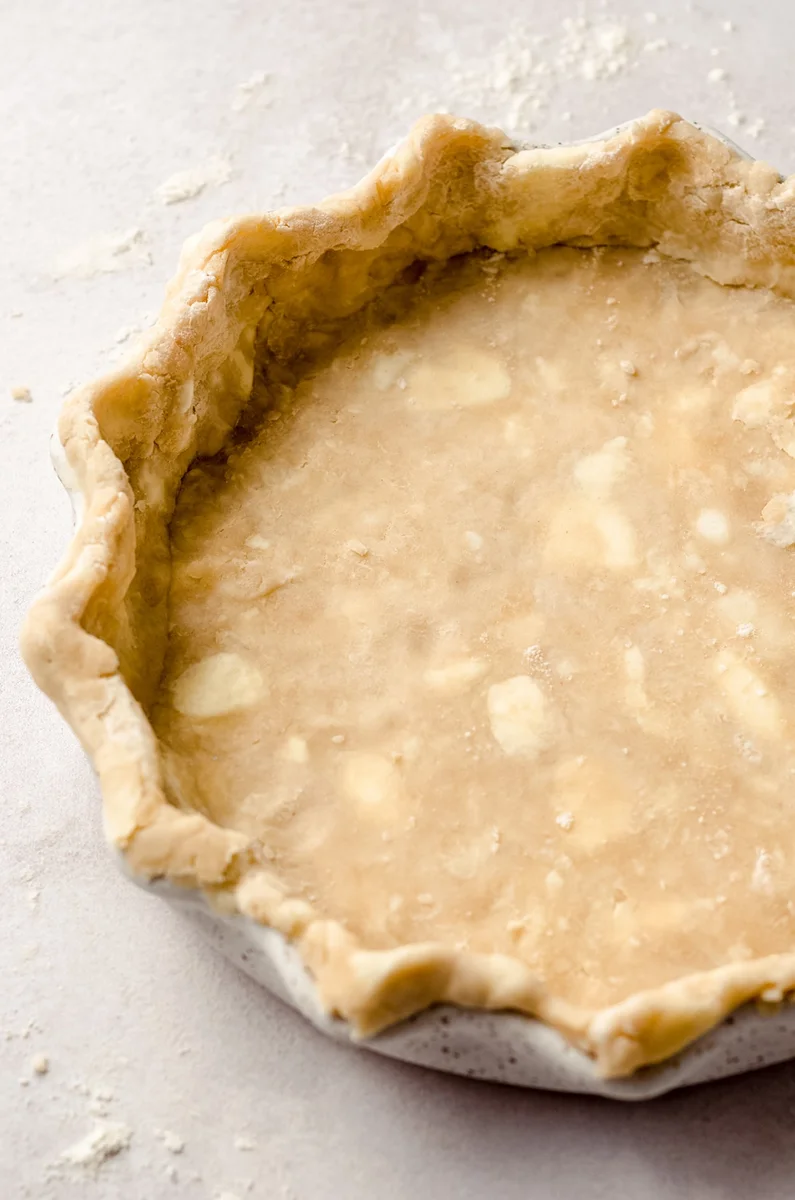
This American-style double pie crust combines butter for flavour with vegetable shortening for a tender, flaky texture. Make it ahead, then roll the two chilled discs out for the base and top of a pie.
Ingredients
- 330 g (2¾ cups)plain flour
- 15 g (1 tablespoon)granulated sugar
- 1 teaspoonsalt
- 113 g (½ cup), cubed and chilledunsalted butter
- 128 g (⅔ cup), chilledvegetable shortening
- 120 ml (½ cup), icedwater
Instructions
- 1
Mix dry ingredients
Whisk the flour, sugar and salt together in a large bowl.
- 2
Cut in fats
Add the chilled butter and shortening. Use a pastry cutter or two forks to work them into the flour until most of the mixture is shaggy, with small bits of fat and a few larger chunks remaining.
- 3
Prepare ice water
Measure 120 ml (½ cup) of water into a cup, bowl or measuring jug. Add a few ice cubes and stir.
- 4
Add water gradually
Add the ice water 1 tablespoon at a time, stirring with a rubber spatula or wooden spoon after each addition. Stop once the dough forms large clumps; this usually takes between ⅓ and ½ cup (80–120 ml). Use only as much water as needed.
- 5
Bring dough together
Transfer the dough, including all loose pieces and extra flour, to a floured work surface. With floured hands, fold it into itself until the loose bits and flour are incorporated.
- 6
Chill the discs
Shape the dough into a ball and divide it in half. Flatten each half into a disc about 2.5 cm (1 inch) thick, wrap each tightly in cling film and refrigerate for at least 2 hours and up to 5 days.
- 7
Roll out pastry
When ready to make your pie, roll a disc gently on a lightly floured surface, starting at the centre and working outwards. Turn it a quarter turn between rolls. For a 23 cm (9-inch) pie dish, roll the pastry to about 30.5 cm (12 inches). If using a pastry mat, flip the whole mat over the dish to transfer the pastry.
- 8
Chill in dish
Before continuing with your pie recipe, chill the pastry in the pie dish for 15–20 minutes so the fats become cold again. This is optional; then proceed with your pie recipe's instructions.
What is flaky pie crust?
Pie crust is a pastry shell used to hold sweet or savoury fillings. This version is an American-style double crust, divided into two discs so one can line the dish and the other can cover the filling.
Its character comes from combining butter and vegetable shortening. The butter brings flavour, while the chilled fats and gentle handling help create a sturdy, flaky pastry.
Nutrition and macros by portion
The nutrition label shows one serving as written: 1660 calories, 18g protein, 137g carbs, 116g fat.
| Portion | Adjustment | kcal | Protein | Carbs | Fat |
|---|---|---|---|---|---|
| Lighter | Use a smaller crust portion | 1162 kcal | 13g | 96g | 81g |
| This serving | As written | 1660 kcal | 18g | 137g | 116g |
| Hungry | Use a larger slice | 2490 kcal | 27g | 206g | 174g |
The flour supplies most of the carbohydrates, while butter and shortening account for most of the fat. The flour also contributes some protein; the crust itself is not a major protein source. For a more balanced plate, pair a slice of pie with a serving of vegetables or salad.
Why use two fats?
Butter: Keep it cubed and cold so it stays in small pieces as you work it into the flour. Those pieces contribute to the pastry's flavour and texture.
Shortening: Use it chilled, as directed. Alongside the butter, it helps make a dough that is workable yet tender once baked.
Add only enough water
Ice water: Add it a tablespoon at a time, stirring after each addition. The dough is ready when it gathers into large clumps; it should not become wet or sticky.
Texture cue: A shaggy mixture with some visible pieces is fine before shaping. Avoid working the dough until it is completely smooth.
Handle the dough gently
Bring it together: Fold the mixture on a floured surface until the loose flour and crumbs are incorporated. Use floured hands to reduce sticking without adding unnecessary extra flour.
Roll it out: Start at the centre and work towards the edges, turning the dough a quarter turn between rolls. This helps you roll it evenly into a round large enough for a 23 cm pie dish.
Chilling and timing
First chill: Refrigerate the wrapped discs for at least 2 hours, or up to 5 days. This gives you the option of making the pastry ahead of assembling the pie.
Second chill: Chilling the pastry in the dish for 15–20 minutes is optional, but the recipe recommends it to cool the fats again before you continue with your pie.
Using and serving the crust
For a double crust pie, use one disc to line the dish and the other to cover the filling, following the instructions for your chosen pie recipe. Transfer rolled pastry by flipping the pastry mat over the dish if you are using one.
Serve the finished pie with fruit, custard or ice cream for a sweet filling, or with vegetables or a crisp salad for a savoury one.
Recipe notes & tips
- Chill the butter and shortening before mixing them into the flour.
- Keep the water cold by stirring it with a few ice cubes before measuring additions.
- Add the water gradually and stop as soon as large clumps form.
- Use a lightly floured surface and hands when bringing the dough together.
- Turn the dough a quarter turn between rolls to help it keep an even shape.
- Wrap the discs tightly before refrigerating so they do not dry out.
Variations
- Savoury crust: Omit the sugar if your pie recipe calls for an unsweetened pastry.
- All-butter option: Replace the shortening with an equal weight of chilled butter for a butter-only crust.
- Sweet filling: Keep the sugar in the dough when using it for a dessert pie.
- Single-crust pie: Use one disc for the base and keep the second wrapped for another pie.
- Pastry mat: Roll on a marked mat and flip it over the dish to help transfer the pastry.
Common mistakes to avoid
- Warm fats: They can blend into the flour too readily; chill the butter and shortening before starting.
- Too much water: It can make the dough sticky; add it a tablespoon at a time and stop when clumps form.
- Overworking the dough: It can lose its shaggy texture; fold only until the loose flour and pieces are incorporated.
- Skipping the first chill: The dough will not have the chilling time specified; refrigerate the discs for at least 2 hours.
- Rolling from the edge: It can make the pastry uneven; start at the centre and work outwards.
- Forgetting to turn the dough: It may roll unevenly; rotate it a quarter turn between rolls.
How to store
Keep the tightly wrapped dough discs in the refrigerator for up to 5 days. The recipe gives no reheating instructions; use the chilled dough as directed in your pie recipe.
Frequently asked questions
How much water should I add?
Add it gradually, 1 tablespoon at a time, and stop when the dough forms large clumps. The method says it usually takes between ⅓ and ½ cup (80–120 ml), but you may not need all of it.
Can I make the dough ahead?
Yes. Wrap the discs tightly and refrigerate them for up to 5 days.
Why are there two discs?
This is a double-crust recipe. The discs are intended for the top and base of a pie.
Is chilling the pastry in the dish necessary?
No, that 15–20 minute chill is optional. The recipe recommends it to cool the fats before you continue with your pie.
How large should I roll the pastry?
For a 23 cm (9-inch) pie dish, roll it to about 30.5 cm (12 inches) across.
Can I use the pastry for a savoury pie?
Yes. The method says to proceed with the instructions for your chosen pie. For a savoury filling, you can omit the sugar if your pie recipe calls for an unsweetened crust.
Cook it from the original
This recipe comes from freshaprilflours.com. Their page has the author’s own photos, notes and tips — the best place to cook it from.
Open the recipe on freshaprilflours.com