
Curd Rice Recipe (Thayir Sadam)
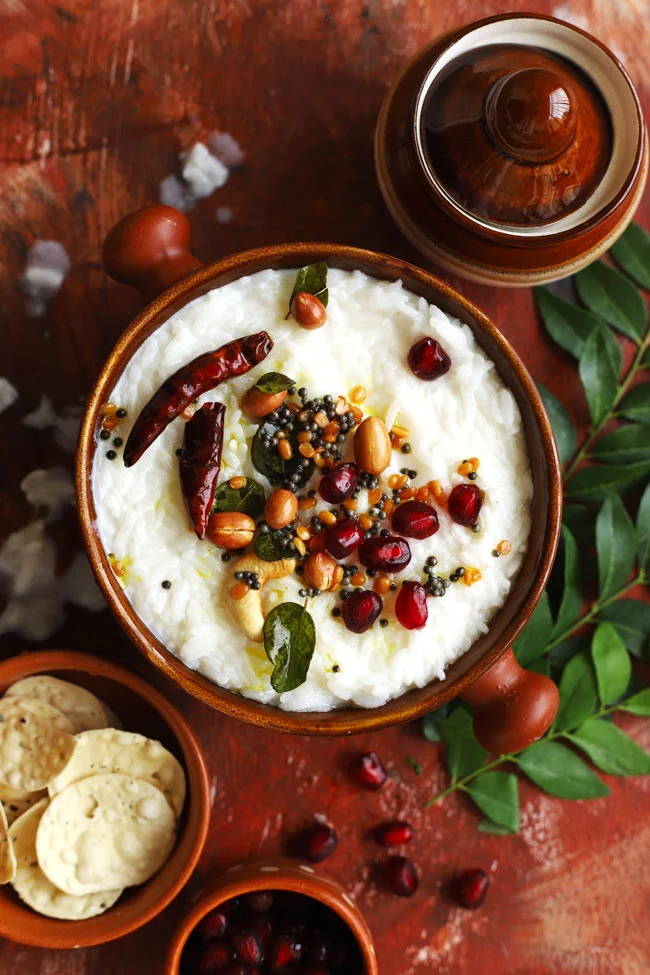
Thayir sadam is a South Indian dish of rice mixed with creamy, tangy curd and finished with a spiced tempering. This version adds cucumber, carrot and pomegranate for freshness, crunch and colour.
Ingredients
- 360 ml (1 1/2 cups)cooked white rice
- 300 ml (1 1/4 cups)curd (yoghurt)
- 5 ml (1 teaspoon), or to tastesalt
- 15 ml (1 tablespoon)ginger
- 60 ml (1/4 cup)cucumber, grated
- 60 ml (1/4 cup)carrot, shredded
- 60 ml (1/4 cup)pomegranate
- 60 ml (1/4 cup)malai (milk cream)
- 30 ml (2 tablespoons)cooking oil
- 5 ml (1 teaspoon)mustard seeds
- 5 ml (1 teaspoon)white urad dal
- 8fresh curry leaves
- 15 ml (1 tablespoon)green chilli, chopped
- 30 ml (2 tablespoons)peanuts
Instructions
- 1
Mash the rice
Put the cooked rice in a wide mixing bowl and gently press it with the back of a spoon to break up any lumps.
- 2
Mix the curd
Stir the curd, ginger, grated cucumber, carrot and salt into the rice. Add the cream and mix again. If you like, chill the curd rice for 10–15 minutes at this stage.
- 3
Heat the oil
Warm the oil in a small pan to prepare the tempering.
- 4
Fry the spices
Add the mustard seeds, urad dal, curry leaves and green chilli. Fry for 10–20 seconds, until the seeds begin to pop.
- 5
Add the peanuts
Stir in the peanuts and fry for a further 10 seconds. Turn off the heat.
- 6
Pour over rice
Pour the tempering over the curd rice.
- 7
Garnish the dish
Garnish the curd rice with pomegranate pearls and fresh coriander.
- 8
Serve straight away
Serve immediately with fried papadum or potato roast.
What is thayir sadam?
Thayir sadam, meaning curd rice, is a traditional South Indian dish that combines cooked rice with yoghurt. It is a simple, soothing meal, often finished with a tempering of spices and aromatics.
Here, cucumber and carrot bring fresh crunch, while pomegranate adds bursts of sweetness. Cream makes the mixture richer, and the warm tempering gives it a fragrant, savoury finish.
Nutrition and macros by portion
The nutrition label shows one serving as written: 262 calories, 7g protein, 28g carbs, 14g fat.
| Portion | Adjustment | kcal | Protein | Carbs | Fat |
|---|---|---|---|---|---|
| Lighter | Less malai and oil | 183 kcal | 5g | 20g | 10g |
| This serving | As written | 262 kcal | 7g | 28g | 14g |
| Hungry | Larger rice portion | 393 kcal | 11g | 42g | 21g |
Rice supplies most of the carbohydrates, while curd contributes protein and the oil and malai provide much of the fat. Serve a portion with extra vegetables or a light side salad to add freshness and balance the plate.
Choosing the rice and curd
Rice: Use cooked white rice that is soft enough to mash gently. Breaking up the clumps helps it combine evenly with the curd.
Curd: Plain, unsweetened yoghurt is the right choice. The recipe’s added malai makes the mixture creamier, so use it if you want the richer texture described here.
Getting the texture right
Mash gently: Press the rice with the back of a spoon rather than turning it into a smooth paste. A few soft grains give the finished dish more texture.
Vegetables: Grated cucumber and shredded carrot should be fine enough to mix through the rice, but still noticeable in each bite. If the cucumber is very wet, drain off excess liquid before mixing.
Making the tempering
Popping seeds: Heat the oil in a small pan, then add the mustard seeds with the dal, curry leaves and chilli. The seeds beginning to pop is the cue to move on; the listed frying time is only 10–20 seconds.
Peanuts: Add these after the other tempering ingredients and fry for another 10 seconds. Keep an eye on the pan, as the short cooking time means they can brown quickly.
When to chill it
Optional rest: Once the rice mixture is combined, you can chill it for 10–15 minutes before adding the tempering. This gives you a cooler serving while keeping the final steps quick.
Serve: The recipe calls for serving the dish immediately after garnishing. If it has been chilled, pour over the tempering and add the pomegranate and coriander just before serving.
What to serve alongside
Crunchy side: Fried papadum is the suggested accompaniment, adding a crisp contrast to the soft rice.
Warm side: Potato roast is another option named in the recipe. Serve it alongside rather than mixing it into the curd rice, so the textures stay distinct.
Recipe notes & tips
- Use plain, unsweetened yoghurt so the savoury flavours stay in balance.
- Mash the rice lightly; it should hold together without becoming a paste.
- Grate the cucumber shortly before mixing to keep it fresh.
- Watch the mustard seeds closely and move on when they start popping.
- Add the pomegranate just before serving to preserve its texture.
- Taste the mixture before serving and adjust the salt if needed.
Variations
- Extra crunch: Add more peanuts, keeping the tempering method the same.
- More heat: Increase the chopped green chilli to suit your taste.
- Herb finish: Add fresh coriander at the end, as described in the method.
- Cooler bowl: Chill the mixed rice for 10–15 minutes before adding the tempering.
- Simpler topping: Leave out the pomegranate for a less sweet finish.
Common mistakes to avoid
- Over-mashing: The rice can turn pasty; press gently and leave some grains intact.
- Using sweetened yoghurt: It changes the savoury flavour; choose plain, unsweetened curd.
- Skipping the popping cue: Add the next ingredients once the mustard seeds begin to pop.
- Over-frying the peanuts: They can brown quickly; limit their frying time to 10 seconds.
- Adding the garnish too early: The pomegranate can lose its fresh bite; garnish just before serving.
How to store
Refrigerate leftovers promptly in a covered container and use within 1–2 days. Serve chilled or let the portion lose its refrigerator chill; if reheating, warm gently and add a little curd if the rice has thickened.
Frequently asked questions
Can I make curd rice ahead?
You can mix the rice and curd and chill it for 10–15 minutes as the recipe suggests. For the freshest texture, add the tempering and pomegranate shortly before serving.
What kind of curd should I use?
Use plain, unsweetened curd or yoghurt. Avoid flavoured yoghurt, which would change the savoury taste.
Can I use leftover rice?
Yes, cooked white rice works for this dish. Break up any lumps gently before mixing it with the curd.
Do I have to add the malai?
The recipe includes malai for a richer, creamier mixture. You can leave it out, though the finished dish will be less rich.
What can I serve with thayir sadam?
The recipe suggests fried papadum or potato roast. Either provides a contrast to the soft, creamy rice.
Cook it from the original
This recipe comes from funfoodfrolic.com. Their page has the author’s own photos, notes and tips — the best place to cook it from.
Open the recipe on funfoodfrolic.com