
Instant Pot Matar Paneer Recipe
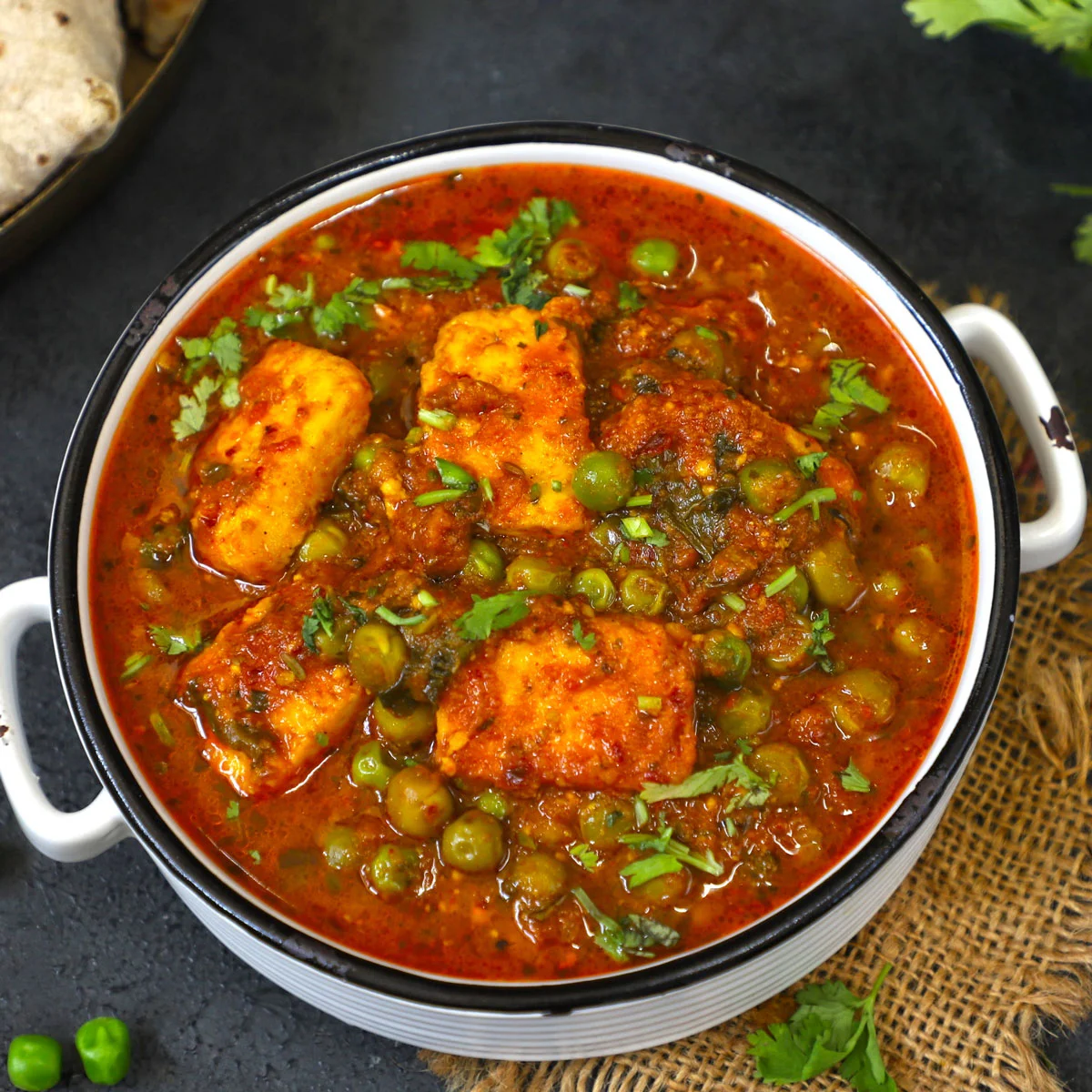
This Punjabi-style matar paneer pairs soft paneer and green peas in a warmly spiced tomato gravy, made in an Instant Pot in about 30 minutes. It is a handy one-pot curry to serve with naan, paratha or rice.
Ingredients
- 200 gpaneer (cottage cheese), cut into cubes
- about 200 g (1¼ cups)green peas, fresh or frozen
- 30 ml (⅛ cup)mustard oil or ghee
- 1 teaspooncumin seeds (jeera)
- 1bay leaf
- 1 teaspoonturmeric
- 1 teaspoonred chilli powder
- 1 teaspooncoriander powder
- 1¼ teaspoons, or to tastesalt
- 1 tablespoonkasuri methi (dried fenugreek leaves)
- 1 teaspoongaram masala
- 240 ml (1 cup)water
- about 150 g (1 cup)red onion, diced
- 1 tablespoongarlic cloves
- 1 tablespoonginger, chopped
- about 300 g (1¼ cups)tomato, diced
- 2Kashmiri red chillies
- 1 tablespoonfresh coriander leaves, chopped
Instructions
- 1
Blend onion paste
Blend the onion, garlic and ginger until smooth. Transfer the paste to a bowl and set it aside.
- 2
Blend tomato paste
Blend the tomato and dried red chillies until smooth. Transfer to a separate bowl and set aside.
- 3
Heat the oil
Set the Instant Pot to SAUTE for 15 minutes and add the oil to the inner pot.
- 4
Fry whole spices
When the oil is smoking hot, which takes less than 1 minute, add the cumin seeds and bay leaf, followed by the onion paste.
- 5
Cook onion paste
Saute the paste for 2 minutes, or until it turns light brown, stirring continuously.
- 6
Cook tomato masala
Add the tomato paste, turmeric, coriander powder, red chilli powder and salt. Stir to combine and saute for 5 minutes, or until oil begins to separate from the masala.
- 7
Add peas and paneer
Add the peas, paneer and water, then stir to combine. Fit the Instant Pot lid and seal it.
- 8
Pressure cook
Select pressure cook and set the timer for 5 minutes. Set the steam valve to SEALING.
- 9
Release pressure
After 5 minutes, release the pressure manually or wait for it to release naturally.
- 10
Finish the curry
Once the steam has released, open the lid. Add the kasuri methi, garam masala and fresh coriander leaves, then stir to combine.
- 11
Serve warm
Serve the matar paneer warm with naan, paratha or jeera rice.
What is matar paneer?
Matar paneer is a North Indian curry of green peas (matar) and paneer in a spiced gravy. It is especially associated with Punjabi cooking, where paneer and warming spices make a hearty, satisfying dish.
This version builds its gravy from blended onion, ginger and garlic, followed by tomato and dried chilli. Cooking under pressure brings the peas and sauce together quickly, while the paneer is added before pressure cooking so it takes on the flavour of the gravy.
Nutrition and macros by portion
The nutrition label shows one serving as written: 280 calories, 11g protein, 16g carbs, 20g fat.
| Portion | Adjustment | kcal | Protein | Carbs | Fat |
|---|---|---|---|---|---|
| Lighter | Use less oil | 196 kcal | 8g | 11g | 14g |
| This serving | As written | 280 kcal | 11g | 16g | 20g |
| Hungry | Add extra peas | 420 kcal | 17g | 24g | 30g |
The peas and onion contribute most of the carbohydrates, while paneer provides protein and much of the fat; mustard oil or ghee adds further fat. For a more balanced plate, serve a portion with jeera rice or bread and add a side of vegetables.
Why blend the gravy?
Onion paste: blending the onion with garlic and ginger gives the curry a smooth, even base. Stir it as it fries so it cooks evenly and turns light brown without catching.
Tomato paste: blending the tomato with dried chillies disperses them throughout the sauce. Give this mixture the full 5 minutes of sauteing, until oil starts to separate from the masala.
Build flavour in the pot
Whole spices: cumin seeds and the bay leaf go into hot oil first, where they flavour the fat before the onion paste is added. The oil should be very hot, but keep an eye on it so the spices do not burn.
Kasuri methi: dried fenugreek leaves and garam masala go in after pressure cooking, along with fresh coriander. Adding them at the end keeps their aromas distinct in the finished curry.
Check the sauce and peas
The recipe uses 240 ml water, which helps create a pourable gravy in the sealed pot. Stir well before closing the lid so the paneer and peas are coated with the masala.
Fresh and frozen peas can both be used. The peas should be tender after pressure cooking; if you prefer a thicker curry, let it stand briefly after opening the pot so the sauce settles.
Choose the right paneer
Paneer: cut it into cubes of roughly similar size so they warm through evenly. Fresh, soft paneer tends to stay tender, while firmer paneer will hold its shape more firmly in the gravy.
If your paneer is already quite firm, avoid stirring vigorously once it is cooked. A gentle fold helps keep the cubes intact.
Plan the pressure release
This recipe gives you two options after the 5-minute pressure-cook cycle: release the pressure manually or wait for natural release. Keep the lid closed until the steam has released and the pot is safe to open.
The SAUTE setting is set for 15 minutes, but the method also gives specific cooking cues: 2 minutes for the onion paste and 5 minutes for the tomato masala. Use those cues as well as the timer.
What to serve alongside
Naan or paratha: both are useful for scooping up the thick gravy. Serve them warm so they stay soft and pliable.
Jeera rice: its cumin flavour complements the spices in the curry. Add a simple vegetable side if you want a more varied plate.
Recipe notes & tips
- Measure out the ingredients before starting, as the sauteing stages move quickly.
- Stir the onion paste while it cooks to stop it sticking to the inner pot.
- Wait for the tomato masala to show oil separating before adding the peas and paneer.
- Check that the steam valve is set to SEALING before pressure cooking.
- Add the dried fenugreek, garam masala and fresh coriander after opening the pot, as directed.
- Fold the curry gently after pressure cooking to help keep the paneer cubes whole.
Variations
- Use ghee: swap it for the mustard oil for a buttery flavour.
- Adjust the heat: use fewer Kashmiri chillies for a milder curry.
- Choose frozen peas: add them straight from the freezer without thawing first.
- Make it saucier: add a little more water if you prefer a thinner gravy.
- Serve with rice: pair it with jeera rice for a classic accompaniment.
Common mistakes to avoid
- Skipping the browning cue: cook the onion paste until light brown, stirring as it fries.
- Stopping the tomato saute too soon: continue until oil begins to separate from the masala.
- Forgetting to seal the valve: set it to SEALING before starting the pressure-cook cycle.
- Opening before pressure releases: wait until the steam has fully released before lifting the lid.
- Stirring too roughly: fold the finished curry gently to avoid breaking the paneer.
How to store
Refrigerate leftovers in a covered container and use within 3 days. Reheat gently in a saucepan or microwave until piping hot, stirring carefully; add a splash of water if the gravy has thickened.
Frequently asked questions
Can I use frozen peas?
Yes. The recipe allows either fresh or frozen peas, so you can use frozen peas directly.
Can I use ghee instead of mustard oil?
Yes. The ingredient list gives mustard oil or ghee as alternatives.
Should I release the pressure manually or naturally?
Either option is given in the method. In both cases, wait until the steam has released before opening the lid.
How do I know when the masala is ready?
The onion paste should turn light brown after about 2 minutes. After adding the tomato paste and spices, saute for about 5 minutes, until oil starts to separate from the masala.
What can I serve with matar paneer?
Serve it warm with naan, paratha or jeera rice.
Can I make the curry less spicy?
Use fewer Kashmiri red chillies or reduce the red chilli powder to suit your preference.
Cook it from the original
This recipe comes from funfoodfrolic.com. Their page has the author’s own photos, notes and tips — the best place to cook it from.
Open the recipe on funfoodfrolic.com