
Dhaba Style Matar Paneer Recipe
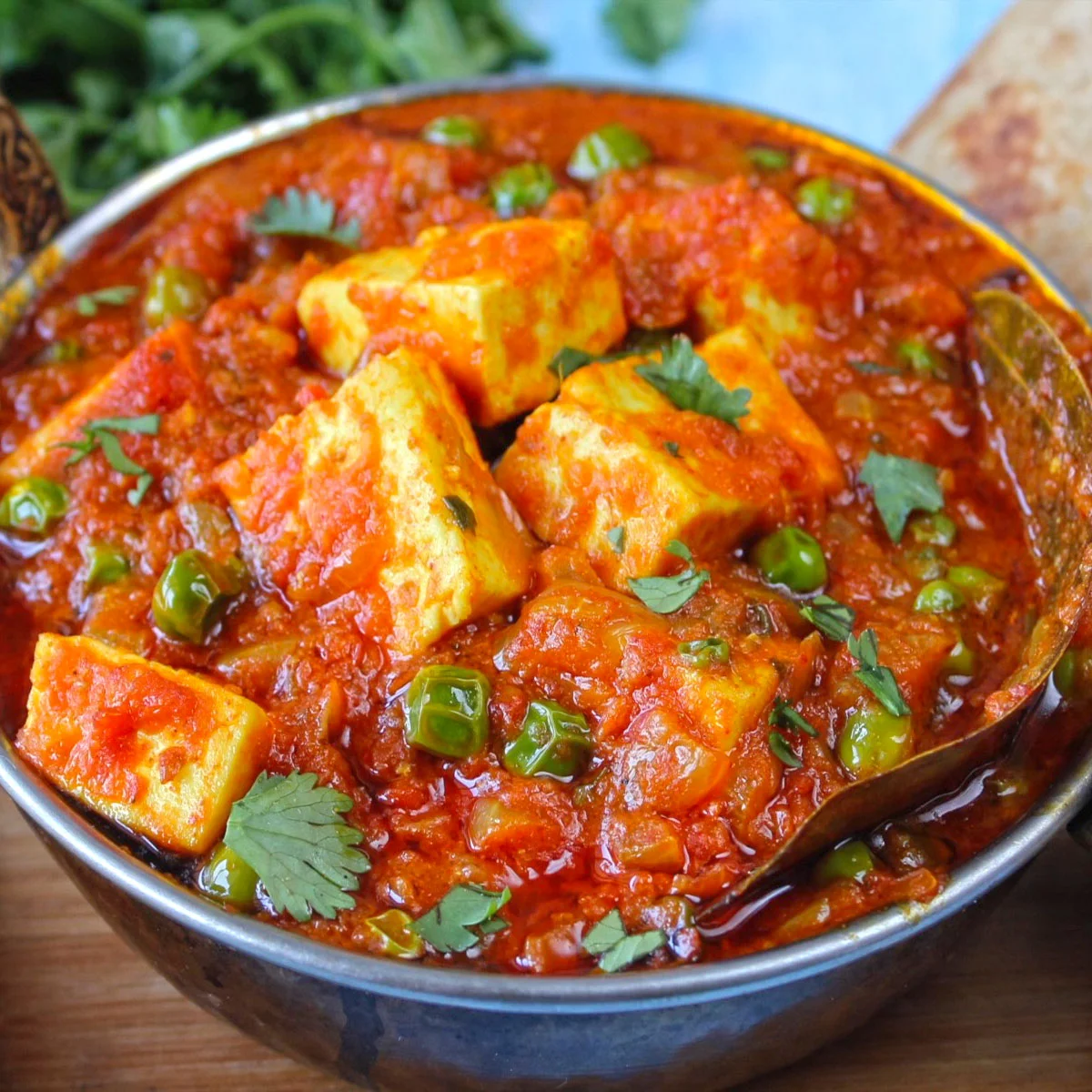
Dhaba-style matar paneer is a rich Indian curry of paneer and green peas in a warmly spiced tomato-onion sauce. Frying the paneer until golden is optional, but it adds a crisp edge that holds up well in the thick gravy.
Ingredients
- 500 gpaneer (cottage cheese), cut into cubes
- 75 g (½ cup)fresh green peas
- 150 g (1 cup)chopped onion
- 180 g (1 cup)chopped tomato
- 15 ml (1 tablespoon)ginger-garlic paste
- 2green chillies, sliced
- 60 ml (4 tablespoons)mustard oil
- to tastesalt
- 1bay leaf
- 5 ml (1 teaspoon)deggi mirch powder or Kashmiri chilli powder
- 2.5 ml (½ teaspoon)turmeric powder
- 2.5 ml (½ teaspoon)coriander powder
- 2.5 ml (½ teaspoon)garam masala
- 8 g (1 tablespoon)gram flour (besan)
Instructions
- 1
Blend the tomatoes
Purée the chopped tomatoes in a mixer and set the paste aside.
- 2
Toast the flour
Dry-roast the gram flour over low heat until fragrant and golden, then set it aside.
- 3
Heat the oil
Heat the mustard oil in a kadhai until it begins to smoke, then turn the heat down to low.
- 4
Fry the paneer
Fry the paneer cubes until crisp and golden on both sides. Transfer them to a plate and set aside; this step is optional.
- 5
Fry the bay leaf
Add the bay leaf to the oil and fry it for a few seconds.
- 6
Brown the onion
Add the chopped onion and cook until golden brown.
- 7
Cook the paste
Add the ginger-garlic paste and fry it for 3–5 minutes.
- 8
Fry the tomato
Add the tomato paste and cook for 5–10 minutes, until the masala begins to leave the sides of the pan.
- 9
Add the chilli
Dissolve the red chilli powder in 30 ml (2 tablespoons) of water, then stir it into the masala.
- 10
Add the spices
Add the turmeric, peas, roasted gram flour and coriander powder, then stir to combine.
- 11
Simmer the curry
Add approximately 240 ml (1 cup) of water. Cover the pan and simmer over low heat for 10 minutes.
- 12
Return the paneer
Add the paneer, garam masala, sliced green chillies and salt, then mix well.
- 13
Thicken the gravy
Simmer for a further 5 minutes, or until the curry has thickened.
- 14
Garnish the curry
Garnish the matar paneer with fresh coriander leaves.
- 15
Serve with rice
Serve with naan or basmati rice.
What is matar paneer?
Matar paneer is a North Indian curry pairing matar, or green peas, with paneer in a spiced sauce. The dhaba-style name refers to the hearty, boldly seasoned curries associated with roadside eateries in India.
Here, browned onion and cooked tomato form a substantial base, while roasted gram flour helps give the gravy body. The paneer can be fried for a golden exterior or added without frying for a softer finish.
Nutrition and macros by portion
The nutrition label shows one serving as written: 546 calories, 20g protein, 14g carbs, 46g fat.
| Portion | Adjustment | kcal | Protein | Carbs | Fat |
|---|---|---|---|---|---|
| Lighter | Skip frying the paneer | 382 kcal | 14g | 10g | 32g |
| This serving | As written | 546 kcal | 20g | 14g | 46g |
| Hungry | Serve with extra rice | 819 kcal | 30g | 21g | 69g |
Paneer supplies most of the protein and fat in this dish, while the peas, onion and tomato contribute carbohydrates. Mustard oil also adds fat; serve a moderate scoop with naan or basmati rice and add a vegetable side to round out the plate.
Building the masala
Onion first: Cook it patiently until golden brown, as this gives the sauce a deeper savoury base. Add the ginger-garlic paste only after the onion has coloured.
Tomato next: Purée the tomatoes so they blend smoothly into the masala. Give them time to cook until the mixture starts to pull away from the pan sides; this is a useful sign that the base has concentrated.
Why toast the gram flour?
Roasted besan: Dry-toasting the gram flour first brings out a nutty aroma and helps avoid a raw flour taste in the finished gravy. Keep the heat low and stir or shake it as it colours, since a small amount can scorch quickly.
Smooth addition: Stir the roasted flour in with the peas and spices before adding water. Mixing it into the masala at this stage helps it disperse as the curry simmers.
Getting the paneer texture right
Golden edges: Fry the cubes on both sides if you want a lightly crisp outside. The recipe makes this step optional, so you can skip it for a more tender, soft paneer texture.
Gentle finish: Once the paneer is back in the curry, stir carefully so the cubes keep their shape. The final five-minute simmer lets them warm through while the gravy thickens.
Managing the heat
Mustard oil: Heat it until it starts smoking, then lower the heat before frying the paneer and aromatics. This is an important transition: the oil is very hot at first, so work carefully as you turn it down.
Chilli powder: Dissolving it in water before adding it helps it mix into the masala. Choose deggi mirch or Kashmiri chilli powder for the recipe's stated options, and adjust the number of green chillies to suit your preference.
When the curry is ready
The tomato masala should look concentrated and begin to leave the sides of the pan before you add the remaining ingredients. After water goes in, the covered low simmer gives the peas time to cook and the flavours time to come together.
At the end, look for a gravy that has thickened but still coats the paneer. If it is not there yet, continue simmering briefly and check again.
What to serve alongside
Naan: Soft naan is useful for scooping up the thick sauce. Add a simple vegetable side if you want more variety on the plate.
Basmati rice: Fluffy rice makes a straightforward pairing and catches the gravy. Garnish the curry with fresh coriander leaves just before serving, as directed in the method.
Recipe notes & tips
- Keep the gram flour over low heat and take it off as soon as it turns golden and smells nutty.
- Let the tomato masala cook until it starts to leave the sides of the pan before adding the spices and peas.
- Lower the heat after the mustard oil begins to smoke, before adding the paneer.
- If frying the paneer, brown both sides rather than cooking the cubes for a long time.
- Stir gently after adding the paneer so the cubes stay intact.
- Check the gravy near the end and simmer a little longer if it has not thickened.
Variations
- Skip the frying: Add the paneer without browning it for a softer texture.
- Adjust the chillies: Use fewer green chillies for a milder curry.
- Use frozen peas: Add them in place of fresh peas and simmer until tender.
- Choose the chilli powder: Use either deggi mirch or Kashmiri chilli powder as listed.
- Change the accompaniment: Serve with naan or basmati rice.
Common mistakes to avoid
- Scorching the gram flour: Toast it over low heat and remove it once fragrant and golden.
- Under-cooking the tomato: Continue frying until the masala begins to leave the sides of the pan.
- Adding chilli powder dry: Dissolve it in 30 ml (2 tablespoons) of water first.
- Leaving the oil too hot: Turn the heat to low as soon as the mustard oil starts smoking.
- Breaking the paneer: Fold it into the curry gently rather than stirring vigorously.
- Stopping too soon: Simmer for the final 5 minutes, or until the gravy thickens.
How to store
Cool leftovers promptly, cover and refrigerate for up to 3 days. Reheat gently in a saucepan until piping hot, adding a splash of water if the gravy has become too thick.
Frequently asked questions
Can I skip frying the paneer?
Yes. The recipe describes frying as optional; add the paneer directly when the method calls for it if you prefer a softer texture.
Can I use frozen peas?
Yes, frozen peas can stand in for fresh ones. Add them at the same stage and check that they are tender by the end of the covered simmer.
How do I know the tomato masala is cooked?
The method gives a clear cue: cook it until the masala starts leaving the sides of the pan. This usually takes 5–10 minutes.
Why is gram flour used in the curry?
The toasted gram flour helps give the gravy body. Toast it gently first so it is aromatic and golden rather than raw-tasting.
What can I serve with matar paneer?
Serve it with naan or basmati rice, as suggested in the recipe. Fresh coriander leaves are used for the garnish.
Cook it from the original
This recipe comes from funfoodfrolic.com. Their page has the author’s own photos, notes and tips — the best place to cook it from.
Open the recipe on funfoodfrolic.com