
Whole Masoor Dal Recipe
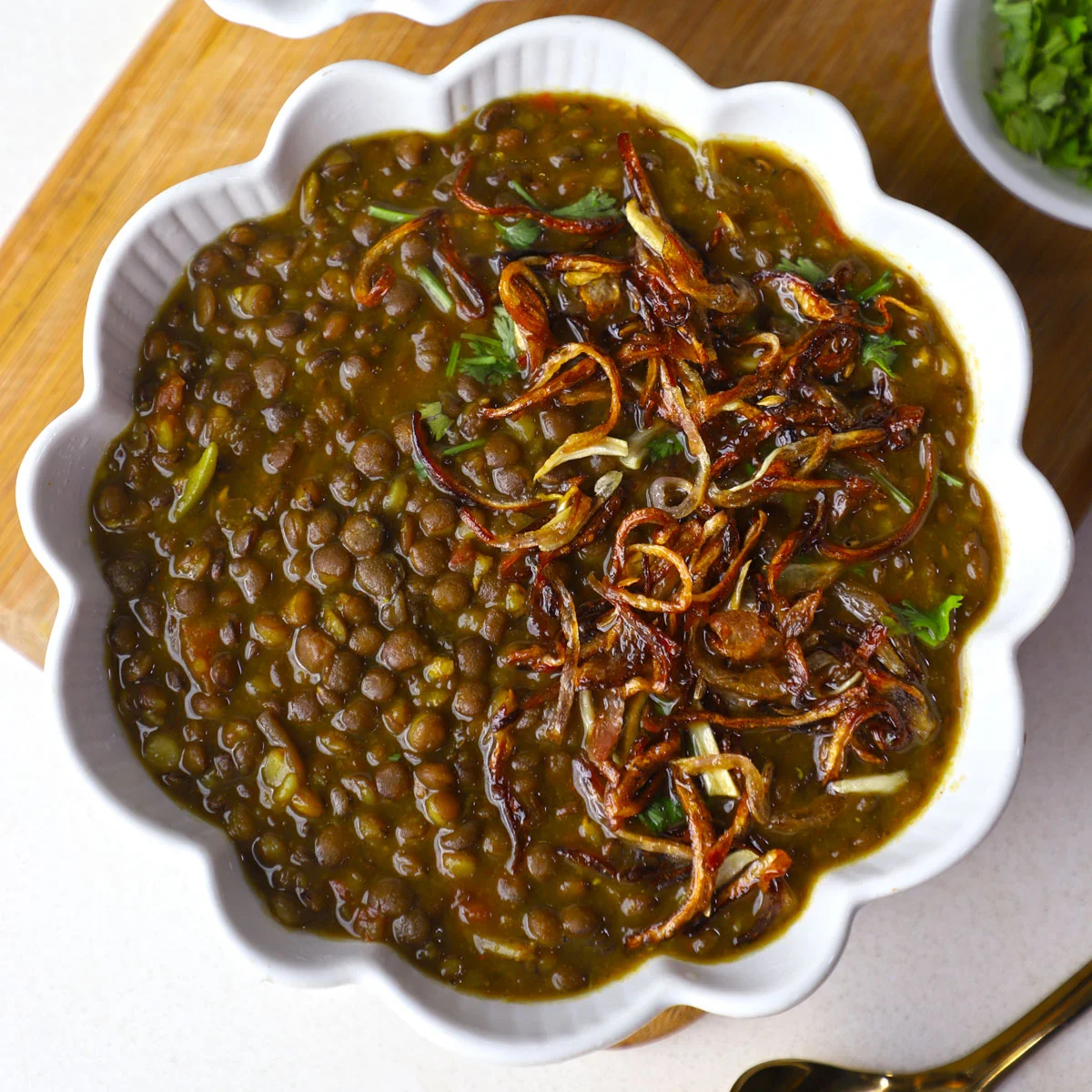
Whole masoor dal is a comforting Indian lentil dish, cooked until tender but still holding its shape, then finished with a fragrant fried-onion tadka. It makes a hearty meal with rice or naan and brings deep flavour from warm spices, ginger and garlic.
Ingredients
- 240 ml (1 cup)uncooked brown lentils (sabut masoor dal)
- 1 mediumtomato, finely chopped
- 1.3 cm (½ inch)ginger, peeled and sliced
- 1green chilli, chopped
- ¼ teaspoonhing (asafoetida)
- 1 teaspoonturmeric powder
- ½ teaspoonred chilli powder
- ½ teaspooncoriander powder
- ½ teaspoongaram masala
- ½ teaspoonmango powder (amchur)
- 60 ml (4 tablespoons)ghee
- 1 largered onion, sliced
- 4 clovesgarlic, thinly sliced
- ½ teaspooncumin seeds (jeera)
- 1 handfulfresh coriander leaves, chopped
- 720 ml (3 cups)water
- to tastesalt
Instructions
- 1
Rinse the lentils
Rinse the lentils in water 2–3 times, then soak them in clean water for 15–20 minutes. Drain well once soaked.
- 2
Combine the ingredients
Put the drained lentils in a pressure cooker or Instant Pot with 720 ml (3 cups) water, turmeric, coriander powder, ginger, tomato, asafoetida, green chilli and salt.
- 3
Pressure cook
Cook under pressure for 4 whistles over medium heat. The lentils should be tender but retain their shape. Let the pressure release naturally, then lightly mash some of the dal with the back of a ladle for a creamier texture.
- 4
Fry the onion
Heat the ghee or oil in a heavy-based pan. Fry the sliced onion for around 15–20 minutes, until light golden and slightly crisp, taking care not to burn it. Add the sliced garlic and cumin, and cook for 1–2 minutes, until the garlic browns.
- 5
Season the dal
Reheat the dal and stir in the chilli powder, mango powder and garam masala. Taste and add more seasoning if needed.
- 6
Simmer and top
If the dal is too thick, loosen it with a little hot water. Simmer gently for 10 minutes, then transfer to a serving bowl and spoon the ghee and fried-onion tadka over the top.
- 7
Garnish and serve
Scatter over the chopped fresh coriander. Serve with jeera rice or naan.
What is whole masoor dal?
Masoor dal is a familiar Indian preparation of lentils; sabut masoor uses the whole brown lentil rather than split red lentils. The whole lentils keep a more distinct bite while releasing enough starch to give the cooking liquid a softly creamy body.
This version builds flavour in two stages: the lentils cook with aromatics and spices, then a separate onion, garlic and cumin tadka is poured over the finished dal.
Nutrition and macros by portion
The nutrition label shows one serving as written: 333 calories, 13g protein, 36g carbs, 16g fat.
| Portion | Adjustment | kcal | Protein | Carbs | Fat |
|---|---|---|---|---|---|
| Lighter | Use less ghee | 233 kcal | 9g | 25g | 11g |
| This serving | As written | 333 kcal | 13g | 36g | 16g |
| Hungry | Serve with extra rice | 500 kcal | 20g | 54g | 24g |
The lentils provide most of the carbohydrates and a good share of the protein, while ghee and the fried-onion tadka contribute much of the fat. Pair a serving with vegetables and a measured portion of rice or naan to make a balanced plate.
The lentils and aromatics
Soaking: A short soak helps the lentils cook more evenly. Drain them before adding them to the cooker so the measured cooking water stays consistent.
Aromatics: Ginger, tomato, chilli and asafoetida cook alongside the lentils, bringing savoury depth and a gentle tang. Turmeric and coriander powder are added at this stage too.
Getting the lentil texture right
Pressure cooking: Follow the recipe's four whistles over medium heat, then allow the pressure to release naturally. The target is tender lentils that still hold their shape, rather than a completely smooth purée.
Light mashing: Press the dal gently with the back of a ladle after cooking. Mashing only some of the lentils thickens the mixture while leaving plenty of whole lentils in each serving.
Take time with the tadka
Onions: Fry the slices patiently for around 15–20 minutes until they are light golden and slightly crisp. Keep an eye on the colour: onions that are too pale will lack the same sweetness, while burnt edges can taste bitter.
Garlic and cumin: Add these after the onions have coloured and cook for 1–2 minutes. Their fragrant, browned flavour carries through the ghee and seasons the dal when spooned over the top.
Balance spice and tang
Finishing spices: Red chilli powder, amchur and garam masala go into the reheated dal rather than the pressure cooker. This keeps their flavours distinct and lets you adjust the seasoning after tasting.
Consistency: The dal thickens as it simmers. If it becomes too dense, stir in a little hot water, then let it simmer gently for 10 minutes so the flavours come together.
How to serve it
Rice: Jeera rice is a natural partner, soaking up the dal and matching its cumin notes. Spoon the onion tadka across the top so each portion gets some crisp onion and flavoured ghee.
Bread: Naan is another good choice for scooping up the lentils. Add a fresh, crunchy vegetable side if you want contrast with the soft dal and rich topping.
Recipe notes & tips
- Rinse the lentils several times, until the water runs clearer.
- Let the cooker release pressure naturally so the lentils finish cooking gently.
- Mash only a portion of the lentils to keep a mix of creamy and whole textures.
- Fry the onions over steady heat and allow the full 15–20 minutes for an even golden colour.
- Add hot water a little at a time if the dal needs loosening.
- Taste after adding the finishing spices, then adjust the salt and seasoning.
Variations
- More heat: Add extra chopped green chilli to the lentils.
- Milder dal: Reduce or omit the red chilli powder.
- Extra tang: Adjust the amchur a little at a time after tasting.
- Oil instead of ghee: Use oil for frying if you prefer not to use ghee.
- Thicker texture: Mash a few more lentils before the final simmer.
- Fresh finish: Add a little more chopped coriander just before serving.
Common mistakes to avoid
- Skipping the soak: Give the lentils 15–20 minutes in clean water for a more even cook.
- Overcooking the lentils: Check that they are tender but still hold their shape after four whistles.
- Mashing everything: Press only some of the lentils so the finished dal retains texture.
- Burning the onions: Fry patiently and watch for light golden colour rather than dark brown edges.
- Adding cold water: Use hot water to adjust the consistency without interrupting the simmer.
- Leaving out the rest: Let the pressure release naturally before opening the cooker.
How to store
Refrigerate leftover dal in a covered container for up to 3 days. Reheat gently in a pan or microwave until piping hot, adding a splash of water if it has thickened; stir the tadka through or add it on top when serving.
Frequently asked questions
Can I cook whole masoor dal without a pressure cooker?
Yes, simmer it in a covered saucepan until tender, checking the liquid level and adding water as needed. Cooking time can vary, so use the lentils' texture as your guide.
Do I have to soak the lentils?
The recipe calls for a 15–20 minute soak. You can cook without soaking, but the lentils may take longer to become tender.
How can I tell when the dal is cooked?
The lentils should be tender but still hold their shape. Lightly mashing some should make the liquid creamy without turning the whole dish into a purée.
What can I use instead of amchur?
Amchur provides a tart note. If you do not have it, leave it out or add a little lemon juice at the end to taste; the flavour will differ.
Can I make it ahead?
Yes. Cook the dal ahead and refrigerate it, then reheat with a little water if needed. For the best texture, fry the onion tadka close to serving time.
What should I serve with whole masoor dal?
Serve it with jeera rice or naan, as suggested in the recipe. A fresh vegetable side can add a crisp contrast.
Cook it from the original
This recipe comes from funfoodfrolic.com. Their page has the author’s own photos, notes and tips — the best place to cook it from.
Open the recipe on funfoodfrolic.com