
Burnt basque cheesecake
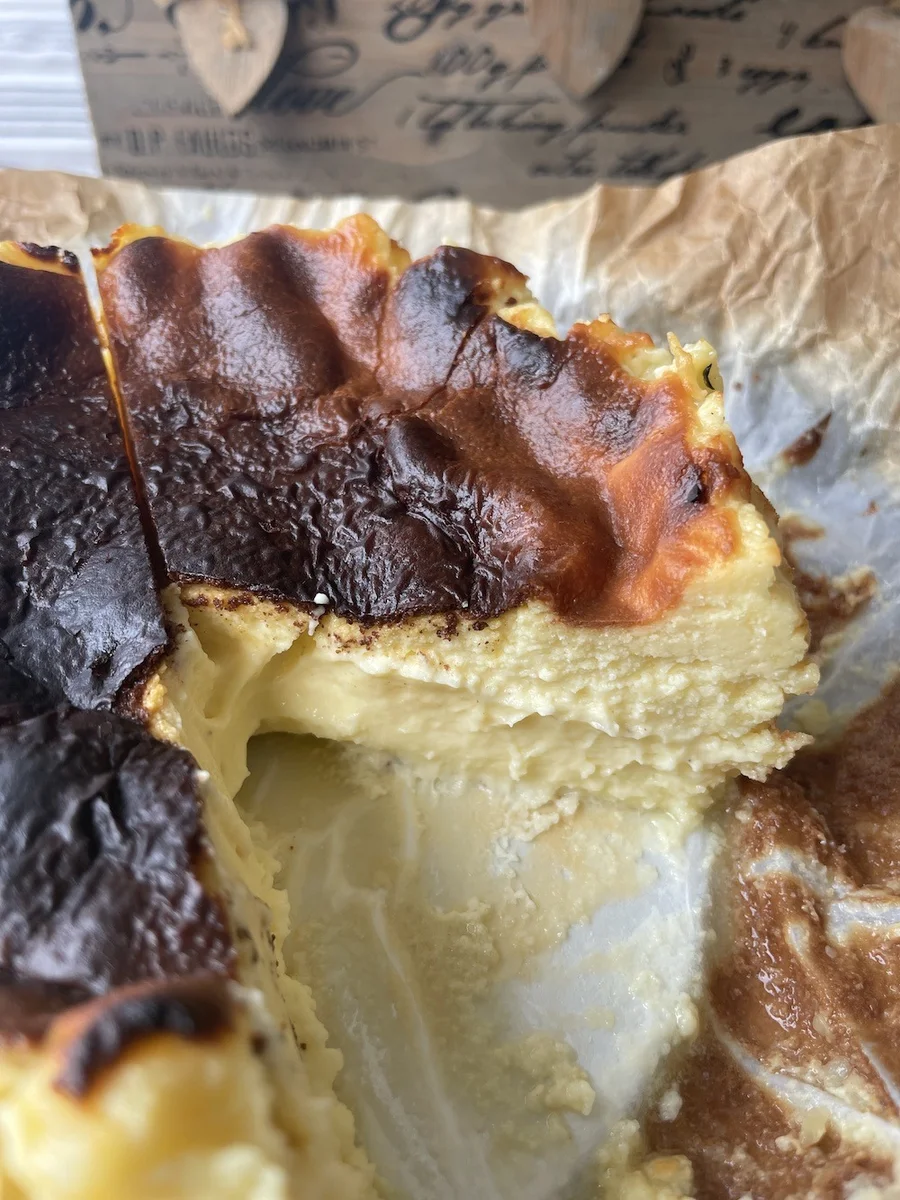
This burnt Basque cheesecake is a small, crustless cheesecake with a deeply browned top and a soft, creamy centre. It is blended in one go, then baked hot and briefly for an easy dessert that needs chilling before serving.
Ingredients
- 225 gPhiladelphia full-fat plain cream cheese
- 250 gcrème fraîche
- 2extra-large eggs
- 100 gregular sugar
- 1 tspvanilla extract
- A dashsalt
Instructions
- 1
Heat the oven
Preheat the fan-assisted oven to 230°C. Gather a 15 cm loose-bottomed or springform tin, a blender, spatula, baking sheet and baking paper.
- 2
Blend the batter
Put all the ingredients in a blender and pulse until combined. Blend continuously for a further 30 to 45 seconds.
- 3
Rest the mixture
Check that the batter is thick, smooth and creamy, then leave it to rest for 20 minutes.
- 4
Shape the paper
Crumple a sheet of baking paper large enough to fit the tin, with 5 to 10 cm extending above its rim. Press it into the tin using the base, then remove both the base and the shaped paper.
- 5
Line the tin
Put the base back into the tin, then return the shaped baking paper, sitting it on top of the base.
- 6
Add the batter
Once the batter has rested for 20 minutes, pour it into the prepared tin.
- 7
Release air bubbles
Lift and drop the tin, turning it as you go, to dislodge any air bubbles trapped in the batter.
- 8
Bake the cheesecake
Set the tin on a baking sheet and place it gently in the oven. Bake for 20 to 22 minutes, until the top is tanned golden brown and the centre wobbles like jelly. The cheesecake may look underbaked; it will firm up as it cools.
- 9
Cool and chill
Take the cheesecake out of the oven and cool it on a wire rack away from the oven's heat. Refrigerate for 4 to 5 hours to set.
- 10
Slice and serve
Take the cheesecake out of the fridge and let it come to room temperature. Gently peel back the baking paper and cut into 6 slices, or 4 larger ones. For neat slices, dip the knife in hot water and wipe it between cuts.
- 11
Enjoy a slice
Serve with a cup of tea or coffee.
What is burnt Basque cheesecake?
This crustless cheesecake comes from the Basque region of Spain, where its signature is a deeply browned top and a centre that stays soft and creamy. Unlike cheesecakes baked in a water bath, it is cooked at a high temperature and allowed to colour.
This small version relies on a short ingredient list and a 15 cm tin. Blending the batter keeps the preparation straightforward, while chilling gives the soft centre time to set.
Nutrition and macros by portion
The nutrition label shows one serving as written: 339 calories, 6g protein, 18g carbs, 27g fat.
| Portion | Adjustment | kcal | Protein | Carbs | Fat |
|---|---|---|---|---|---|
| Lighter | Smaller cheesecake slice | 237 kcal | 4g | 13g | 19g |
| This serving | As written | 339 kcal | 6g | 18g | 27g |
| Hungry | Cut into four slices | 509 kcal | 8g | 27g | 41g |
The sugar supplies most of the carbohydrates, while cream cheese and crème fraîche contribute much of the fat; the eggs and dairy provide the protein. Pair a slice with fresh fruit or serve a smaller slice after a meal if you want a more balanced plate.
Choosing the ingredients
Cream cheese: Full-fat cream cheese gives the cheesecake its rich, familiar tang and structure. The recipe also allows medium-fat cream cheese as a substitute.
Crème fraîche: This adds richness and a gentle tang. Sour cream is the suggested alternative, though it may make the flavour a little sharper.
Sugar: Use regular sugar rather than caster sugar, as specified in the recipe. Vanilla and a dash of salt round out the simple flavour.
Blending and resting
Blend the ingredients until they are combined, then continue for 30 to 45 seconds to make the batter smooth. Scrape down the blender if ingredients remain stuck to the sides.
Rest the mixture for 20 minutes before pouring it into the tin. This is also a useful time to shape the baking paper and finish setting up the tin.
Lining the tin
Baking paper: Crumpling it first makes it easier to press into the tin's curves. Leave a 5 to 10 cm overhang above the rim so the paper can rise with the cheesecake.
Loose base: The method shapes the paper using the tin's base, then puts the base back before adding the paper and batter. Set the tin on a baking sheet to make it easier to handle.
Reading the bake
Colour: Look for a tanned golden-brown top after 20 to 22 minutes at 230°C. The high heat is what gives the cheesecake its characteristic darkened surface.
Centre: The middle should wobble like jelly when the tin is moved. It may seem too soft when it comes out, but it will set as it cools and chills.
Cooling and serving
Cool the cheesecake on a wire rack away from the heat of the oven, then refrigerate it for 4 to 5 hours. Let it return to room temperature before peeling away the paper and serving.
A hot, clean knife helps make tidy slices: dip it in hot water and wipe it between each cut. Serve the cheesecake with tea or coffee, as suggested in the recipe.
Recipe notes & tips
- Use a 15 cm loose-bottomed or springform tin for the quantities given.
- Leave enough baking paper above the rim to contain the batter as it bakes.
- Let the blended batter rest for the full 20 minutes before baking.
- Keep an eye on both the browned top and the wobble rather than expecting a firm centre in the oven.
- Chill for 4 to 5 hours before slicing so the cheesecake can set.
- Dip and wipe the knife between cuts for cleaner slices.
Variations
- Use sour cream: Swap it for the crème fraîche for a slightly sharper tang.
- Try medium-fat cream cheese: Use it in place of the full-fat cream cheese if preferred.
- Serve with berries: Add fresh berries alongside each slice for a bright contrast.
- Make larger portions: Cut the cheesecake into 4 slices instead of 6.
- Add citrus zest: Blend in a little lemon zest for a fresh note.
Common mistakes to avoid
- Using caster sugar: The recipe specifies regular sugar, so use that instead.
- Skipping the rest: Leave the blended batter for 20 minutes before pouring it into the tin.
- Trimming the paper too short: Leave 5 to 10 cm of overhang above the rim.
- Baking until the centre is firm: Take it out when the top is browned and the middle still wobbles.
- Skipping the chill: Refrigerate for 4 to 5 hours to let the cheesecake set.
- Cutting with a cold, unclean knife: Dip the knife in hot water and wipe it between slices.
How to store
Keep the cheesecake covered in the fridge and eat within 3 days. Let a portion come to room temperature before serving; reheating is not needed.
Frequently asked questions
Can I use sour cream instead of crème fraîche?
Yes. Sour cream is the suggested substitute and will give the cheesecake a slightly sharper tang.
Can I use medium-fat cream cheese?
Yes, the recipe notes that medium-fat cream cheese can be used instead of full-fat.
How do I know when the cheesecake is baked?
The top should be tanned golden brown and the centre should wobble like jelly. It will set further as it cools and chills.
Why does the cheesecake look underbaked?
The centre is meant to remain very soft when it comes out of the oven. Cooling and 4 to 5 hours in the fridge help it set.
Can I make the cheesecake ahead?
Yes. It needs 4 to 5 hours in the fridge to set, so you can make it earlier and keep it chilled until serving.
How can I get neat slices?
Let the cheesecake come to room temperature, then use a knife dipped in hot water. Wipe the blade between cuts.
Cook it from the original
This recipe comes from freshkitchen.co.za. Their page has the author’s own photos, notes and tips — the best place to cook it from.
Open the recipe on freshkitchen.co.za