
Puto flan
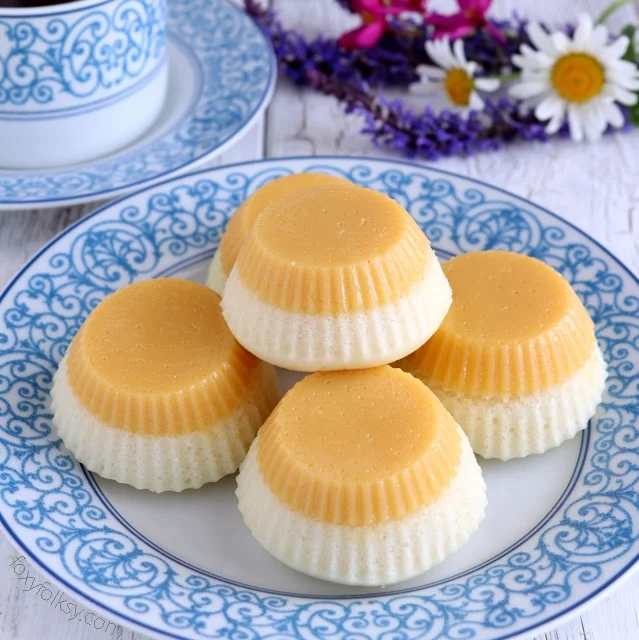
Puto flan layers soft, steamed Filipino puto with a rich leche flan-style custard. It’s a two-in-one dessert for when you want a tender, lightly sweet cake and creamy topping in each bite.
Ingredients
- For greasingMelted butter
- 4Egg yolks
- 180 ml (¾ cup)Sweetened condensed milk
- 1 tablespoonVanilla extract
- 2Egg whites
- 120 ml (½ cup)Fresh milk
- 125 g (1 cup)Plain flour
- 100 g (½ cup)Sugar
- ½ tablespoonBaking powder
Instructions
- 1
Grease the moulds
Brush the moulds with melted butter.
- 2
Mix the custard
In a bowl, whisk the egg yolks, sweetened condensed milk and vanilla extract until evenly combined.
- 3
Steam the custard
Pour custard into each mould until it reaches about one-third of the way up. Steam for 5 minutes.
- 4
Make the puto batter
Meanwhile, beat the egg whites with an electric mixer until soft peaks form. Keep beating as you add the fresh milk, then add the flour, sugar and baking powder. Beat for another minute or two.
- 5
Top and steam
Pour puto batter over the steamed custard until each mould is about three-quarters full. Steam for another 10–12 minutes, or until a toothpick inserted into the batter comes out clean.
- 6
Cool and unmould
Let the puto flan cool slightly before removing it from the moulds.
What is puto flan?
Puto flan brings together two familiar Filipino sweets: puto, a steamed rice or flour cake, and leche flan, a smooth egg custard. This version layers a condensed-milk custard beneath a soft, flour-based puto topping.
Steaming the custard first helps keep the layers distinct, while the brief second steaming cooks the batter without drying out the dessert.
Nutrition and macros by portion
The nutrition label shows one serving as written: 163 calories, 4g protein, 27g carbs, 3g fat.
| Portion | Adjustment | kcal | Protein | Carbs | Fat |
|---|---|---|---|---|---|
| Lighter | Serve a smaller piece | 114 kcal | 3g | 19g | 2g |
| This serving | As written | 163 kcal | 4g | 27g | 3g |
| Hungry | Serve a larger piece | 245 kcal | 6g | 41g | 5g |
The flour and sugar provide most of the carbohydrates, while the condensed milk and egg yolks contribute fat and some protein. The eggs and milk also add protein; serve a piece with fruit or alongside a meal with a protein-rich component for a more balanced plate.
The custard layer
Egg yolks: they give the condensed-milk mixture its rich, delicate set. Whisk until the ingredients are blended, but there is no need to whip the mixture airy.
Moulds: fill each one only about a third full with custard. That leaves room for the puto layer while keeping the finished dessert within the three-quarter fill mark.
Getting soft peaks
Egg whites: beat them until the peaks hold their shape softly but still curl over. This gives the puto batter some lift.
Milk: add it gradually while beating, as directed, then mix in the dry ingredients for just a minute or two. Stop once the batter is combined rather than continuing to beat it.
Steaming the two layers
First steam: give the custard its full 5 minutes before adding the puto batter. This helps it begin to set so the topping can sit above it.
Second steam: cook for 10–12 minutes and check the puto with a toothpick. A clean pick indicates the cake layer is cooked; avoid relying on colour alone.
Filling and unmoulding
Leave a little space at the top of each mould by filling it only about three-quarters full after adding the batter. This gives the puto room to cook without overflowing.
Let the desserts cool slightly before turning them out. If one resists, give it a little more time to cool rather than pulling at the delicate custard layer.
Serving ideas
Serve the puto flan once it has cooled enough to unmould, either as a small dessert after a meal or alongside coffee or tea.
For a more balanced plate, pair one with fresh fruit. Its tartness can offset the sweetness of the condensed-milk custard.
Recipe notes & tips
- Grease the moulds thoroughly so the custard edges are less likely to stick.
- Use an electric mixer to beat the egg whites to soft peaks before adding the milk.
- Fill moulds consistently so the layers cook in roughly the same time.
- Keep the puto batter layer below the three-quarter mark in each mould.
- Start checking for doneness at 10 minutes during the second steaming.
Variations
- Citrus note: Add a little finely grated citrus zest to the custard mixture for a fresh aroma.
- Pandan aroma: Replace the vanilla with pandan extract for a different Filipino-inspired flavour.
- Coconut milk: Use coconut milk in place of fresh milk for a coconut-scented puto layer.
- Mini moulds: Divide the mixture among smaller moulds and check for doneness earlier.
- Caramel finish: Add a thin layer of caramel to the moulds before the custard for a more flan-like finish.
Common mistakes to avoid
- Overfilling the moulds: The batter needs room to rise, so stop at about three-quarters full.
- Skipping the first steam: Steam the custard for 5 minutes before adding the puto batter to help keep the layers defined.
- Underbeating the whites: Beat until soft peaks form so the puto batter has some lift.
- Overmixing the batter: Stop after a minute or two once the flour mixture is combined.
- Unmoulding too soon: Let the desserts cool slightly first, which helps the delicate layers release more neatly.
How to store
Refrigerate leftovers in a covered container and eat within 3 days. Serve chilled or warm gently until just heated through; avoid prolonged heating, which can make the custard firm.
Frequently asked questions
Can I make puto flan without an electric mixer?
Yes, you can beat the egg whites by hand with a whisk, though it takes more effort. Stop when soft peaks form.
How do I know when the puto layer is cooked?
Insert a toothpick into the puto layer; it should come out clean. Begin checking at the 10-minute mark of the second steaming.
Why are the custard and puto layers mixing?
The custard may need its full 5-minute first steam before you add the batter. Pour the batter gently over the top.
Can I prepare these ahead?
Yes. Steam them, let them cool, then cover and refrigerate. Unmould before serving or warm them gently if you prefer.
Do I need to serve puto flan warm?
No. It can be served chilled or at room temperature after cooling, depending on your preference.
Cook it from the original
This recipe comes from foxyfolksy.com. Their page has the author’s own photos, notes and tips — the best place to cook it from.
Open the recipe on foxyfolksy.com