
Dalia Upma Recipe
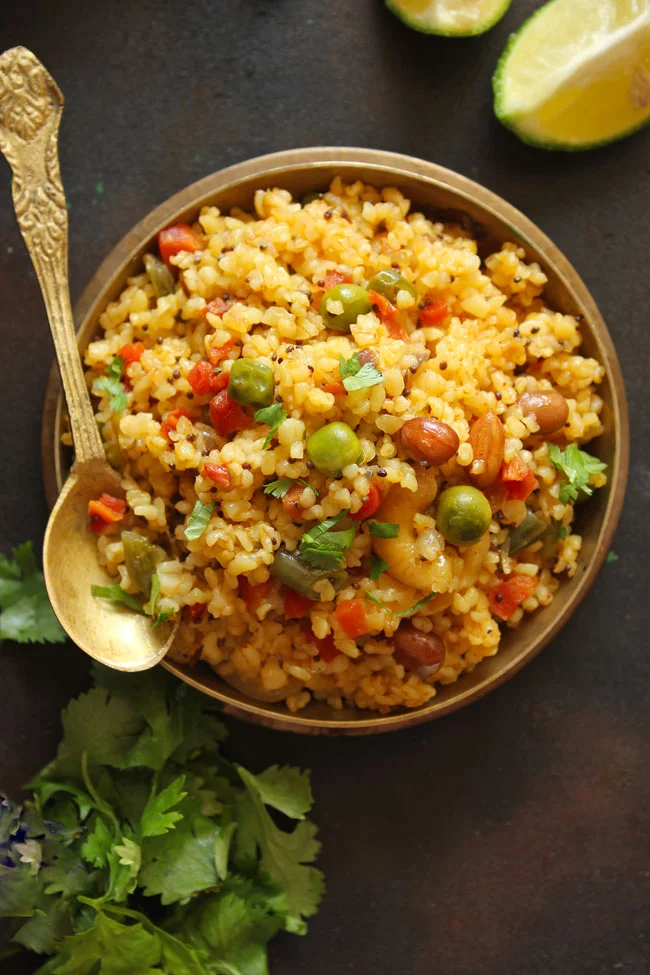
Dalia upma is a savoury Indian porridge made with broken wheat, vegetables, spices and a bright squeeze of lemon. This pressure-cooker version makes a hearty breakfast in about 30 minutes, with a quick dry-roast to bring out the wheat’s aroma.
Ingredients
- 150 g (1 cup)dalia (broken wheat)
- 150 g (1 cup)finely chopped onion
- 35 g (1/4 cup)green peas (matar)
- 30 g (1/4 cup)finely chopped carrot
- 30 g (1/4 cup)finely chopped green beans
- 1 tablespoonpeanuts
- 1 tablespoonsliced cashews
- 1–2green chillies, chopped
- to tastesalt
- 1 teaspoonmustard seeds (rai)
- 1 teaspooncumin seeds (jeera)
- 1 teaspoonred chilli powder
- 1/2 teaspoonturmeric powder
- Juice of 1lemon
- 2 tablespoonscooking oil
- 360 ml (1.5 cups)water
- to tastefresh coriander, chopped
Instructions
- 1
Toast the wheat
Dry-roast the dalia over a low heat for 3–5 minutes, until aromatic and light brown. Transfer it to a plate and set aside.
- 2
Heat the oil
Heat the oil in a pressure cooker over a medium heat.
- 3
Fry the spices
When the oil is hot, add the mustard and cumin seeds. Once they begin to crackle, add the peanuts and cashews and fry for 10–20 seconds.
- 4
Cook the onion
Add the chopped onion and green chilli. Sauté over a medium heat until the onion turns light brown.
- 5
Sauté the vegetables
Add the vegetables and sauté for 3–5 minutes.
- 6
Season the mixture
Add the toasted broken wheat to the vegetables. Season with salt, red chilli powder and turmeric, then stir so the seasoning is evenly distributed.
- 7
Pressure-cook the upma
Pour in the water, stir once and close the pressure cooker with its lid. Fit the weight and cook over a medium heat until you hear two whistles, then turn off the hob.
- 8
Release the pressure
Let the pressure release naturally. Once the steam has escaped, remove the lid and gently fluff the upma with a fork.
- 9
Add lemon and coriander
Drizzle over the lemon juice and add freshly chopped coriander. Mix gently.
- 10
Serve warm
Serve the dalia upma warm for breakfast with mint chutney.
What is dalia upma?
Upma is a savoury South Indian breakfast dish traditionally cooked as a soft, seasoned grain porridge. This version uses dalia, or broken wheat, with vegetables, spices and nuts.
The pressure cooker softens the wheat and vegetables together, while dry-roasting the dalia first adds a toasty aroma. Lemon and fresh coriander finish the dish with freshness.
Nutrition and macros by portion
The nutrition label shows one serving as written: 249 calories, 7g protein, 37g carbs, 10g fat.
| Portion | Adjustment | kcal | Protein | Carbs | Fat |
|---|---|---|---|---|---|
| Lighter | Use less cooking oil | 174 kcal | 5g | 26g | 7g |
| This serving | As written | 249 kcal | 7g | 37g | 10g |
| Hungry | Serve a larger portion | 374 kcal | 11g | 56g | 15g |
The broken wheat supplies most of the carbohydrates, while the cooking oil, peanuts and cashews contribute much of the fat. Broken wheat, peas and nuts provide some protein, with the vegetables adding variety to the plate. Pair a serving with plain yoghurt or fruit if you want a more rounded breakfast.
Why roast the dalia first?
Dry roasting gives the broken wheat a lightly nutty flavour and helps it cook evenly. Keep the heat low and stir as it roasts so the small pieces colour without scorching.
Look for a light-brown shade and a toasted aroma after 3–5 minutes. Tip it onto a plate promptly, since it can keep browning in a hot pan.
Build flavour in the cooker
Crackle the mustard and cumin seeds in hot oil before adding the nuts. The brief frying gives the nuts a little colour and lets their flavour mingle with the seasoned oil.
Cook the onion until lightly brown before adding the vegetables. This gives the base time to soften and develop flavour before the wheat goes in.
Get the texture right
Cut the carrot and green beans into small, even pieces so they cook through alongside the peas. Sauté them for the full 3–5 minutes before adding the water.
After two whistles, allow the cooker to release pressure naturally, as directed. Fluff gently with a fork once open; stirring vigorously can make the soft wheat clump.
Finish with lemon
Add the lemon juice and coriander after cooking rather than before pressure-cooking. Their fresh flavours stand out more clearly when stirred through at the end.
Taste after adding the lemon and adjust the salt if needed. Serve soon after fluffing for the soft, porridge-like texture.
Serving ideas
Mint chutney is the suggested accompaniment and adds a cool, herby contrast. Serve it alongside the upma rather than mixing it into the cooker.
For a fuller breakfast plate, pair a portion with plain yoghurt or sliced fruit. Keep the accompaniments separate so the upma’s lemon and spice remain distinct.
Recipe notes & tips
- Chop the vegetables into small, similar-sized pieces so they cook at a similar pace.
- Keep the dalia moving as it roasts to prevent the grains from scorching.
- Wait for the mustard and cumin seeds to crackle before adding the nuts.
- Use the cooker’s two whistles as the cooking cue, then let the pressure release naturally.
- Add the lemon juice and coriander only after pressure-cooking.
- Fluff with a fork rather than stirring hard to keep the cooked wheat light.
Variations
- Add ginger: Stir a little finely chopped ginger in with the onion and green chilli.
- Adjust the heat: Use one green chilli for a milder bowl or two for more warmth.
- Change the vegetables: Swap in other finely chopped vegetables while keeping the pieces small.
- Make it nut-free: Leave out the peanuts and cashews.
- Boost the lemon: Serve with extra lemon wedges for a sharper finish.
Common mistakes to avoid
- Scorching the dalia: Roast over a low heat and stir until it is only lightly brown.
- Adding nuts too early: Fry them only after the seeds crackle, for 10–20 seconds.
- Large vegetable pieces: Chop them finely so they soften during the short sauté and pressure-cooking.
- Releasing pressure manually: Let the cooker release steam on its own as the method directs.
- Mashing the upma: Fluff gently with a fork instead of stirring vigorously.
- Cooking the fresh finish: Add lemon juice and coriander after opening the cooker.
How to store
Cool leftovers promptly and store in an airtight container in the fridge for up to 3 days. Reheat until piping hot in a pan or microwave, adding a small splash of water if the upma has thickened.
Frequently asked questions
What is dalia?
Dalia is broken wheat, also called cracked wheat. It is made from wheat grains broken into smaller pieces.
Can I make this without a pressure cooker?
This method is written for a pressure cooker, so cooking times and liquid needs may differ in a saucepan. Use a method suited to your pan and cook until the wheat and vegetables are tender.
How do I know when the dalia is roasted?
It should smell toasted and look lightly brown after 3–5 minutes over low heat. Take it off the heat before it darkens or smells burnt.
Can I prepare the vegetables in advance?
Yes. Chop them ahead and keep them covered in the fridge until you are ready to cook.
Why is my upma too thick?
The wheat can thicken as it stands. Stir in a little water while reheating, then fluff gently.
What can I serve with dalia upma?
Mint chutney is the suggested accompaniment. Plain yoghurt or fresh fruit also works alongside it.
Cook it from the original
This recipe comes from funfoodfrolic.com. Their page has the author’s own photos, notes and tips — the best place to cook it from.
Open the recipe on funfoodfrolic.com