
Vietnamese Broken Rice (Cơm Tấm Chay)
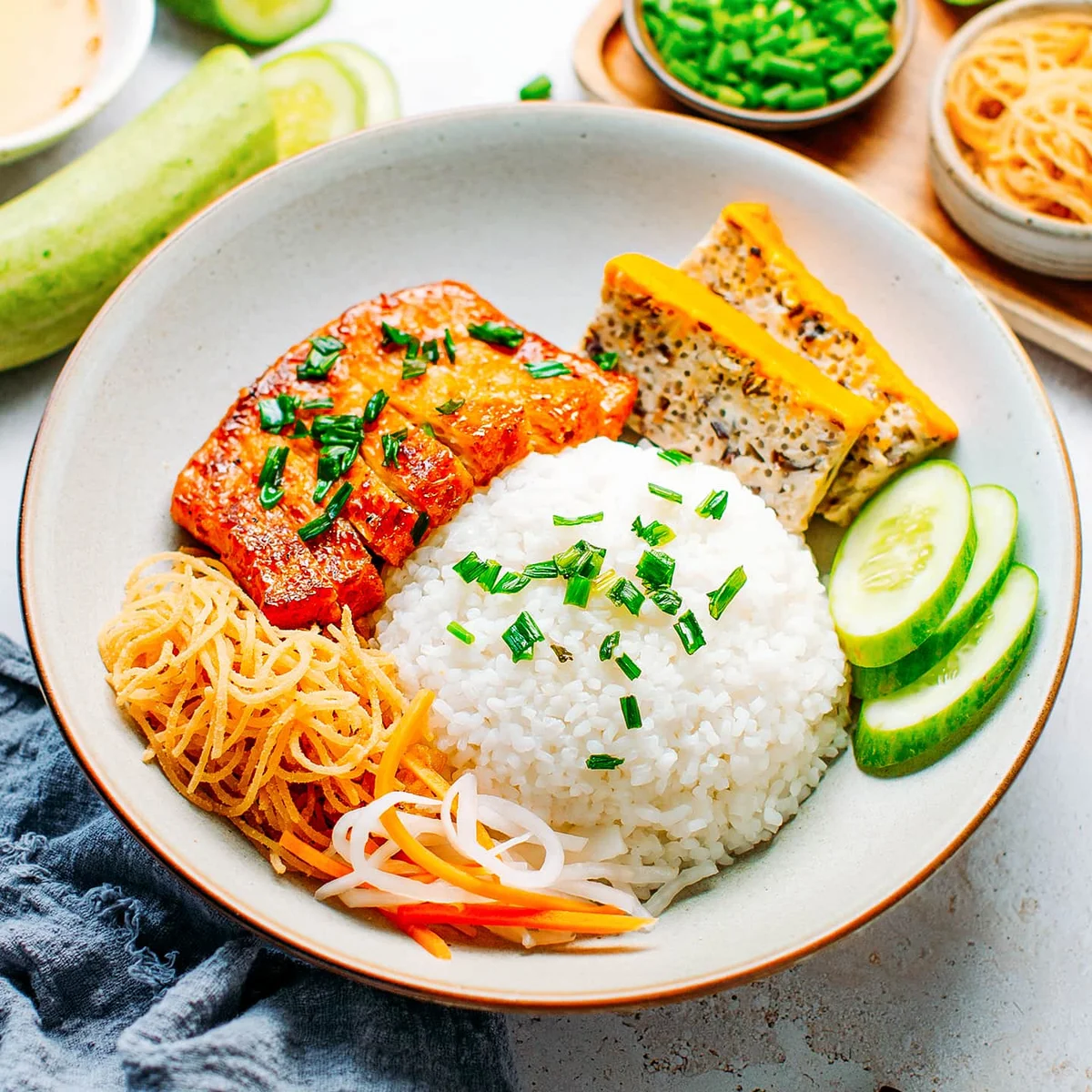
Vietnamese broken rice is served here with char siu-style vegan ribs, tofu loaf, vermicelli “pork skin”, pickles and cucumber. It makes a hearty, varied plate with savoury, sweet and crunchy elements alongside tender rice.
Ingredients
- 43 g (1.5 oz)dried vermicelli noodles (also called glass noodles)
- 5 ml (1 tsp)soy sauce
- 2.5 ml (1/2 tsp)sugar
- 30 g (1/4 cup)roasted rice powder
- 0.6 ml (1/8 tsp)ground black pepper
- 3large TVP slices
- 60 ml (1/4 cup)oil
- 1/2shallot, minced
- 15 ml (1 tbsp)char siu sauce
- 2.5 ml (1/2 tsp)soy sauce
- 1.25 ml (1/4 tsp)sugar
- 30 ml (2 tbsp)water
- 45 ml (3 tbsp)vegan fish sauce
- 135 ml (9 tbsp)water
- 45 ml (3 tbsp)sugar
- 2 clovesgarlic, minced
- 1 smallThai chilli, finely chopped
- 1Vietnamese tofu loaf
- 120 ml (1/2 cup)Vietnamese pickles
- 1/2cucumber, sliced
- 15 g (1/4 cup), plus 15 ml (1 tbsp) oilchopped spring onions, sautéed
- about 140 g (3/4 cup)uncooked broken rice
- 180 ml (3/4 cup)water
Instructions
- 1
Prepare components
Start by preparing the pickles, tofu loaf and char siu ribs.
- 2
Soak the noodles
Put the noodles in a bowl, cover with boiling water and leave for 7–10 minutes, until tender. Rinse under cold water, then drain for 2–3 minutes; they need to be well drained.
- 3
Season the noodles
Transfer the drained noodles to a mixing bowl and stir in the soy sauce and sugar. Add the roasted rice powder and black pepper and mix until coated. If the noodles still look sticky, add more rice powder, then set aside.
- 4
Soak the TVP
Cover the dried TVP slices with boiling water in a large bowl. Soak for at least 20 minutes, until tender; depending on the brand, this may take up to 1 hour. If the slices float, weigh them down with a smaller plate.
- 5
Drain the TVP
Drain the slices, rinse them a couple of times and squeeze out as much water as possible.
- 6
Fry the slices
Heat the oil in a deep saucepan over medium heat. When hot, fry the TVP until golden on both sides, about 3 minutes, turning halfway through. Transfer to a plate lined with kitchen paper to absorb excess oil.
- 7
Make the sauce
Heat 1 tablespoon of oil in a non-stick frying pan. Add the minced shallot and fry for 1–2 minutes, then stir in the char siu sauce, sweet chilli sauce, soy sauce and sugar.
- 8
Coat the slices
Add the fried TVP and water, stirring to coat the slices. Cook for a further 2–3 minutes, until almost all the water has evaporated.
- 9
Cut the ribs
Take the pan off the heat. Use scissors to cut each slice into thinner strips, leaving about 1/2 inch attached at one side so the strips stay joined.
- 10
Mix the dressing
Stir the vegan fish sauce, water, sugar, garlic and chilli, if using, together in a bowl until the sugar dissolves. Set aside.
- 11
Cook the rice
Rinse the broken rice under cold water and drain. Put it in a saucepan with the water and a pinch of salt, then bring to the boil over medium heat. Cover and simmer over low-medium heat for 15–17 minutes, until tender, adding a little more water if needed. Leave covered for 5–7 minutes, then fluff with a fork.
- 12
Assemble the plates
Divide the broken rice between plates. Arrange a piece of vegan rib, a couple of slices of tofu loaf and some vegan “pork skin” beside the rice. Add pickles and cucumber, then drizzle each serving with 3–4 tablespoons of the dressing.
What is Vietnamese broken rice?
Cơm tấm, or broken rice, is a Vietnamese rice dish traditionally built around grains of rice broken during milling. It is often served with several accompaniments, so each plate brings together different textures and flavours.
This chay, or vegetarian-style, version pairs the rice with plant-based char siu-style ribs, tofu loaf, pickles, cucumber and vermicelli coated in roasted rice powder. The mix of savoury toppings, fresh crunch and sweet-savoury dressing makes it a substantial meal.
Nutrition and macros by portion
The nutrition label shows one serving as written: 550 calories, 22g protein, 77g carbs, 19g fat.
| Portion | Adjustment | kcal | Protein | Carbs | Fat |
|---|---|---|---|---|---|
| Lighter | Use less frying oil | 385 kcal | 15g | 54g | 13g |
| This serving | As written | 550 kcal | 22g | 77g | 19g |
| Hungry | Add more broken rice | 825 kcal | 33g | 116g | 29g |
The broken rice and vermicelli supply much of the carbohydrate, while the oil used for frying and the spring onion garnish contributes most of the fat. TVP and tofu loaf provide the main protein, with additional sugar in the dressing and sauces. For a plate with more freshness, serve a generous share of cucumber and pickles alongside the rice and toppings.
The noodle “pork skin”
Drain the softened noodles thoroughly before seasoning them. Excess water can make the roasted rice powder clump rather than coat the strands.
The powder gives the noodles a dry, slightly grainy coating intended to evoke the texture of pork skin. Add more only if the noodles still look sticky after mixing.
Getting the TVP tender
Large TVP slices need a thorough soak before frying; the time depends on the product, so use tenderness rather than the clock alone as your cue. If they float, a small plate helps keep them submerged.
Squeeze out water after rinsing so the slices can brown in the hot oil. Handle them carefully when frying, and let kitchen paper catch excess oil before they go into the sauce.
Building the char siu flavour
Fry the shallot briefly before adding the sauces and sugar; this gives it a moment to soften and perfume the pan. Stir the TVP through the sauce so its surfaces are coated.
Cook until very little liquid remains, rather than letting the slices sit in a pool of sauce. That helps the coating cling and keeps the ribs easier to arrange on the plate.
Cooking broken rice
Rinsing removes loose starch from the rice before it goes into the pan. Once it reaches a boil, cover it and keep the heat low enough for a gentle simmer.
Check near the end of the 15–17-minute cooking time: the grains should be tender, with no hard centre. If the pan looks dry before the rice is ready, add a little water; the covered rest then lets the rice settle before fluffing.
A balanced plate of toppings
Arrange each topping alongside the rice rather than mixing everything together straight away. This keeps the tofu loaf, cucumber and pickles distinct and lets diners choose a little of each with every bite.
The pickles and cucumber bring a sharp, fresh contrast to the richer fried TVP and sweet dressing. Spoon the sauce over the plate just before eating so the crunchy elements stay lively.
Serving and timing
The recipe gives a total time of 80 minutes, including preparation of the pickles, tofu loaf and char siu ribs. If those components are already prepared, focus on cooking the rice and finishing the TVP and noodles.
Serve the rice hot with the other components arranged beside it. Keep extra dressing at the table for anyone who wants more.
Recipe notes & tips
- Soak the TVP until tender all the way through, extending the soak if the slices are still firm.
- Drain and squeeze the noodles and TVP well before seasoning or frying.
- Turn the TVP slices halfway through frying so both sides brown.
- Use the tenderness of the rice as the final cue, since pans and rice varieties can differ.
- Keep the sauce separate until serving if you want the fresh toppings to retain their crunch.
Variations
- Extra fresh veg: Add more sliced cucumber alongside the pickles.
- More chilli: Increase the chopped Thai chilli in the dressing to suit your preference.
- Milder dressing: Leave out the Thai chilli.
- Noodle texture: Add roasted rice powder gradually until the vermicelli is coated without clumping.
- Rice alternative: Serve the same toppings over another cooked rice if broken rice is unavailable.
Common mistakes to avoid
- Underdone TVP: Soak longer until tender before frying, as some brands need up to an hour.
- Wet noodles: Drain them thoroughly before adding the seasonings so the rice powder can coat them.
- Soggy TVP: Squeeze out the soaking water before frying and drain the fried slices on kitchen paper.
- Burnt sauce: Keep stirring after adding the sauces and sugar, and cook only until almost all the water has gone.
- Hard rice: Check for tenderness before turning off the heat and add a little water if the pan dries too soon.
How to store
Store leftover components separately in covered containers in the fridge and use within 3 days. Reheat the rice and TVP until hot, adding a splash of water to the rice if needed; keep the cucumber and pickles chilled and add them after reheating.
Frequently asked questions
Can I prepare the components ahead?
Yes. The recipe begins by preparing the pickles, tofu loaf and char siu ribs, so those components can be ready before you cook the rice and assemble the plates. Keep the dressing separate until serving.
How long should I soak the TVP?
Soak it for at least 20 minutes, and continue until tender. Depending on the brand and thickness, it may take up to 1 hour.
Can I leave the chilli out?
Yes. The method specifies the chilli as optional in the dressing, so you can omit it for a milder sauce.
What if my noodles are still sticky?
Make sure they are well drained, then add a little more roasted rice powder until the strands are coated. The method also suggests adding more powder if they still appear sticky.
How do I know the broken rice is cooked?
It should be tender after 15–17 minutes of covered simmering. If it is still firm and the pan looks dry, add a little more water and continue cooking.
What is the dressing for?
It is drizzled over the assembled rice and toppings. The recipe suggests 3–4 tablespoons per plate.
Cook it from the original
This recipe comes from fullofplants.com. Their page has the author’s own photos, notes and tips — the best place to cook it from.
Open the recipe on fullofplants.com