
Chicken Pad Thai Recipe
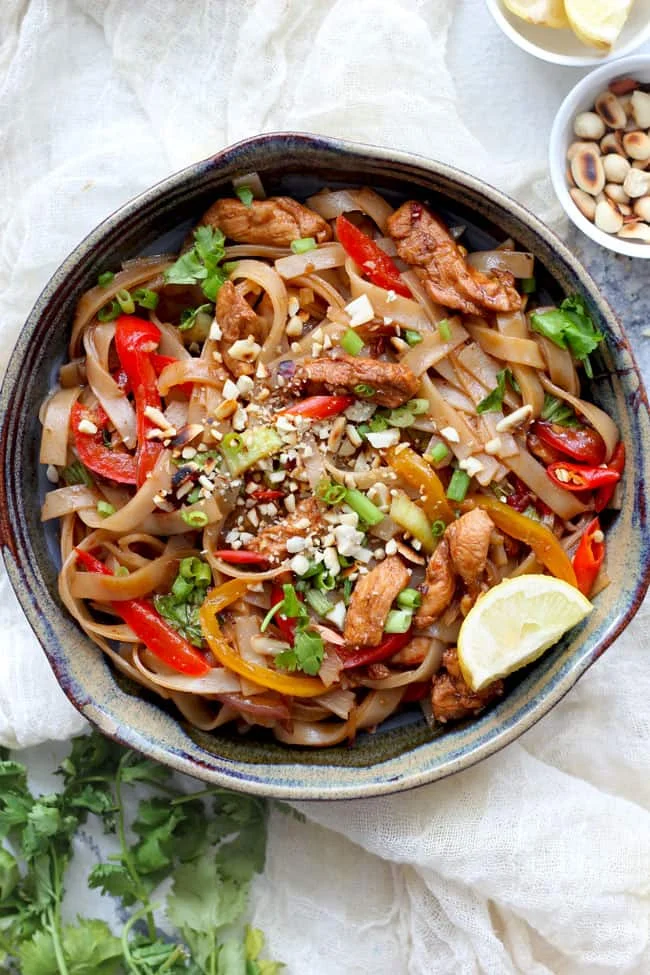
Chicken Pad Thai combines flat rice noodles with chicken, egg, vegetables, a tangy tamarind sauce and crunchy peanuts. This version is a colourful stir-fry for two, with the noodles softened before they meet the hot wok.
Ingredients
- 500 gflat rice noodles
- 60 ml (4 tablespoons)sesame oil
- 15 ml (1 tablespoon)chopped garlic
- 75 g (½ cup)shallots, thinly sliced
- 200 gboneless chicken, cut into thin strips
- 1egg
- 75 g (½ cup)red pepper, cut into thin strips
- to tastesalt
- 2.5 ml (½ teaspoon)white pepper
- 15 ml (1 tablespoon)brown sugar
- 30 ml (2 tablespoons)tamarind pulp or paste
- 15 ml (1 tablespoon)light soy sauce
- 15 ml (1 tablespoon)oyster sauce
- 15 ml (1 tablespoon)rice vinegar
- 15 ml (1 tablespoon)red chilli sauce
- 30 ml (2 tablespoons)roasted peanuts, crushed
- a fewlemon wedges
- 30 ml (2 tablespoons)chopped spring onion greens
- 30 ml (2 tablespoons)mung bean sprouts
- 60 ml (¼ cup)Thai basil leaves
Instructions
- 1
Soak the noodles
Put the rice noodles in a large, shallow bowl and pour over boiling water. Cover for 5 minutes, gently loosen and soak them in the water, then cover again for exactly 5 minutes.
- 2
Drain the noodles
Transfer the softened noodles to a colander and drain well. Rinse gently under cold running water.
- 3
Mix the sauce
Whisk the tamarind, light soy sauce, oyster sauce, rice vinegar, red chilli sauce and brown sugar together in a bowl until combined. Set aside.
- 4
Prepare the egg
Whisk the egg in a small bowl and keep it beside the cooking area.
- 5
Marinate the chicken
Mix the chicken with 30 ml (2 tablespoons) of the Pad Thai sauce. Leave it to marinate for 10 minutes.
- 6
Fry the aromatics
Heat the sesame oil in a wok or stir-fry pan. Add the garlic and shallots and stir-fry for 40–50 seconds.
- 7
Cook the chicken
Add the marinated chicken, brown sugar and salt. Stir-fry for 2–3 minutes, until the chicken is tender and pale.
- 8
Add the vegetables
Add the red pepper and Thai basil leaves and stir-fry for 1 minute. Push the chicken and vegetables to one side of the pan.
- 9
Scramble the egg
Pour the whisked egg into the clear side of the pan and scramble it.
- 10
Toss the noodles
Add the noodles, remaining Pad Thai sauce, mung bean sprouts and half the crushed peanuts. Gently toss over high heat, taking care not to break the noodles, and avoid cooking them for too long.
- 11
Serve the noodles
Transfer the Pad Thai to a serving bowl. Scatter over the remaining peanuts, spring onion greens and mung bean sprouts, and squeeze on lemon juice from the wedges. Serve warm.
What is chicken Pad Thai?
Pad Thai is a Thai stir-fried noodle dish, usually made with rice noodles and a balance of savoury, sweet and tart flavours. Despite the supplied cuisine label, this is a Thai-style recipe rather than a Chinese noodle dish.
This version combines chicken and egg with pepper, sprouts, basil and peanuts. Tamarind and sauces give the noodles their punchy coating, while lemon adds a fresh finish.
Nutrition and macros by portion
The nutrition label shows one serving as written: 1508 calories, 40g protein, 245g carbs, 39g fat.
| Portion | Adjustment | kcal | Protein | Carbs | Fat |
|---|---|---|---|---|---|
| Lighter | Use less sesame oil | 1056 kcal | 28g | 172g | 27g |
| This serving | As written | 1508 kcal | 40g | 245g | 39g |
| Hungry | Add a larger noodle portion | 2262 kcal | 60g | 368g | 59g |
The rice noodles and brown sugar provide most of the carbohydrates, while sesame oil and peanuts contribute much of the fat. Chicken, egg and peanuts supply protein, with the sauces also contributing sodium. To balance the plate, serve a generous side of fresh vegetables alongside the noodles.
Getting the noodles ready
Soaking: The recipe softens the noodles in boiling water in two covered five-minute stages. Follow the timings and check that the noodles are pliable before draining.
Rinsing: Drain thoroughly and rinse gently with cold water. This cools the noodles and helps keep them from continuing to soften before they go into the wok.
Building the sauce
Tamarind: Pulp or paste supplies the sauce's tart note, while brown sugar rounds it out. Whisk the sauce ingredients until the sugar is dispersed before setting it aside.
Seasoning: Light soy and oyster sauce bring savoury depth, and rice vinegar and chilli sauce contribute tang and heat. The recipe also adds brown sugar with the chicken, so keep that listed amount available for the pan.
Stir-frying in stages
Aromatics: Give the garlic and shallots 40–50 seconds in the hot oil to release their aroma without leaving them unattended.
Chicken and egg: Cook the chicken for 2–3 minutes, until tender and pale, then push it and the vegetables aside to scramble the egg in the same pan. This keeps the cooking sequence quick and uses the available space efficiently.
Keeping the noodles intact
Gentle tossing: Once the noodles go in, fold them through the sauce rather than stirring aggressively. Flat rice noodles can tear when handled roughly.
High heat: The final toss is brief and over high heat. Stop once the noodles are coated and hot; prolonged cooking can make them soft and prone to breaking.
Choosing toppings and sides
Crunch and freshness: Peanuts, mung bean sprouts and spring onion greens add texture and contrast to the sauced noodles. Reserve the stated portion of peanuts for the finish.
To serve: Bring the bowl to the table warm with lemon wedges for squeezing. A simple side of extra fresh vegetables can add variety without competing with the stir-fry.
Recipe notes & tips
- Measure the sauce ingredients before heating the wok so you can add them without pausing the stir-fry.
- Cut the chicken and pepper into thin strips so they cook quickly.
- Keep the drained noodles nearby and ready before you start cooking the chicken.
- Use a wide wok or stir-fry pan to make it easier to toss the noodles gently.
- Reserve half the peanuts and add them at the end for a crunchy topping.
- Serve as soon as the noodles are hot to avoid leaving them in the pan.
Variations
- More vegetables: Add extra pepper or sprouts, keeping the final toss brief.
- Extra heat: Increase the red chilli sauce to suit your preference.
- No chicken: Leave out the chicken and use the egg and vegetables as the main additions.
- Different herbs: Use extra spring onion greens if you do not have Thai basil.
- Nut-free finish: Omit the peanuts and serve with extra mung bean sprouts for crunch.
Common mistakes to avoid
- Over-soaking the noodles: They can turn too soft; follow the two five-minute covered soaks and drain them promptly.
- Crowding the pan: The ingredients may heat unevenly; use a roomy wok or stir-fry pan.
- Burning the aromatics: Garlic can darken quickly; stir it with the shallots and move on after 40–50 seconds.
- Overcooking the chicken: It can lose its tenderness; check it after the stated 2–3 minutes.
- Roughly stirring the noodles: They may break apart; fold and toss them gently.
- Cooking the finished noodles too long: They can become mushy; stop once coated and heated through.
How to store
Refrigerate leftovers in a covered container and eat within 2 days. Reheat in a pan over a medium heat with a small splash of water, tossing gently until piping hot; the noodles may soften further on reheating.
Frequently asked questions
Can I soak the noodles ahead of time?
You can soften and drain them ahead, then keep them covered until you are ready to stir-fry. Avoid leaving them submerged, as they may become too soft.
Can I use another type of rice noodle?
Yes, but choose a flat rice noodle if possible. Follow its packet instructions for soaking, since thickness and preparation can vary.
How can I tell when the chicken is cooked?
The method gives 2–3 minutes, until the strips look pale and feel tender. If checking with a food thermometer, ensure the thickest piece reaches 74°C.
Can I make the dish less spicy?
Use less red chilli sauce, or leave it out if you prefer a mild result. Taste the sauce before adding it to the pan.
What can I use instead of tamarind paste?
The recipe allows tamarind pulp or paste. If neither is available, the flavour will differ; a little extra rice vinegar can add tartness, but adjust cautiously.
Why are my noodles breaking?
They may be over-softened or stirred too forcefully. Drain them well, use a gentle folding motion and keep the final cooking brief.
Cook it from the original
This recipe comes from funfoodfrolic.com. Their page has the author’s own photos, notes and tips — the best place to cook it from.
Open the recipe on funfoodfrolic.com