
Pork Adobo Recipe
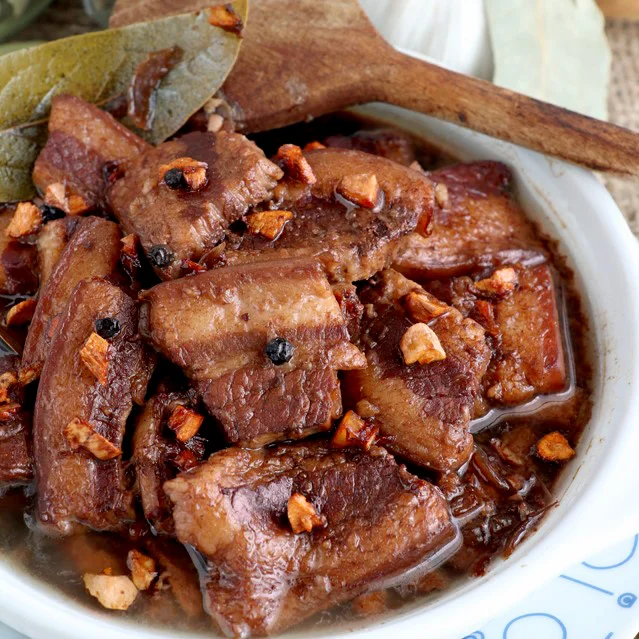
Pork adobo is a Filipino-style dish of tender pork simmered with soy sauce, vinegar, aromatics and bay leaves, then finished in a pan with browned garlic. The slow simmer builds savoury, tangy flavour, while reducing the sauce gives it a rich finish to serve with rice.
Ingredients
- 680 g (1½ lb)pork belly, cut into 2.5 × 2.5 cm or 2.5 × 5 cm cubes
- 80 ml (⅓ cup)dark soy sauce
- 120 ml (½ cup)vinegar
- 240 ml (1 cup)water
- 10–12peppercorns
- 3bay leaves
- 5 ml (1 teaspoon), optionalbrown sugar
- 1 largeonion, coarsely chopped
- 30 ml (2 tablespoons)oil
- 5 clovesgarlic, minced
Instructions
- 1
Combine ingredients
Put the pork belly in a pot. Add the soy sauce, vinegar, water, peppercorns, bay leaves, brown sugar if using, and onion. Bring to the boil over high heat.
- 2
Simmer the pork
Cover the pot and turn the heat to low. Cook for about 1 hour, or until the pork is very tender and the liquid has reduced by half. Lift the meat out and set it aside, keeping the sauce.
- 3
Brown the garlic
Heat the oil in a frying pan over medium-low heat and add the minced garlic. Cook until golden, then transfer most of the garlic to a small bowl, leaving about half in the pan.
- 4
Reduce the sauce
Return the pork to the frying pan and cook for 1–2 minutes. Pour in the reserved sauce and simmer for a few minutes, until it has reduced further and thickened.
- 5
Serve the adobo
Transfer the pork adobo to a serving dish and scatter the reserved browned garlic over the top. Serve with steaming hot rice.
What is pork adobo?
Adobo is a well-known Filipino way of cooking, with meat simmered in a mixture that commonly includes vinegar, soy sauce and aromatics. The vinegar brings tang, while the soy sauce gives the cooking liquid savoury depth.
This version uses pork belly, then separates the meat from the sauce before briefly frying it with garlic and simmering it in the reduced liquid. That final step concentrates the flavour and adds a fragrant, browned-garlic finish.
Nutrition and macros by portion
The nutrition label shows one serving as written: 782 calories, 14g protein, 4g carbs, 77g fat.
| Portion | Adjustment | kcal | Protein | Carbs | Fat |
|---|---|---|---|---|---|
| Lighter | Smaller pork portion | 547 kcal | 10g | 3g | 54g |
| This serving | As written | 782 kcal | 14g | 4g | 77g |
| Hungry | Serve with extra rice | 1173 kcal | 21g | 6g | 116g |
Pork belly supplies most of the energy and fat, while the small amount of soy sauce and aromatics contributes relatively little carbohydrate. There is only a modest amount of protein from the pork in the stated serving; rice adds further carbohydrates if served alongside. Balance the plate with a portion of vegetables and rice suited to your appetite.
Why pork belly works
Pork belly’s layers of meat and fat become tender during the covered simmer and give the sauce a rounded, rich quality. Cut the pieces to roughly the stated size so they cook at a similar rate.
Dark soy sauce provides the main savoury seasoning, while vinegar keeps the sauce lively. Brown sugar is optional; it adds a little sweetness to balance the sharpness.
The slow simmer
Low heat is important after the pot comes to the boil. Keep the lid on so the pork cooks gently in the liquid rather than drying out before it turns tender.
Tenderness is the key cue, with the liquid reduced to about half as described in the method. If the pork still feels firm, continue cooking gently until it softens.
Reducing the sauce
Separating the pork and sauce lets you brown the garlic without overcooking it in the long simmer. Cook it over medium-low heat and watch closely: garlic can go from golden to burnt quickly.
Once the sauce goes back into the pan, simmer it only until it thickens further. It should cling more readily to the pork, while still leaving enough sauce to spoon over the rice.
Serving with rice
Hot rice is a natural partner for this strongly flavoured, saucy pork and helps make a satisfying plate. Spoon some of the reduced sauce over the rice as well as the meat.
For a fresher contrast, serve with a simple side of steamed or lightly cooked vegetables. Keep the garlic topping for just before serving so its browned aroma remains noticeable.
Timing and preparation
The stated total time is 80 minutes, with about an hour allocated to the covered simmer. The remaining time allows for bringing the pot to the boil and finishing the pork in the frying pan.
Chop the onion and mince the garlic before heating the pot, so the ingredients are ready for the final stages. Use a pot and frying pan large enough to hold the pork without crowding.
Recipe notes & tips
- Cut the pork into evenly sized pieces so it simmers at a consistent pace.
- Keep the pot covered and the heat low during the long simmer.
- Reserve the cooking liquid when lifting out the pork; it is needed for the final reduction.
- Stir or watch the garlic closely as it browns, since minced garlic colours quickly.
- Taste the reduced sauce before serving and adjust the amount you spoon over the rice to suit your preference.
Variations
- Use another vinegar: Choose a mild vinegar if you prefer a less sharp-tasting sauce.
- Skip the sugar: Leave out the optional brown sugar for a more savoury, tangy finish.
- Add extra onion: Include more chopped onion in the initial simmer for a stronger onion presence.
- Adjust the garlic: Brown a little more minced garlic for a bolder topping.
- Serve with vegetables: Add steamed greens or another simple vegetable side for contrast.
Common mistakes to avoid
- Boiling hard throughout: Lower the heat after bringing the pot to the boil so the pork can simmer gently.
- Cutting uneven pieces: Aim for similarly sized cubes so some pieces do not become tender long before others.
- Burning the garlic: Use medium-low heat and remove it as soon as it turns golden.
- Discarding the liquid: Keep the sauce after removing the pork, as it forms the final coating.
- Reducing too far: Simmer only until the sauce thickens further; do not let it cook down until dry.
How to store
Cool leftovers promptly and store the pork and sauce in a covered container in the fridge for up to 3 days. Reheat gently in a pan until steaming hot, adding a splash of water if the sauce has become too thick.
Frequently asked questions
Can I make pork adobo ahead of time?
Yes. Cook it ahead and chill it in a covered container, then reheat gently with the sauce before serving. The browned garlic topping is best added just before serving.
How do I know when the pork is tender?
The pork should feel very soft when tested with a fork. If it is still firm after about an hour, keep simmering gently until tender.
Why is my sauce still thin?
Continue simmering it briefly after returning the pork to the pan, until it has reduced and thickened. Keep an eye on it so it does not reduce too far.
Can I leave out the brown sugar?
Yes. The recipe marks it as optional, so you can omit it for a less sweet, more directly savoury and tangy sauce.
What should I serve with pork adobo?
Serve it with steaming hot rice, as directed, and add a simple vegetable side if you like.
Cook it from the original
This recipe comes from foxyfolksy.com. Their page has the author’s own photos, notes and tips — the best place to cook it from.
Open the recipe on foxyfolksy.com