
Spanish Eggs
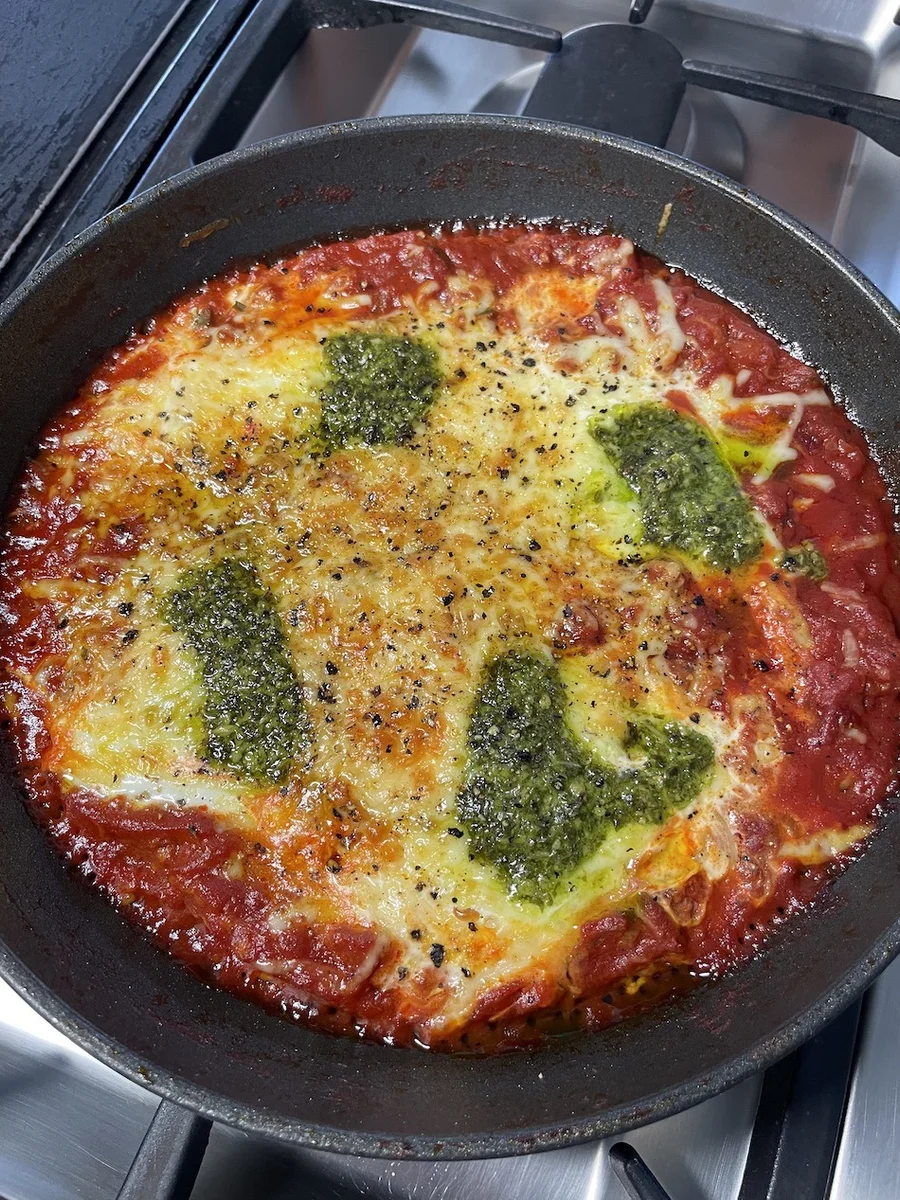
Spanish Eggs is a tomato-and-chorizo skillet with eggs cooked in little wells in the sauce, finished with cheese and pesto. It makes a cosy brunch or easy supper, all cooked in one pan.
Ingredients
- 30 mlolive oil
- 1 small onion or 4–5 spring onions, about 60–70 g, finely choppedonion or spring onions
- 2 cloves, finely choppedgarlic
- 2, choppedjalapeño peppers
- 5 mlsmoked paprika
- 15 mltomato paste
- 2Roma tomatoes, grated
- 1 tinchopped peeled tomatoes with chilli
- 10 cm, sliced 3 mm thick and halvedchorizo
- A sprinkledried oregano
- 4extra-large eggs
- A handfulcheese
- To garnishpesto
Instructions
- 1
Soften the onion
Heat the olive oil in a 20 cm frying pan over a medium heat. Add the onion or spring onions and cook until soft and translucent, taking care not to let them burn.
- 2
Cook the aromatics
Add the garlic and chopped jalapeños. Cook for 1 minute, stirring continuously.
- 3
Add the paprika
Add the seasoning and smoked paprika, and stir to coat the onion mixture.
- 4
Build the paste
Stir in the tomato paste and grated tomatoes. Cook until the mixture reduces to a thick paste.
- 5
Thicken the sauce
Add the tinned tomatoes and chorizo. Cook until the liquid has thickened and the onions are fully cooked, stirring as needed; this should take about 20 minutes. Sprinkle in the dried oregano for extra flavour. Set the oven to 200°C.
- 6
Add the eggs
When the sauce is thick and most of the liquid has evaporated, taste and check the seasoning. A pinch of sugar can help balance the tomatoes' acidity. Make four small wells with the back of a spoon and crack an egg into each. You can cook the eggs in the pan until they reach your preferred doneness. Add the cheese and a dollop of pesto on each egg to mark their positions for serving.
- 7
Melt or bake
Place the pan under the grill just long enough to melt the cheese. Alternatively, if the eggs have not been cooked in the pan, bake them in a preheated 180°C oven for about 15 minutes, checking for your preferred doneness.
What are Spanish eggs?
Spanish Eggs here means eggs cooked in a rich tomato sauce with chorizo, rather than one single fixed traditional recipe. The dish draws on familiar Spanish-style ingredients such as paprika and chorizo, served in a skillet for sharing.
This version builds flavour by reducing grated fresh tomatoes with tinned tomatoes, then cooking the eggs in the thickened sauce. Cheese and pesto add a savoury finish.
Nutrition and macros by portion
The nutrition label shows one serving as written: 590 calories, 30g protein, 20g carbs, 43g fat.
| Portion | Adjustment | kcal | Protein | Carbs | Fat |
|---|---|---|---|---|---|
| Lighter | Use less chorizo and cheese | 413 kcal | 21g | 14g | 30g |
| This serving | As written | 590 kcal | 30g | 20g | 43g |
| Hungry | Add bread for dipping | 885 kcal | 45g | 30g | 65g |
The eggs and chorizo supply most of the protein, while the tomatoes and any bread served alongside contribute carbohydrates. Olive oil, chorizo, cheese and pesto account for much of the fat. To balance the plate, serve a moderate portion with a green salad or extra vegetables.
Build the tomato base
Fresh tomatoes: Grating the Roma tomatoes gives the sauce a soft texture and helps them cook down with the tomato paste.
Tinned tomatoes: These provide most of the sauce, so allow time for their liquid to evaporate before adding the eggs.
Cook the chorizo gently
Chorizo: Slicing it thinly lets it warm through and season the tomato sauce as it simmers.
Paprika: Smoked paprika reinforces the smoky notes from the chorizo. Stir it into the softened onion mixture so it is distributed through the sauce.
Get the sauce consistency right
Reduce: Keep the sauce simmering until it is thick and most of the visible liquid has evaporated. A thinner sauce can make it harder to keep the eggs in their wells.
Check: Taste the sauce before adding the eggs. The recipe suggests a pinch of sugar if the tomatoes taste too sharp; add it gradually.
Cook the eggs to your liking
Wells: Make four small pockets in the sauce with the back of a spoon, then crack one egg into each. This keeps the eggs spaced apart and makes portions easier to serve.
Doneness: Keep cooking in the pan for a softer result, or use the oven method and check after about 15 minutes. Oven times can vary, so use the appearance of the eggs as your guide.
Serve straight from the pan
Finish: Melt the cheese briefly under the grill, or bake the eggs in the oven as directed. Add the pesto at the end so its flavour stays distinct.
Alongside: Serve with bread to scoop up the sauce, or add a simple green salad for a fresher contrast.
Recipe notes & tips
- Keep the onion over medium heat so it softens without browning or burning.
- Stir the garlic and jalapeño continuously during their brief cooking time.
- Let the tomato sauce reduce before making the wells for the eggs.
- Taste the sauce before the eggs go in, as seasoning is harder to adjust afterwards.
- Add the pesto after cooking so it remains visible on top.
- Use an oven-safe frying pan if you plan to transfer the dish from the hob to the oven.
Variations
- Adjust the heat: Use fewer jalapeños for a milder sauce.
- Change the cheese: Use a melting cheese you enjoy, grated or torn into small pieces.
- Add greens: Stir a handful of spinach into the hot sauce before making the egg wells.
- Skip the pesto: Finish with chopped herbs if you would rather leave it out.
- Make it meat-free: Leave out the chorizo and season the tomato sauce to taste.
Common mistakes to avoid
- Burnt onion: Keep the heat at medium and stir occasionally until the onion is soft.
- Thin sauce: Continue simmering until most of the liquid has evaporated before adding the eggs.
- Broken yolks: Crack each egg into a small cup first, then slide it gently into a well.
- Crowded eggs: Make four separate wells and space them across the pan.
- Overcooked eggs: Check the eggs frequently, especially if using the oven method.
- Unmelted cheese: Give the pan a brief turn under the grill, watching closely.
How to store
Cool leftovers promptly, transfer them to an airtight container and refrigerate for up to 2 days. Reheat gently in a covered pan until hot throughout; the eggs may cook further during reheating.
Frequently asked questions
Can I cook the eggs entirely on the hob?
Yes. The method allows you to cook them in the pan until they reach your preferred doneness, then add the cheese and pesto.
Can I bake the eggs instead?
Yes. The recipe suggests baking them in a preheated 180°C oven for about 15 minutes. Check their doneness as they cook.
Why does the sauce need to thicken first?
A thick sauce holds the eggs in their wells and is easier to serve. Simmer until most of the liquid has evaporated.
Can I use spring onions instead of an onion?
Yes. The ingredients specify either one small onion or 4–5 spring onions, about 60–70 g, finely chopped.
What should I serve with Spanish Eggs?
Bread works well for scooping up the sauce. A simple green salad is another useful accompaniment.
Is the pan safe to put in the oven?
Only transfer it to the oven if it is oven-safe. Otherwise, cook the eggs on the hob or transfer the sauce to an ovenproof dish first.
Cook it from the original
This recipe comes from freshkitchen.co.za. Their page has the author’s own photos, notes and tips — the best place to cook it from.
Open the recipe on freshkitchen.co.za