
Kairichi Kadhi Recipe
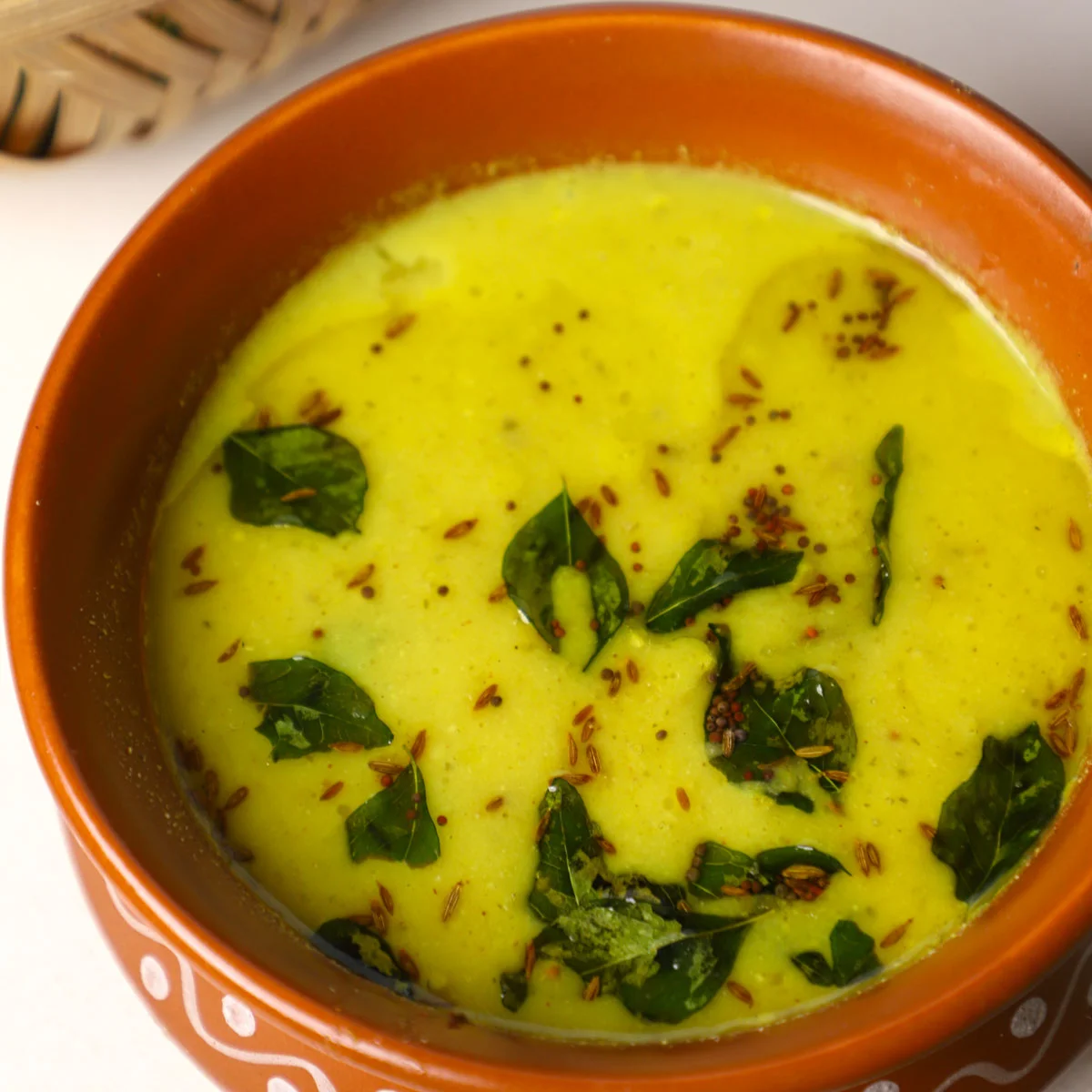
Kairichi kadhi is a Maharashtrian curry that brings together the tang of raw mango, coconut, spice and jaggery. Serve it warm with rice for a sweet-sour dish that is especially suited to green mango season.
Ingredients
- 1 mediumraw green mango (kairi)
- 40 ggrated coconut
- 1.3 cmginger, chopped
- 2 tablespoonsgram flour (besan)
- 2green chillies
- 1 handfulcoriander leaves
- 480 mlwater
- 2 tablespoonsjaggery powder
- 1/2 teaspoon or to tastesalt
- 1/4 teaspoonground turmeric
- 1 tablespoongroundnut oil
- 1/2 teaspoonmustard seeds
- 1/2 teaspooncumin seeds
- 1/4 teaspoonfenugreek seeds
- 1 pinchasafoetida
- 1 sprigcurry leaves
Instructions
- 1
Cook the mango
Wash and peel the mango, then pressure-cook it whole with a little water for 2 whistles. Let it cool, squeeze out the pulp and discard the stone. Blend or mash the pulp until smooth; aim for about 80–120 ml of puree.
- 2
Blend the paste
Blend the coconut, ginger, green chillies, gram flour and coriander leaves with 1–2 tablespoons of water to make a paste. Set it aside.
- 3
Temper the spices
Heat the groundnut oil or ghee in a deep pot. Add the mustard seeds and, once they crackle, add the cumin seeds, asafoetida, fenugreek seeds and turmeric.
- 4
Cook the paste
Add the green chillies and curry leaves and let them sizzle for a few seconds, until fragrant. Add the coconut mixture and sauté for 2–3 minutes.
- 5
Simmer the kadhi
Stir in the mango puree, salt and jaggery. Bring the mixture to a very gentle simmer over low heat, stirring constantly until it thickens slightly. Avoid a vigorous boil, which can cause the kadhi to curdle.
- 6
Garnish and serve
Finish with a generous handful of fresh coriander. Serve the kadhi warm with rice.
What is kairichi kadhi?
Kairichi kadhi is a Maharashtrian preparation built around kairi, or unripe green mango. Its flavour balances the fruit’s tartness with coconut, chilli and jaggery.
In this version, cooked mango pulp gives the sauce its sour edge, while a blended coconut and gram-flour paste adds body. It is served warm, commonly alongside rice.
Nutrition and macros by portion
The nutrition label shows one serving as written: 299 calories, 4g protein, 40g carbs, 15g fat.
| Portion | Adjustment | kcal | Protein | Carbs | Fat |
|---|---|---|---|---|---|
| Lighter | Use less jaggery | 209 kcal | 3g | 28g | 11g |
| This serving | As written | 299 kcal | 4g | 40g | 15g |
| Hungry | Serve with extra rice | 449 kcal | 6g | 60g | 23g |
The reported carbohydrates mainly come from the mango, jaggery and gram flour, while the coconut and groundnut oil contribute much of the fat. Protein is modest and comes largely from the gram flour and coconut. Serve it with a moderate portion of rice and add vegetables or a pulse dish to make the meal more rounded.
Choosing the mango
Green mango: Choose a firm, unripe mango that tastes distinctly tart rather than ripe and sweet. Its sharpness is what gives this kadhi its characteristic flavour.
Cooked pulp: Pressure-cooking softens the whole fruit so the flesh can be squeezed away from the stone. The recipe aims for about 80–120 ml of smooth puree.
Making a smooth paste
Coconut and gram flour: Blend these with the ginger, chillies and coriander into a paste. Add only the stated 1–2 tablespoons of water at first, so the mixture stays thick enough to give the kadhi body.
Blending: Scrape down the sides of the blender if needed, and keep going until there are no large pieces of coconut or ginger.
Getting the temper right
Mustard seeds: Let them crackle in the hot oil before adding the other spices; this signals that the tempering has started.
Fragrance: Add the cumin, asafoetida, fenugreek and turmeric after the mustard seeds. Keep the spices moving and add the curry leaves and chillies as directed so they sizzle briefly without scorching.
Keeping the texture silky
Gentle heat: Once the mango, salt and jaggery are in the pot, keep the kadhi at a very gentle simmer. A hard boil can make the coconut mixture separate or curdle.
Stirring: Stir continuously as it warms and thickens. Stop when it has thickened slightly; it should remain a spoonable sauce rather than become stiff.
Balancing the flavour
Sour and sweet: The mango supplies the tartness and jaggery softens it with sweetness. The result should taste balanced, not like a dessert or a sharply sour sauce.
Seasoning: Salt and chilli round out the flavour. Taste near the end and adjust the salt to suit, keeping the kadhi at a gentle heat.
Serving with rice
Rice: Serve the kadhi warm with rice, which readily soaks up its lightly thickened sauce. Add the fresh coriander garnish just before serving.
On the side: A simple vegetable dish or a crisp accompaniment can add contrast without competing with the mango, coconut and spice.
Recipe notes & tips
- Use a firm, tart green mango for the clearest sour flavour.
- Let the cooked mango cool before squeezing out the pulp.
- Blend the coconut paste thoroughly so the kadhi has a smoother texture.
- Keep the heat low after adding the mango puree and stir as it simmers.
- Taste the balance of sourness and sweetness before serving.
- Garnish with fresh coriander just before bringing the kadhi to the table.
Variations
- Adjust the sweetness: Add jaggery gradually if you prefer a less sweet, tangier kadhi.
- Change the heat: Use fewer green chillies for a milder flavour.
- Use ghee: Replace the groundnut oil with ghee for a different aromatic note.
- Make it smoother: Blend the cooked mango pulp well before adding it to the pot.
- Add a side: Serve with a vegetable dish or pulses alongside the rice.
Common mistakes to avoid
- Using ripe mango: It can make the kadhi too sweet; choose a firm, unripe fruit.
- Adding too much water to the paste: The sauce may turn thin; start with the stated 1–2 tablespoons.
- Scorching the spices: They can taste bitter; add them in sequence and keep the pan moving.
- Boiling vigorously: The kadhi may curdle; keep it at a gentle simmer over low heat.
- Stopping before it thickens: Give it time on low heat, stirring constantly until it thickens slightly.
How to store
Cool leftovers promptly, transfer them to a covered container and refrigerate for up to 2 days. Reheat gently in a saucepan over low heat, stirring; avoid bringing it to a vigorous boil.
Frequently asked questions
Can I make the mango puree ahead?
Yes. Cook the mango, cool it, remove the pulp and refrigerate the puree in a covered container until you are ready to make the kadhi.
How sour should the mango be?
Use an unripe mango with a clear tart flavour. The jaggery balances that sourness, so taste the kadhi as it simmers.
Why should the kadhi not boil hard?
A vigorous boil can cause the coconut mixture to split or curdle. Keep the heat low and stir as it thickens.
What should I serve with kairichi kadhi?
Rice is the suggested pairing and works well with the sauce. You can also add a simple vegetable dish or pulses.
Can I make it less sweet?
Use less jaggery, adding it gradually and tasting as you go. The mango should still provide the kadhi’s characteristic tartness.
Cook it from the original
This recipe comes from funfoodfrolic.com. Their page has the author’s own photos, notes and tips — the best place to cook it from.
Open the recipe on funfoodfrolic.com