
Rajasthani Kadhi Recipe
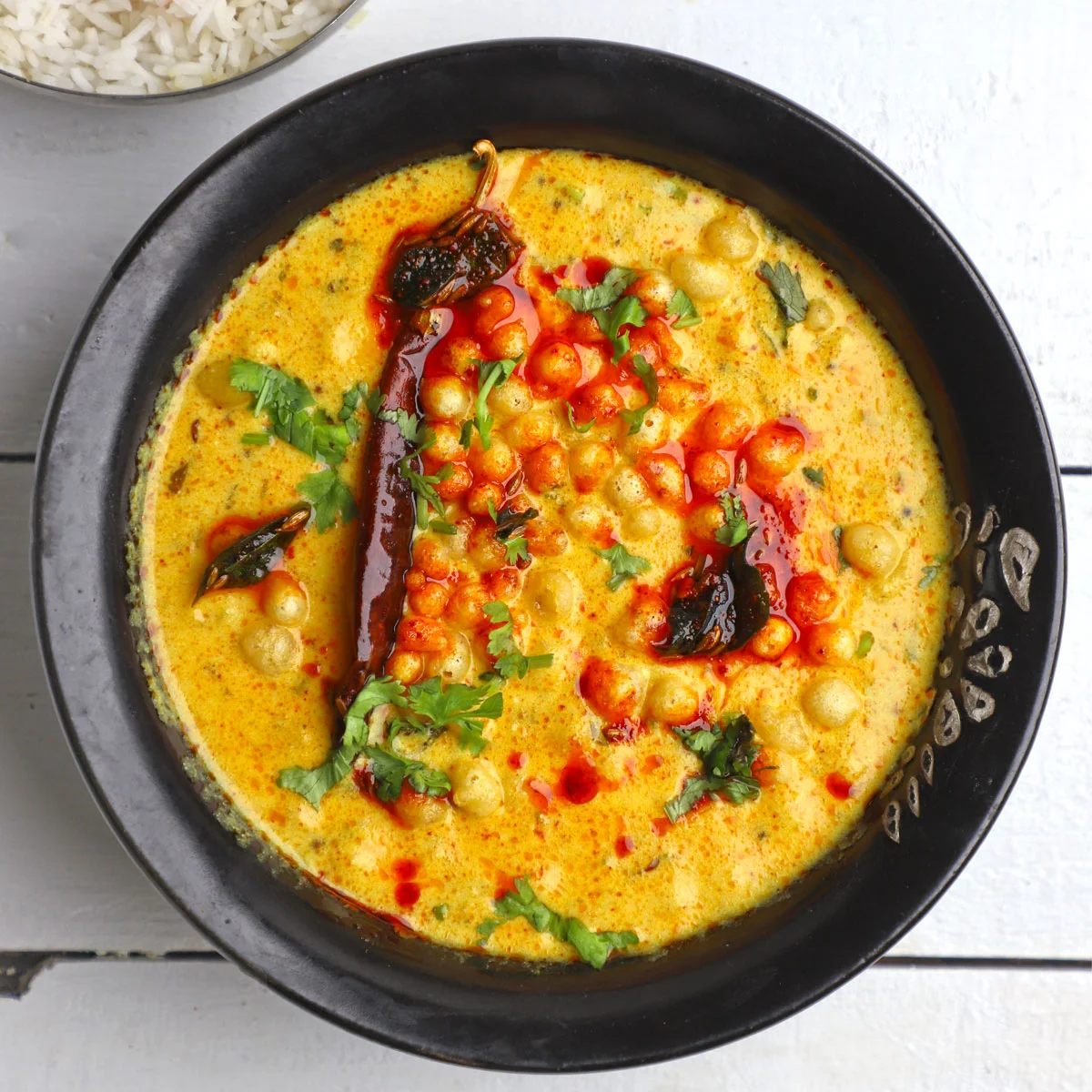
Rajasthani kadhi is a gently spiced yoghurt and gram flour curry, finished with boondi and a fragrant ghee tempering. This version skips pakora, onion and garlic, making it a straightforward dish to serve with rice and papad.
Ingredients
- 250 mlcurd or yoghurt
- 30 g (¼ cup)gram flour (besan)
- 1 teaspoonturmeric powder
- 1 teaspoonred chilli powder
- 1 teaspooncoriander powder
- 1 teaspooncumin powder (jeera powder)
- 30 ml (⅛ cup)refined oil
- 1 teaspoonmustard seeds (rai)
- 2 teaspoonscumin seeds (jeera)
- 1 teaspoonfenugreek seeds (methi dana)
- ¼ teaspoonhing (asafoetida)
- 2 tablespoonsginger and green chilli paste
- 500 mlwater
- 1 tablespoonkasuri methi (dried fenugreek leaves)
- 60 g (½ cup)boondi balls
- 2 tablespoonschopped coriander leaves
- 2 tablespoonsghee
- 2dried red chillies
- 1 teaspoonred chilli powder
- 2 tablespoonscurry leaves
- To tastesalt
Instructions
- 1
Whisk the yoghurt
Whisk the curd or yoghurt with the gram flour, turmeric, red chilli powder, coriander powder and cumin powder until smooth and lump-free. Add 1 cup (240 ml) water and whisk again until the mixture falls from a spoon in a steady stream.
- 2
Fry the spices
Heat the refined oil in a kadhai. Add the mustard seeds, cumin seeds, fenugreek seeds, hing and ginger and green chilli paste, then sauté for 50–60 seconds.
- 3
Simmer the kadhi
Stir in the whisked yoghurt mixture and the remaining 450 ml water. Bring to a simmer over low heat and cook for 20–25 minutes, seasoning with salt and stirring regularly.
- 4
Check the mixture
When the kadhi has thickened slightly and the raw smell of gram flour has gone, prepare the tadka.
- 5
Make the tadka
Heat the ghee in a small tadka pan. Add the curry leaves, dried red chillies and red chilli powder, cook for 20–30 seconds, then turn off the heat.
- 6
Finish the kadhi
Pour the tadka over the simmering kadhi. Add the kasuri methi, boondi and fresh coriander leaves, and stir to combine. Cover and simmer over low heat for 5 minutes.
- 7
Serve while hot
Serve the Rajasthani kadhi hot with rice and papad.
What is Rajasthani kadhi?
Kadhi is an Indian yoghurt and gram flour curry, with regional versions that vary in seasoning and texture. This Rajasthani-style version is made without pakora, onion or garlic, and is finished with boondi.
Yoghurt gives it a tangy base, while gram flour thickens the sauce as it simmers. A final ghee tadka adds a warm, aromatic finish.
Nutrition and macros by portion
The nutrition label shows one serving as written: 238 calories, 6g protein, 13g carbs, 18g fat.
| Portion | Adjustment | kcal | Protein | Carbs | Fat |
|---|---|---|---|---|---|
| Lighter | Use less oil and ghee | 167 kcal | 4g | 9g | 13g |
| This serving | As written | 238 kcal | 6g | 13g | 18g |
| Hungry | Serve with extra rice | 357 kcal | 9g | 20g | 27g |
The rice served alongside contributes most of the meal's carbohydrates, while the oil and ghee provide much of the fat. Yoghurt and gram flour contribute some protein, with boondi adding to the dish's energy. For a more balanced plate, serve a moderate portion with plenty of vegetables alongside.
Getting a smooth base
Yoghurt and flour: whisk them together with the powdered spices before adding water. A smooth paste at this stage helps prevent lumps in the finished kadhi.
Water: add the initial water gradually and whisk again before combining the mixture with the spiced oil. The method then calls for 450 ml more water; note that these stated amounts do not match the 500 ml listed in the ingredients.
Building the spice flavour
Whole spices: mustard, cumin and fenugreek seeds go into hot oil with hing and the ginger and green chilli paste. Their brief sauté gives the cooking base its savoury, fragrant character.
Tadka: curry leaves, dried chillies and chilli powder are heated briefly in ghee. Keep this to 20–30 seconds and switch off the heat so the spices do not scorch.
Simmering to the right texture
Low heat: let the kadhi simmer for 20–25 minutes, stirring at regular intervals. It should thicken a little, and the raw flour smell should fade.
Finish: after adding the boondi, kasuri methi and coriander, cover and simmer for 5 minutes. The boondi softens as it sits in the hot curry.
Choosing the yoghurt and boondi
Yoghurt: curd or plain yoghurt forms the tangy base. Whisk it thoroughly with the gram flour before heating to help the mixture stay even.
Boondi: add it near the end rather than at the start, so it has less time to soften in the simmering curry. Kasuri methi and fresh coriander bring their own distinct herbal notes.
Serving the meal
Rice: serve the hot kadhi with rice, as suggested in the recipe, to make a comforting meal. Papad adds a crisp contrast to the smooth sauce and soft boondi.
Timing: the kadhi is best served soon after its final covered simmer, while the tadka remains aromatic and the boondi has not softened too much.
Recipe notes & tips
- Whisk the yoghurt and gram flour until no dry pockets or lumps remain.
- Add the water to the yoghurt mixture gradually while whisking.
- Keep the kadhi at a low simmer and stir it regularly as it thickens.
- Prepare the ghee tadka near the end so its spices stay aromatic.
- Add the boondi only for the final covered simmer to control how soft it becomes.
- Serve promptly with rice and papad for a mix of soft and crisp textures.
Variations
- Adjust the heat: use less red chilli powder for a milder curry.
- Keep the boondi firmer: stir it in just before serving rather than simmering it for 5 minutes.
- Use plain yoghurt: choose an unsweetened yoghurt if curd is not available.
- Add more herbs: finish with extra chopped coriander leaves.
- Serve with flatbread: offer roti alongside, or instead of, rice.
Common mistakes to avoid
- Lumpy yoghurt mixture: whisk the gram flour and yoghurt thoroughly before adding water.
- Boiling too hard: keep the kadhi at a low simmer to avoid an uneven texture.
- Skipping the stirring: stir regularly during the 20–25-minute simmer so the mixture cooks evenly.
- Scorched tadka: cook the spices in ghee for only 20–30 seconds, then turn off the heat.
- Over-soft boondi: add it at the end and avoid extending the final 5-minute simmer.
How to store
Cool leftovers and refrigerate in a covered container for up to 3 days. Reheat gently in a saucepan, stirring; add a splash of water if the kadhi has thickened. The boondi will soften further during storage.
Frequently asked questions
Can I make this without boondi?
Yes. The kadhi can be served without it, though boondi is part of this recipe's finishing texture.
How do I stop the yoghurt mixture from going lumpy?
Whisk the yoghurt and gram flour into a smooth paste before adding water. Stir regularly while the kadhi simmers.
How thick should the kadhi be?
It should thicken slightly as it simmers, while remaining loose enough to serve with rice. The final texture also depends on how much water is used.
When should I add the boondi?
Add it with the kasuri methi and coriander near the end, then cover and simmer for 5 minutes as directed.
Can I make the kadhi ahead?
You can cook it ahead and refrigerate it, but the boondi will soften as it sits. Reheat gently and, if you prefer a firmer texture, add the boondi close to serving.
Why do the water quantities differ?
The ingredient list gives 500 ml water, while the method calls for 1 cup (240 ml) at first and then 450 ml more. Those method amounts total more than the listed ingredient quantity, so check the consistency as you add water.
Cook it from the original
This recipe comes from funfoodfrolic.com. Their page has the author’s own photos, notes and tips — the best place to cook it from.
Open the recipe on funfoodfrolic.com