
Punjabi Kadhi Pakora Recipe
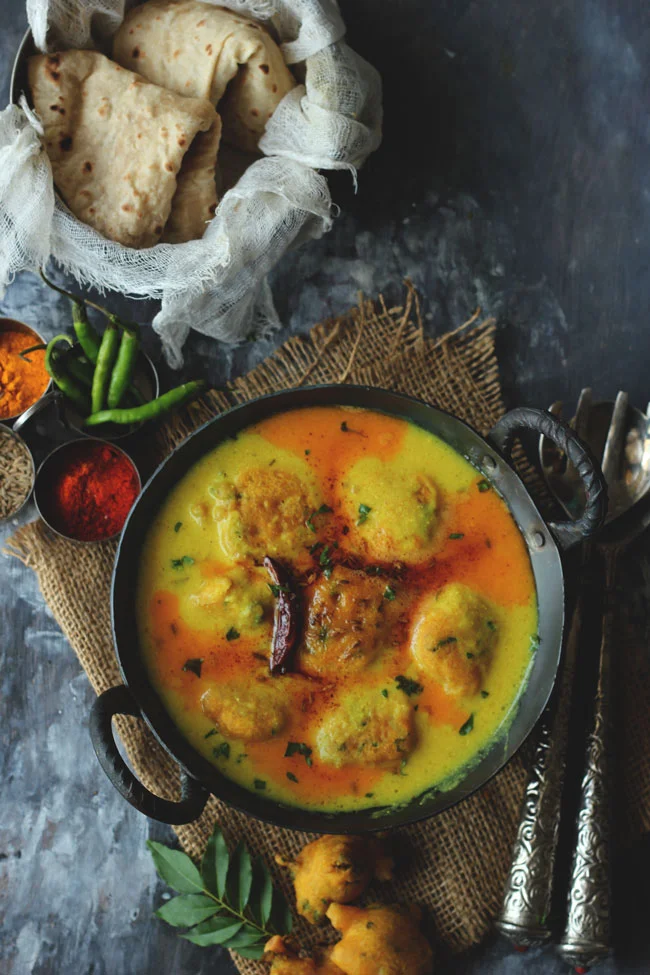
Punjabi kadhi pakora is a yoghurt and gram flour curry with crisp gram flour fritters, finished with a fragrant ghee tempering. It takes a little simmering, but the result is a warming, tangy curry to serve with steamed basmati rice.
Ingredients
- 120 g (1 cup)gram flour (besan)
- 160 g (1 cup)finely chopped onion
- 1 teaspoonturmeric powder
- 1 tablespoonfinely chopped coriander
- 1/4 teaspoonred chilli powder
- to tastesalt
- for deep-fryingoil
- 30 ml (1/8 cup)refined oil
- 1 teaspoonmustard seeds (rai)
- 1 teaspooncumin seeds (jeera)
- 1/2 teaspoonfenugreek seeds (methi dana)
- 1/4 teaspoonasafoetida (hing)
- 480 g (2 cups)curd or yoghurt
- 30 g (1/4 cup)gram flour (besan)
- 500 mlwater
- to tastesalt
- 1 teaspoonturmeric powder
- 1 teaspoonred chilli powder
- 1 tablespoondried fenugreek leaves (kasuri methi)
- 2green chillies, sliced
- 2 tablespoonschopped fresh coriander
- 2 tablespoonsghee
- 1 teaspooncumin seeds (jeera)
- 4dried red chillies
Instructions
- 1
Mix the pakora batter
Put all the pakora ingredients except the frying oil in a bowl and mix well. Add about 60 ml (1/4 cup) water to make a thick batter, then whisk it with your fingers for 2–3 minutes.
- 2
Fry the pakoras
Heat oil in a deep non-stick pan. Drop spoonfuls of batter into the hot oil, taking care not to overcrowd the pan. Deep-fry over medium heat until crisp all over.
- 3
Drain the pakoras
Lift the pakoras out of the oil and drain them on absorbent paper. Set aside.
- 4
Whisk the kadhi
Whisk the curd, turmeric, red chilli powder, gram flour and salt with 1 cup of the water until smooth and free of lumps.
- 5
Heat the spices
Heat the refined oil in a kadhai. Add the cumin seeds, mustard seeds, asafoetida and dried red chillies; sauté for 20–30 seconds.
- 6
Simmer the kadhi
Pour in the curd mixture and bring it to the boil. Lower the heat and simmer for 20–25 minutes, stirring at regular intervals. Taste and adjust the seasoning.
- 7
Add the pakoras
When the kadhi has thickened and the raw taste of gram flour has gone, stir in the fried pakoras, dried fenugreek leaves, sliced green chillies and fresh coriander. Cover and simmer on low for 5–6 minutes so the pakoras absorb the curry.
- 8
Make the tempering
Heat the ghee in a small tadka pan. Add the cumin seeds and dried red chillies and cook for 20–30 seconds.
- 9
Finish and serve
Pour the tempering over the kadhi and stir to combine. Garnish with fresh coriander leaves and serve with steamed basmati rice.
What is Punjabi kadhi pakora?
Kadhi is a yoghurt-based curry thickened with gram flour, found in several regional forms across the Indian subcontinent. The Punjabi version is commonly served with pakoras and rice.
Here, onion and gram flour fritters add a tender, savoury bite to the tangy curry. A final ghee tempering brings toasted spice and chilli aromas to the bowl.
Nutrition and macros by portion
The nutrition label shows one serving as written: 341 calories, 15g protein, 39g carbs, 15g fat.
| Portion | Adjustment | kcal | Protein | Carbs | Fat |
|---|---|---|---|---|---|
| Lighter | Use less frying oil | 239 kcal | 11g | 27g | 11g |
| This serving | As written | 341 kcal | 15g | 39g | 15g |
| Hungry | Add more basmati rice | 512 kcal | 23g | 59g | 23g |
The gram flour and rice served alongside provide most of the carbohydrates, while the frying oil and ghee contribute much of the fat. Gram flour, curd and the pakoras also provide protein. Serve with steamed basmati rice and add a fresh, lightly dressed salad or vegetables to balance the plate.
The two gram flour mixtures
Pakora batter: Gram flour binds the chopped onion and seasonings into spoonable fritters. Keep it thick so the pakoras hold their shape when dropped into the oil.
Kadhi base: Whisk the gram flour thoroughly into the curd and water before heating. A smooth mixture is easier to cook evenly and less likely to form lumps.
Frying crisp pakoras
Oil temperature: Use medium heat so the fritters have time to cook through while their outsides become crisp. If the oil is too hot, they can brown before the centres are cooked.
Batch size: Fry in batches rather than crowding the pan. Leaving space around each spoonful helps the oil stay hot and the pakoras brown evenly.
Getting the kadhi texture right
Steady simmer: After bringing the curd mixture to the boil, turn the heat down and simmer it for 20–25 minutes. Stir regularly to keep the base from catching on the bottom of the pan.
Doneness cue: The kadhi should thicken, and the raw gram flour taste should have cooked away. Add the pakoras only then, so they soak up the finished curry rather than prolonging the base's cooking.
Letting the pakoras absorb flavour
Once added, the pakoras simmer in the kadhi for 5–6 minutes under a lid. This gives them time to take on the curry while retaining some texture.
For more contrast, serve soon after this final simmer. Leaving them in the curry for longer makes them softer.
The finishing tempering
Ghee: Heat it in a small pan, then cook the cumin seeds and dried red chillies for just 20–30 seconds. Keep a close eye on them so the spices release their aroma without burning.
Serving: Pour the hot tempering over the kadhi and stir it through. Steamed basmati rice is the suggested accompaniment and makes a simple, satisfying plate.
Recipe notes & tips
- Whisk the pakora batter for the full 2–3 minutes to help make the fritters lighter in texture.
- Keep the pakora batter thick; add only the stated amount of water to loosen it.
- Whisk the curd mixture until no gram flour lumps remain before adding it to the pan.
- Stir the kadhi regularly as it simmers to prevent it catching on the bottom.
- Fry the pakoras in batches so the pan does not become overcrowded.
- Add the pakoras only after the kadhi has thickened and the raw gram flour taste has cooked away.
Variations
- Adjust the chilli: Use less red or green chilli for a milder curry.
- Change the fritter size: Drop smaller spoonfuls of batter into the oil for bite-sized pakoras.
- Add extra coriander: Scatter more fresh coriander over the finished curry for a herbal finish.
- Make the tempering milder: Use fewer dried red chillies while keeping the cumin seeds.
- Serve with rice: Pair the kadhi with steamed basmati rice as suggested in the recipe.
Common mistakes to avoid
- Lumpy kadhi base: Whisk the gram flour into the curd and water until completely smooth before heating.
- Overcrowded frying pan: Fry the pakoras in batches so they can crisp evenly.
- Oil too hot: Keep it at medium heat so the fritters cook through before becoming too dark.
- Uncooked gram flour flavour: Continue simmering the kadhi for 20–25 minutes, stirring regularly.
- Pakoras added too early: Wait until the kadhi has thickened and its raw gram flour taste has gone.
- Burnt tempering: Cook the cumin and dried chillies for only 20–30 seconds, watching them closely.
How to store
Store leftover kadhi in an airtight container in the fridge for up to 3 days. Reheat gently in a pan, stirring as it warms; add a splash of water if it has thickened. The pakoras soften as they sit in the curry.
Frequently asked questions
Can I make the pakoras ahead?
Yes. Fry them ahead and set them aside, then add them to the simmered kadhi for the final 5–6 minutes before serving.
How do I stop the kadhi becoming lumpy?
Whisk the curd, gram flour, spices, salt and water until smooth before heating. Stir regularly while the kadhi simmers.
How do I know when the kadhi is cooked?
It should have thickened after simmering for 20–25 minutes, and the raw taste of gram flour should have disappeared.
Can I make this less spicy?
Use less red chilli powder and fewer green or dried red chillies. You can adjust these to suit your preference.
What should I serve with kadhi pakora?
Serve it with steamed basmati rice, as suggested in the recipe.
Can I freeze leftover kadhi pakora?
The recipe does not specify freezing. The pakoras soften in the curry, so for the best texture, refrigerate leftovers and reheat them gently.
Cook it from the original
This recipe comes from funfoodfrolic.com. Their page has the author’s own photos, notes and tips — the best place to cook it from.
Open the recipe on funfoodfrolic.com