
Crispy Country Fried Pork Steak
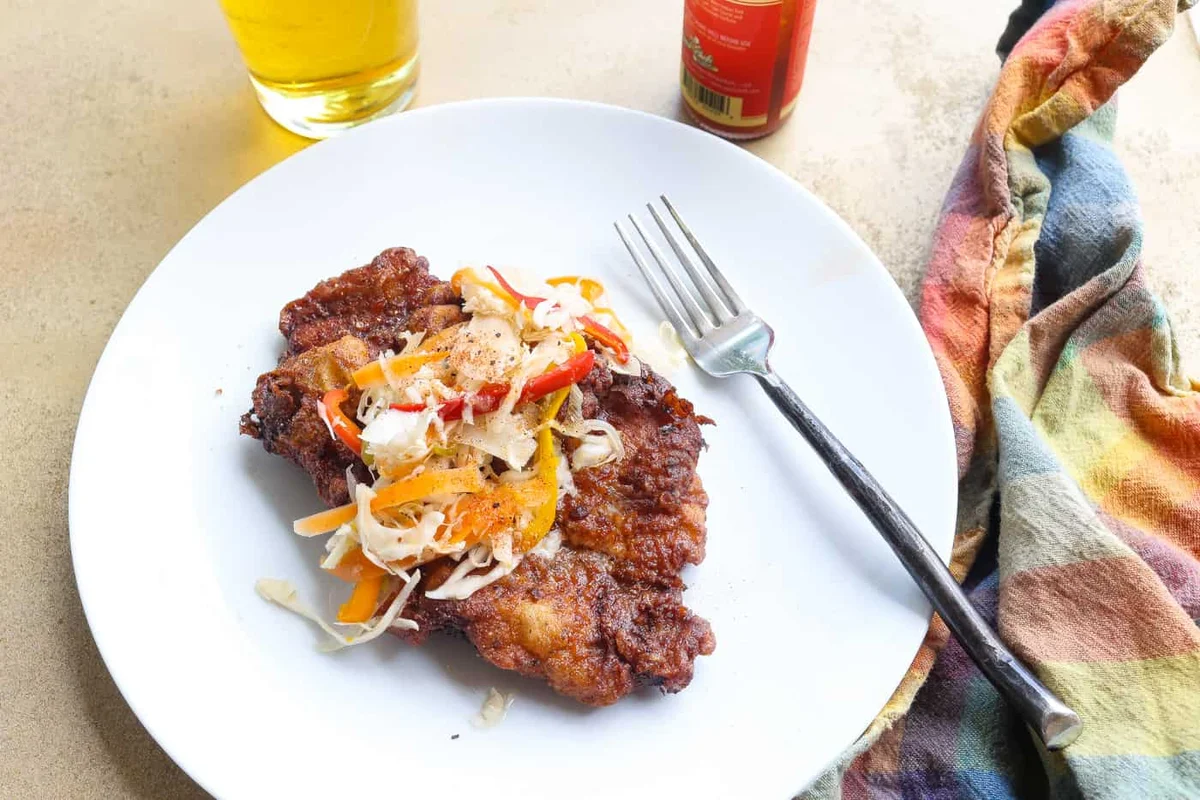
These crispy country-fried pork steaks pair a golden, crunchy coating with a buttermilk and Haitian epis marinade rich in garlic, herbs and peppers. They make a cosy, boldly seasoned centrepiece for a family meal, though the method includes a long marinating time despite the short stated total time.
Ingredients
- 480 ml (2 cups)buttermilk
- 240 ml (1 cup)Haitian epis seasoning
- 4 steaks, 170–227 g (6–8 oz) eachpork shoulder steaks
- 250 g (2 cups)plain flour
- 1 tspallspice
- ½ tbspsmoked paprika
- 2 tspkosher salt
- 1 tspblack pepper
- As neededwater
- 60 ml (¼ cup)vodka
- As neededpeanut oil, or canola or vegetable oil
Instructions
- 1
Mix the brine
Stir the buttermilk, 1 teaspoon of salt and Haitian epis seasoning together in a bowl, then set the mixture aside.
- 2
Marinate the steaks
Put the pork steaks in a sealable bag and pour in the buttermilk mixture, making sure the meat is submerged. Seal and refrigerate for at least 4 hours, preferably overnight.
- 3
Bring to room temperature
Take the steaks out of the refrigerator and let them come to room temperature.
- 4
Mix the spices
Combine the dry spices in a small bowl or ramekin and set aside.
- 5
Make the wash
Put ¼ cup of flour in a bowl. Stir in ½ teaspoon of the spice mix, the vodka and enough water to make a thin, batter-like mixture. Dip the pork steaks in it and coat them well.
- 6
Dredge the steaks
Combine 1 cup of cornmeal with another 1 tablespoon of the spice mix in a medium bowl and mix well. Coat the steaks in this dry mixture, then place them on a wire rack set over a baking sheet. Shake off any excess coating if needed.
- 7
Fry the first time
Heat a deep fryer or large skillet, preferably cast iron, to about 165°C (330°F). Fry the steaks for about 2 minutes per side, working in batches if necessary.
- 8
Fry until crisp
Raise the oil temperature to 175–182°C (350–360°F) and fry the steaks for another 1–2 minutes.
- 9
Drain the steaks
Remove the pork steaks and let the excess fat drain in a bowl lined with kitchen paper or on a wire rack.
What are country-fried pork steaks?
Country-fried pork is a Southern-style comfort dish: tenderised or marinated meat is coated and fried until crisp. This version brings Haitian epis, a seasoning blend built around aromatic ingredients such as garlic, herbs and peppers, into the marinade.
Buttermilk helps carry the seasoning over the pork, while the separate wet and dry coatings are intended to create a crunchy crust. The recipe’s ingredient list and method differ on the dry coating, so check the note below before you start.
Nutrition and macros by portion
The nutrition label shows one serving as written: 532 calories, 26g protein, 69g carbs, 13g fat.
| Portion | Adjustment | kcal | Protein | Carbs | Fat |
|---|---|---|---|---|---|
| Lighter | Serve with extra greens | 372 kcal | 18g | 48g | 9g |
| This serving | As written | 532 kcal | 26g | 69g | 13g |
| Hungry | Add a larger steak | 798 kcal | 39g | 104g | 20g |
The pork supplies most of the protein, while the flour and coating contribute much of the carbohydrate. The frying oil and pork shoulder account for much of the fat; add vegetables or salad to balance the plate with a fresh side.
The epis and buttermilk marinade
Marinade: the steaks need at least 4 hours in the buttermilk and epis mixture, with overnight preferred. This resting time is separate from the short frying time.
Room temperature: the method says to take the steaks out of the fridge and let them warm before frying. Keep the time out brief, and don’t leave raw pork sitting out for an extended period.
Check the coating ingredients
Flour: the ingredient list gives 2 cups of plain flour, and the method uses ¼ cup for the wash. It then calls for cornmeal in the dry dredge, but cornmeal is not listed among the ingredients.
Before cooking: confirm whether you have cornmeal or whether the intended dry coating is flour. The recipe does not specify how much water to use, so add it gradually until the wash is thin and batter-like.
Coat for a crisp crust
Wet layer: dip each steak in the vodka-and-water wash so the surface is coated. Let excess wash drip off before dredging to avoid a heavy, gummy layer.
Dry layer: press the coating over the steak, then shake off loose excess. Resting the coated meat briefly on a wire rack helps keep the coating in place as you prepare to fry.
Frying and doneness
First fry: cook at about 165°C, turning after roughly 2 minutes per side, then raise the temperature to 175–182°C and fry for a further 1–2 minutes. Avoid crowding the pan, which can bring down the oil temperature.
Doneness: use a food thermometer in the thickest part of each steak rather than relying on colour alone. Pork should reach a safe internal temperature; the recipe does not give a target or a total cooking time for thicker steaks.
What to serve alongside
A crisp, rich steak pairs well with a fresh side such as a green salad or steamed green vegetables. For a more filling Southern-style plate, serve it with mashed potatoes, rice or beans.
If making gravy or another sauce, serve it alongside rather than pouring it over the whole crust, so the coating stays crunchy.
Recipe notes & tips
- Marinate the steaks overnight when you can, since the recipe recommends this over the minimum 4 hours.
- Use a deep-frying thermometer to monitor the two oil temperatures.
- Fry in batches so the steaks have room and the oil temperature can recover.
- Let excess wash drip off before dredging to help prevent a thick, soggy coating.
- Drain the cooked steaks on a wire rack to help keep their undersides crisp.
- Check the ingredient-list discrepancy about cornmeal before beginning.
Variations
- Use canola oil: swap it for peanut oil as the recipe allows.
- Use vegetable oil: choose it instead of peanut oil if preferred.
- Adjust the heat: use a milder or more peppery epis seasoning to suit your taste.
- Serve with gravy: offer it on the side so the crust stays crisp.
- Add fresh sides: pair the steaks with green vegetables or a simple salad.
Common mistakes to avoid
- Skipping the marinade: allow at least 4 hours for the buttermilk and epis to coat the steaks.
- Guessing the coating: the method says cornmeal but the ingredient list does not include it; confirm the intended dredge before cooking.
- Adding water all at once: pour it in gradually until the wash is thin and batter-like.
- Crowding the pan: fry in batches so the oil temperature does not drop sharply.
- Overcooking by time alone: check the thickest part with a thermometer, as steak thickness varies.
- Leaving the coating wet: shake off excess dredge before frying for a cleaner crust.
How to store
Refrigerate leftover pork in a sealed container and use within 3–4 days. Reheat in an oven or air fryer until hot throughout to help revive the coating; microwaving will soften it.
Frequently asked questions
How long should I marinate the pork?
The method specifies at least 4 hours, preferably overnight. Include this resting time when planning, even though the listed total time is 17 minutes.
Is cornmeal required for the coating?
The method calls for 1 cup of cornmeal, but the ingredient list does not include it. Check the original recipe or decide on the intended dry coating before you begin.
Can I use a different frying oil?
Yes. The recipe suggests canola oil or vegetable oil as alternatives to peanut oil.
Can I cook the steaks in a skillet?
Yes. The method allows a large skillet and prefers cast iron; a deep fryer is another option. Use a thermometer to manage the specified oil temperatures.
How do I know the pork is cooked through?
Check the thickest part with a food thermometer and follow a safe internal-temperature guideline for pork. The recipe does not give a target temperature, and cooking time depends on the steaks’ thickness.
Why is the total time only 17 minutes?
That timing does not include the method’s required 4-hour minimum marinade, or its preferred overnight rest. Plan for the marinating time separately.
Cook it from the original
This recipe comes from foodfidelity.com. Their page has the author’s own photos, notes and tips — the best place to cook it from.
Open the recipe on foodfidelity.com