
Chicken Karaage
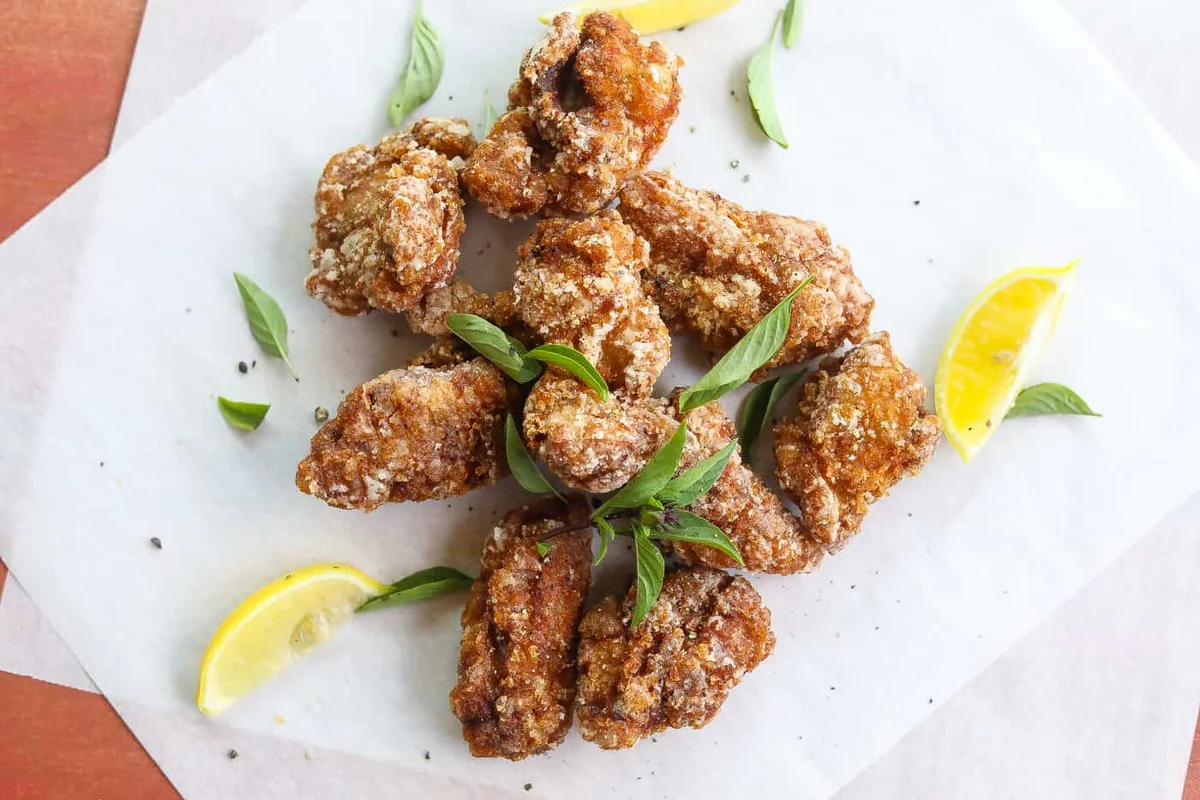
Chicken karaage is Japanese-style fried chicken, marinated with sake, soy sauce, ginger and garlic, then coated in potato starch and fried twice. The double fry gives the outside a crisp finish while keeping the chicken juicy.
Ingredients
- 1 teaspoon (5 ml)grated fresh ginger or finely chopped ginger
- 4garlic cloves, smashed
- 1 tablespoon (15 ml)sugar
- 120 ml (½ cup)dry sake
- 160 ml (⅔ cup)soy sauce
- 4skin-on chicken thighs, deboned and cut into 5 cm chunks
- 120 g (1 cup)potato starch (or cornflour if necessary)
- 1 teaspoon (5 ml)paprika
- ½ teaspoon (2.5 ml)allspice
- ½ teaspoon (2.5 ml)kosher salt
- ½ teaspoon (2.5 ml)black pepper
Instructions
- 1
Mix the marinade
In a medium or large mixing bowl, combine the ginger, smashed garlic, sugar, sake and soy sauce. Set the marinade aside.
- 2
Marinate the chicken
Cut the chicken into chunks, add them to the marinade and leave overnight in the fridge.
- 3
Set up the fryer
Heat the fryer to 175°C. While the oil heats, set out a wire rack inside a baking tray and a shallow bowl for dredging.
- 4
Recoat and chill
In a shallow baking dish large enough to hold the chicken, combine the ginger, garlic, sake, soy sauce and sugar. Toss the chicken in the marinade to coat, cover and refrigerate for 24 to 48 hours.
- 5
Bring chicken up
Lift the chicken from the marinade and let it come to room temperature on the rack.
- 6
Dredge and fry
Coat the chicken in potato starch and fry for about 3 minutes. Transfer the pieces to a clean wire rack or a bowl lined with kitchen paper.
- 7
Fry once more
Raise the oil temperature to 190°C and fry the chicken for another minute, then serve.
What is chicken karaage?
Karaage is a Japanese method of frying bite-sized pieces of meat or fish, often after marinating them and coating them in starch. This version uses chicken thighs and a sake-and-soy marinade with ginger and garlic.
Thigh meat stays succulent during frying, while potato starch forms a crisp, delicate coating. Frying the chicken twice helps refresh and crisp the exterior just before serving.
Nutrition and macros by portion
The nutrition label shows one serving as written: 542 calories, 31g protein, 42g carbs, 24g fat.
| Portion | Adjustment | kcal | Protein | Carbs | Fat |
|---|---|---|---|---|---|
| Lighter | Serve with extra salad | 379 kcal | 22g | 29g | 17g |
| This serving | As written | 542 kcal | 31g | 42g | 24g |
| Hungry | Add rice and vegetables | 813 kcal | 47g | 63g | 36g |
The chicken provides most of the protein, while the potato starch contributes much of the carbohydrate. The chicken skin and frying oil account for much of the fat; balance the plate with vegetables or salad alongside the karaage.
The sake and soy marinade
Marinade base: sake and soy sauce season the chicken, while sugar rounds out the savoury flavour. Ginger and smashed garlic bring aromatic notes throughout the pieces.
Marinating time: the method gives two timings, overnight and 24 to 48 hours. These instructions are repeated, so treat them as one marinating stage and follow the longer stated window if using that version.
Prepare the coating
Potato starch: this is the main coating ingredient and gives karaage its characteristic crisp crust. Cornflour is listed as a substitute if potato starch is unavailable.
Seasoning: paprika, allspice, salt and black pepper are included in the ingredients. Mix them through the starch before dredging so the coating is evenly seasoned.
Set up for frying
Rack and tray: place a wire rack inside a baking tray to hold the chicken after its first fry. Air can circulate around the pieces, helping the coating stay crisp rather than sitting in pooled oil.
Frying oil: heat the fryer to 175°C before starting. Keep the rack or a kitchen-paper-lined bowl close by so you can transfer the chicken promptly.
Use the two-stage fry
First fry: cook the coated pieces for about 3 minutes, then lift them out to drain. The recipe does not specify a doneness temperature, so check that the chicken is cooked through before serving.
Second fry: raise the oil to 190°C and return the chicken for another minute. This quick final fry is intended to crisp the coating; avoid leaving small pieces in longer than needed.
Serving ideas
Fresh sides: serve the hot chicken with a crisp salad or lightly dressed cabbage to add a cool, fresh contrast to the crunchy coating.
A fuller plate: rice and vegetables make a straightforward accompaniment. Serve soon after the final fry, while the outside is at its crispest.
Recipe notes & tips
- Cut the chicken into similarly sized chunks so they cook at a similar rate.
- Pat the chicken lightly if it is dripping with marinade before coating it in starch.
- Mix the listed spices through the potato starch before dredging.
- Leave space around the chicken in the fryer so the pieces can fry evenly.
- Use a rack between frying stages to help keep the coating crisp.
Variations
- Use cornflour: substitute it for potato starch if needed.
- Adjust the spice: add more black pepper for a stronger peppery note.
- Serve with lemon: offer wedges at the table for a fresh, sharp contrast.
- Add a fresh side: pair the chicken with sliced cabbage or a crisp salad.
- Make it a meal: serve with rice and cooked vegetables.
Common mistakes to avoid
- Crowding the fryer: the pieces may cook unevenly; fry them in batches if needed.
- Skipping the rack: chicken left in a pool of oil can lose some crispness; drain it on a wire rack.
- Using uneven chunks: different-sized pieces cook at different speeds; cut them to a similar size.
- Forgetting the second fry: the recipe calls for another minute at 190°C to crisp the coating.
- Leaving the marinade instructions unresolved: the method repeats them; use one marinade rather than making separate batches.
How to store
Refrigerate leftovers in a covered container and use within 2 days. Reheat in an oven or air fryer until hot and crisp; the coating may soften during storage.
Frequently asked questions
How long should I marinate the chicken?
The method mentions overnight and also 24 to 48 hours. These instructions overlap, so use one marinating period; for the longer version, refrigerate for 24 to 48 hours.
Can I use cornflour instead of potato starch?
Yes. Cornflour is listed as a substitute, although the coating may not have exactly the same texture.
Why is the chicken fried twice?
The first fry cooks the pieces, and the brief second fry at a higher temperature helps crisp the outside before serving.
How do I know the chicken is cooked through?
Check the thickest pieces before serving; the chicken should be cooked through with no raw-looking centre. The recipe does not give a precise internal temperature.
Can I prepare the chicken ahead?
You can marinate it in the fridge ahead of cooking, following the stated 24-to-48-hour window. Dredge and fry it close to serving time for the crispest coating.
Cook it from the original
This recipe comes from foodfidelity.com. Their page has the author’s own photos, notes and tips — the best place to cook it from.
Open the recipe on foodfidelity.com