
Jerk Fried Chicken
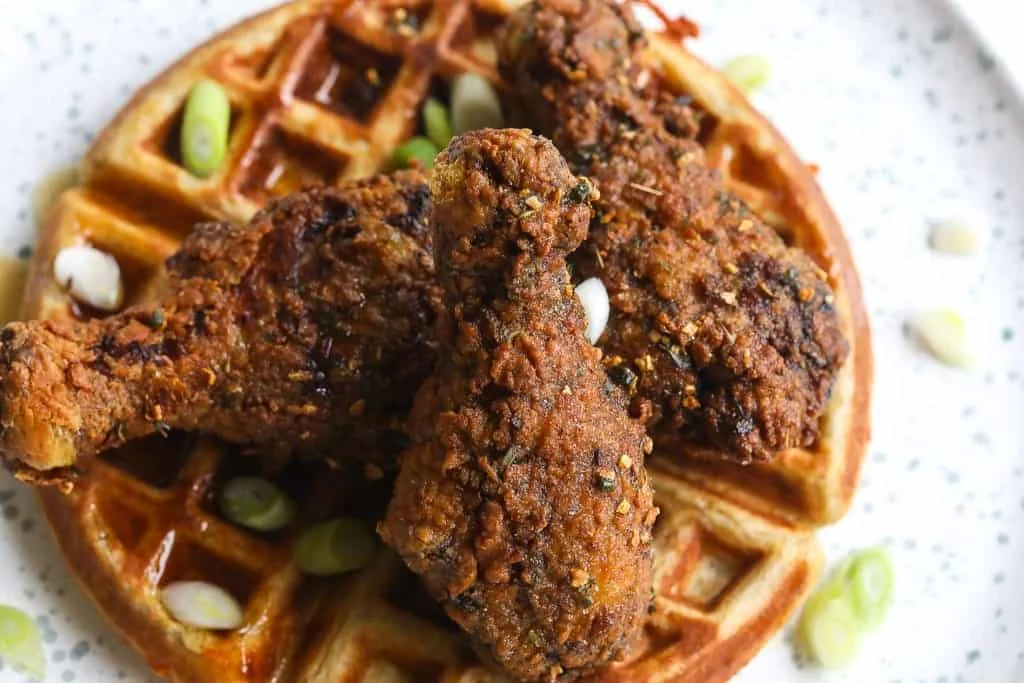
Jerk fried chicken brings the crunch of Southern-style fried chicken together with the heat and aromatic spice of Jamaican jerk seasoning. A buttermilk marinade and a second fry help build a crisp, well-seasoned crust.
Ingredients
- 2chicken thighs, skin on and bone in
- 2chicken legs
- 480 ml (2 cups)low-fat buttermilk
- 15 ml (1 tbsp)kosher salt
- 30 ml (2 tbsp)jerk marinade, such as Walkerswood or Grace
- 60 ml (4 tbsp)vodka
- 240 g (2 cups)plain flour
- 60 g (1/2 cup)cornflour
- 15 ml (1 tbsp)dry jerk spice
- 60 ml (4 tbsp)reserved wet marinade
- To tastepeanut oil
- 7.5 ml (1/2 tbsp)dry jerk seasoning
- 30 ml (2 tbsp)hot peanut oil from cooking
Instructions
- 1
Mix marinade
In a mixing bowl, combine the buttermilk, salt, jerk marinade and vodka. Add the chicken to the bowl or a zip-lock bag, cover it with the marinade and refrigerate for 2 hours or overnight.
- 2
Warm the chicken
Take the chicken out of the fridge and let it come to room temperature on a wire rack. Keep the marinade for the coating.
- 3
Season flour
Mix the flour, cornflour and dry jerk spice in a baking dish or brown paper bag. Stir in 4 tablespoons (60 ml) of the reserved marinade.
- 4
Coat chicken
Using tongs, lift each piece of chicken from the marinade and coat it thoroughly in the seasoned flour, pressing the crumbly bits onto the chicken. Shake off excess coating and set the pieces on a baking sheet. If time allows, leave them uncovered on a wire rack in the fridge for at least 30 minutes.
- 5
Heat the oil
Once all the chicken is coated, pour about 2.5 cm of oil into a heavy frying pan or cast-iron skillet. Heat over medium-high heat to 190°C (375°F). Test it with a small piece of coating; it should bubble and start to fry.
- 6
Fry the chicken
Add the chicken and cook for 4–5 minutes per side, until browned outside and cooked through. Transfer it to a wire rack. If time allows, rest it for 30 minutes or longer, then fry again at 175°C (350°F) for 3–4 minutes.
- 7
Brush with seasoning
While the chicken rests, collect 2 tablespoons (30 ml) of hot cooking oil and mix it with the dry jerk seasoning. Spoon or brush the mixture over the chicken, then sprinkle on any remaining jerk spice while the chicken is hot.
What is jerk fried chicken?
Jerk cooking is associated with Jamaica and its distinctive blend of fragrant, punchy seasonings. This recipe pairs those flavours with the flour-coated, deep-fried chicken familiar from Southern American cooking.
The buttermilk marinade seasons the chicken before frying, while a little wet marinade mixed into the flour makes crisp, craggy bits. A final coating of hot oil and jerk seasoning brings the spice to the surface.
Nutrition and macros by portion
The nutrition label shows one serving as written: 1292 calories, 48g protein, 168g carbs, 40g fat.
| Portion | Adjustment | kcal | Protein | Carbs | Fat |
|---|---|---|---|---|---|
| Lighter | Smaller chicken portion | 904 kcal | 34g | 118g | 28g |
| This serving | As written | 1292 kcal | 48g | 168g | 40g |
| Hungry | Add rice and vegetables | 1938 kcal | 72g | 252g | 60g |
The chicken provides most of the protein, while the flour and cornflour contribute much of the carbohydrate. The frying oil and skin contribute fat; serve with vegetables or salad for a fresh counterpoint, and add rice or potatoes if you want a more filling plate.
The buttermilk marinade
Marinating time: The method calls for at least 2 hours in the fridge, or overnight for a longer soak. Keep the chicken covered by the marinade as it chills.
Before coating: Let the chicken come to room temperature as directed, and reserve some marinade for the flour mixture. The recipe also uses 4 tablespoons of that reserved marinade to make the coating crumbly.
Building a craggy coating
Flour and cornflour: The two dry ingredients form the base of the coating, with dry jerk spice seasoning it throughout. Mix them together before adding the reserved marinade.
Crumbly bits: Work the dampened flour onto each chicken piece with your tongs, pressing the clumps into the surface. Resting the coated chicken uncovered on a rack helps the coating set before frying.
Frying and doneness
First fry: Heat about 2.5 cm of oil to 190°C and test it with a little coating before adding the chicken. Cook each side for 4–5 minutes, until the outside is browned and the chicken is cooked through.
Second fry: The recipe calls for a rest of 30 minutes or longer before frying again at 175°C for 3–4 minutes. Keep an eye on the oil temperature as you add the chicken.
Finishing with jerk oil
Seasoned oil: Mix 2 tablespoons of hot cooking oil with the dry jerk seasoning. Spoon or brush it over the chicken after frying.
Final sprinkle: Add any remaining dry jerk spice while the chicken is still hot, so it clings to the surface. Seasoning is layered through the marinade, coating and finish.
Serving the chicken
The chicken is rich and boldly spiced, so it pairs well with simple sides that add freshness or contrast. Try it with a crisp salad, slaw, or vegetables, and offer rice or potatoes if you want a more substantial meal.
For the best contrast in texture, serve it soon after the final fry. Keep the pieces on a rack rather than stacking them while they are hot.
Recipe notes & tips
- Use peanut or canola oil, as the recipe recommends, for frying.
- Check the oil with a small piece of coating before adding the chicken.
- Press the crumbly flour mixture firmly onto each piece for a more textured crust.
- Leave the coated chicken uncovered on a rack in the fridge for at least 30 minutes if time allows.
- Allow the chicken to come to room temperature before frying, as directed.
- Drain the fried chicken on a wire rack set over a foil-lined baking sheet.
Variations
- Change the spice: Use another seasoning blend in place of the jerk spices while keeping the coating method.
- Choose the oil: Use canola oil instead of peanut oil for frying.
- Extend the marinade: Leave the chicken in the marinade overnight for a longer soak.
- Add a side: Serve with rice or potatoes for a more substantial meal.
Common mistakes to avoid
- Skipping the oil test: Drop in a small piece of coating first and look for bubbling before frying the chicken.
- Leaving out the marinade in the coating: Stir in the reserved 4 tablespoons to create the recipe’s crumbly bits.
- Frying before the coating sets: If time allows, rest the coated chicken on a rack in the fridge for at least 30 minutes.
- Relying only on the first fry: Follow the method’s second fry at 175°C for 3–4 minutes after resting.
- Draining on a flat plate: Use a wire rack so the chicken does not sit in its excess oil.
How to store
Cool leftovers promptly and refrigerate them in a covered container for up to 3 days. Reheat in an oven until hot throughout, using a rack or tray so the coating can crisp again.
Frequently asked questions
How long should I marinate the chicken?
The recipe specifies at least 2 hours in the fridge, or overnight. Keep the chicken covered with the marinade while it chills.
Can I prepare the coated chicken ahead?
Yes. After coating, the method suggests resting it uncovered on a wire rack in the fridge for at least 30 minutes.
What temperature should the oil be?
Heat it to 190°C for the first fry, then use 175°C for the second fry.
How long does the chicken fry for?
Cook it for 4–5 minutes per side on the first fry, until browned and cooked through. After resting, fry again for 3–4 minutes.
How can I tell if the oil is ready?
Drop in a small piece of the flour coating. The recipe says it should bubble and begin to fry.
Can I use another frying oil?
Yes. The recipe recommends a high-smoke-point oil and names canola oil as an alternative to peanut oil.
Cook it from the original
This recipe comes from foodfidelity.com. Their page has the author’s own photos, notes and tips — the best place to cook it from.
Open the recipe on foodfidelity.com