
Puerto Rican Flan de Queso
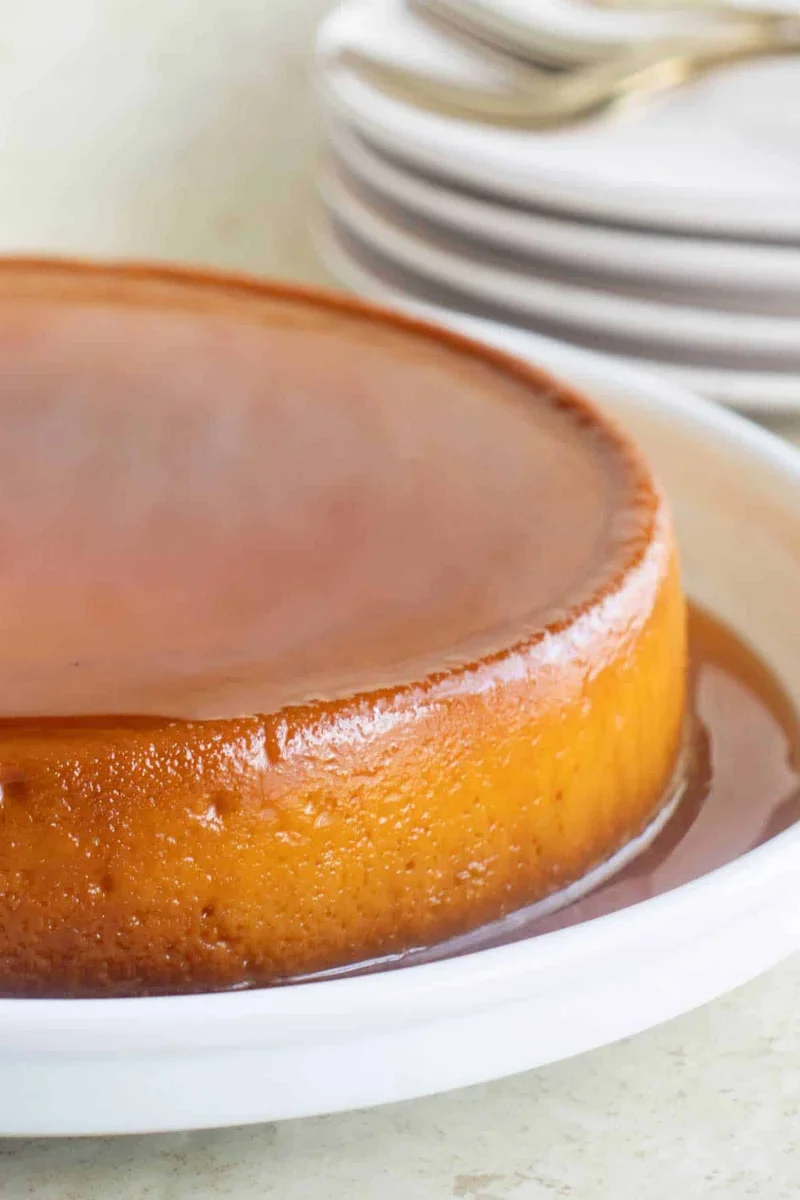
Puerto Rican flan de queso is a smooth baked custard made with cream cheese, evaporated milk and condensed milk, topped with a layer of caramel. It is a rich make-ahead dessert that is easy to portion for sharing.
Ingredients
- 216 g (1 cup)sugar
- 226 g (8 ounces, or 1 bar)cream cheese
- 354 ml (12 ounces, or 1 can)evaporated milk
- 396 g (14 ounces, or 1 can)condensed milk
- 15 ml (1 tablespoon)vanilla extract
- 5eggs
Instructions
- 1
Preheat the oven
Heat the oven to 177°C (350°F).
- 2
Make the caramel
Put the sugar in a medium pan over medium-high heat and cook for about 8–10 minutes, until it starts to melt and turn clear. Reduce the heat to medium and stir to stop it from burning. When nearly all the sugar has dissolved and only a few clumps remain, turn off the heat and keep stirring until the caramel is smooth and golden brown. Pour it carefully into a 23 × 7.5 cm (9 × 3-inch) round mould or flanera; the caramel will be very hot.
- 3
Blend the custard
Blend the evaporated milk, condensed milk, cream cheese and vanilla for 1 minute. Add the eggs one at a time while blending. Pour the mixture through a strainer into the caramel-lined mould, then tap the mould gently against the table to release trapped air bubbles. Set the mould inside a larger pot and add hot water until it reaches almost halfway up the mould.
- 4
Bake the flan
Bake in the water bath for 1 hour and 30 minutes. Check the centre with a knife; it is ready when the knife comes out without residue.
- 5
Cool and chill
Lift the flan out of the water bath and leave it at room temperature for about 30 minutes. Refrigerate for at least 2 hours.
- 6
Unmould and serve
Take the flan out of the fridge and run a knife around the edge of the mould. Place a flat dish large enough to hold the flan over the mould, then carefully invert it onto the dish.
What is flan de queso?
Flan is a baked custard dessert with roots in Spanish cooking, and it has become a familiar sweet across Puerto Rico and the wider Caribbean. This version adds cream cheese to the custard, giving it a richer, more substantial texture than a plain egg-and-milk flan.
Caramel goes into the mould first, then the custard bakes gently in a water bath. Once inverted, the caramel forms a glossy sauce over the top.
Nutrition and macros by portion
The nutrition label shows one serving as written: 456 calories, 12g protein, 58g carbs, 20g fat.
| Portion | Adjustment | kcal | Protein | Carbs | Fat |
|---|---|---|---|---|---|
| Lighter | Smaller slice, fresh fruit | 319 kcal | 8g | 41g | 14g |
| This serving | As written | 456 kcal | 12g | 58g | 20g |
| Hungry | Larger slice | 684 kcal | 18g | 87g | 30g |
The condensed milk and sugar provide most of the carbohydrates, while the cream cheese and eggs contribute much of the fat and protein. Serve a slice with fresh fruit, or alongside a meal with vegetables, to balance the plate with something lighter.
Why these ingredients work
Cream cheese: It brings a mild tang and helps create the recipe’s creamy, dense texture. Let it soften before blending if it is very firm, so it incorporates more evenly.
Two kinds of milk: Evaporated milk adds a concentrated milky flavour, while condensed milk supplies sweetness and body. Vanilla rounds out the custard without competing with the caramel.
Getting the caramel right
Dry sugar: Heat it in the pan until it begins to melt and turn clear, then lower the heat and stir as directed. Keep a close eye on it, since caramel can darken quickly once it starts to colour.
Hot caramel: Pour it into the mould as soon as it is golden brown, taking care not to touch or taste it while hot. It will harden as it cools, then liquefy again around the flan after baking and chilling.
A smooth custard
Blending: Give the milk, cream cheese and vanilla a full minute to combine before adding the eggs one at a time. Straining the mixture into the mould catches any small lumps and helps keep the custard even.
Air bubbles: Tap the filled mould gently against the table before baking. Avoid vigorous handling afterwards so the mixture stays settled.
The water bath and doneness
Water bath: Set the flan mould inside a larger pot and add hot water to almost halfway up its sides. The surrounding water helps the custard cook more gently than it would in a dry oven.
Centre check: The recipe calls for 1 hour and 30 minutes of baking, followed by a knife test in the middle. If the knife has custard residue on it, the flan is not yet at the stated doneness cue.
Chilling and serving
Cooling: Let the mould stand at room temperature for about 30 minutes after removing it from the water bath, then chill the flan for at least 2 hours. This gives it time to set before you turn it out.
To serve: Loosen the edges with a knife and invert the mould onto a flat dish that is wider than the flan. The dish catches the caramel sauce as it runs over the custard.
What to serve alongside
The flan is sweet and creamy, so small slices work well after a meal. Fresh fruit, such as berries or citrus segments, offers a bright contrast without requiring another rich dessert.
For a simple coffee break, serve it on its own with unsweetened coffee or tea. Keep any extra caramel on the plate for spooning over each piece.
Recipe notes & tips
- Use a pan large enough to stir the sugar without spilling it.
- Pour the caramel carefully, as it is extremely hot when melted.
- Strain the custard into the mould to catch any cream cheese lumps.
- Add the eggs gradually while the blender is running.
- Make sure the dish for unmoulding is wider than the flan mould.
- Chill the flan for at least 2 hours before turning it out.
Variations
- Citrus zest: Add a little finely grated orange or lemon zest to the blended custard.
- Cinnamon: Blend in a pinch of ground cinnamon for a warm spice note.
- Coffee: Add a small amount of cooled strong coffee to the custard for a coffee-flavoured version.
- Coconut: Replace some of the evaporated milk with coconut milk for a coconut note.
- Vanilla bean: Use the seeds from a vanilla pod in place of the vanilla extract.
Common mistakes to avoid
- Burnt caramel: Lower the heat once the sugar starts melting and keep stirring as it colours.
- Lumpy custard: Blend the cream cheese thoroughly with the milks before adding the eggs, then strain the mixture.
- Overcooked edges: Use the water bath and check the centre with a knife after the stated baking time.
- Water in the flan: Keep the water below the rim of the mould and handle the water bath carefully.
- Flan breaks when turned out: Chill it for at least 2 hours and loosen the edges before inverting.
- Caramel burns your skin: Pour it carefully and do not touch it while it is hot.
How to store
Cover the flan and refrigerate it for up to 3 days. Serve chilled; reheating is not needed and may soften its set texture.
Frequently asked questions
Can I make flan de queso ahead?
Yes. Bake and chill it in advance, then keep it covered in the fridge until you are ready to serve.
How do I know when the flan is done?
After 1 hour and 30 minutes, check the centre with a knife. The recipe’s cue is that the knife comes out without residue.
Why does this recipe use a water bath?
The mould sits in hot water during baking, which helps the custard cook more gently. Add water until it reaches almost halfway up the mould.
Why should I strain the custard?
Straining catches any small lumps before the mixture goes into the mould, helping the baked custard turn out smoother.
How long should the flan chill before unmoulding?
Let it cool at room temperature for about 30 minutes, then refrigerate it for at least 2 hours before turning it out.
Can I use a flanera instead of a round mould?
Yes. The recipe specifies either a 23 × 7.5 cm (9 × 3-inch) round mould or a flanera.
Cook it from the original
This recipe comes from foodmetamorphosis.com. Their page has the author’s own photos, notes and tips — the best place to cook it from.
Open the recipe on foodmetamorphosis.com