
Puerto Rican stewed pork
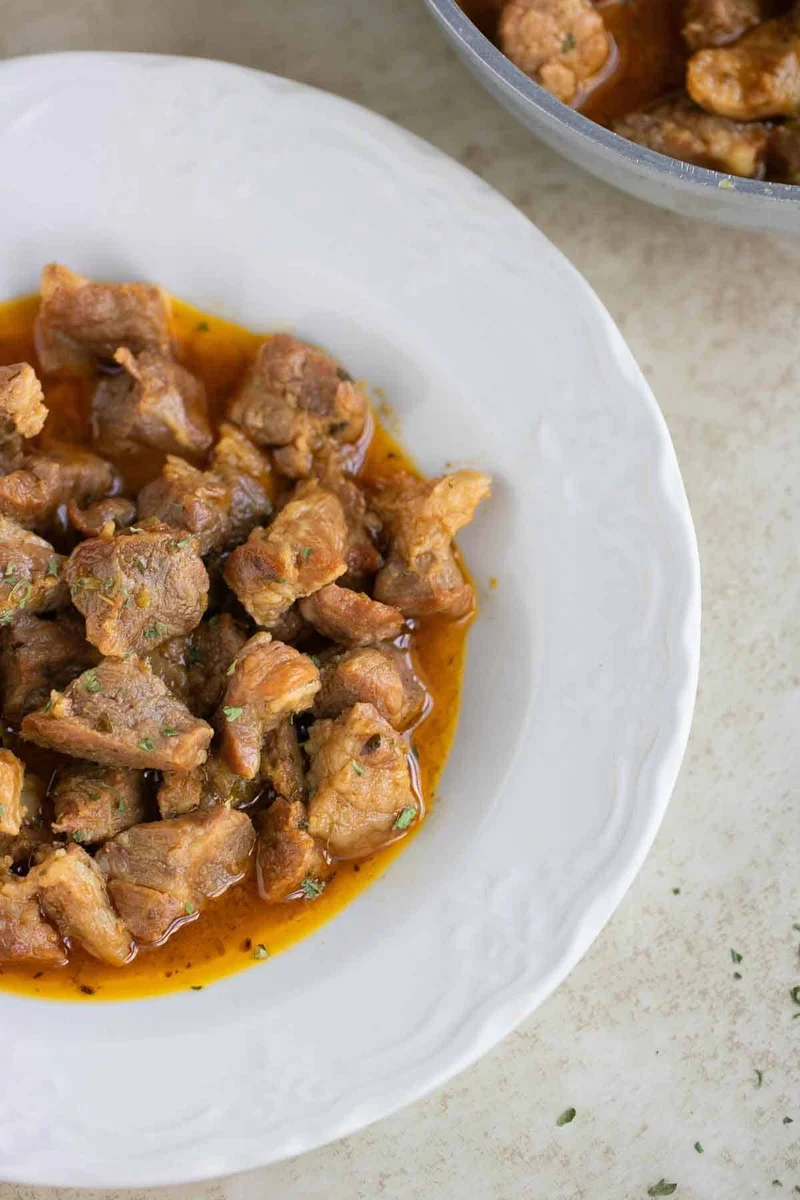
Puerto Rican-style pork is simmered with sofrito, tomato sauce and familiar seasonings until tender. It makes a savoury, comforting lunch or dinner, served with rice or another favourite side.
Ingredients
- 22.5 ml (1½ tablespoons)achiote oil
- 680 g (1½ lb)pork
- 15 ml (1 tablespoon)sofrito
- 15 ml (1 tablespoon)tomato sauce
- 7.5 ml (1½ teaspoons)salt
- 2.5 ml (½ teaspoon)dried oregano
- 5 ml (1 teaspoon)adobo
- 7.5 ml (1½ teaspoons)sazón
- 360 ml (1½ cups)water
Instructions
- 1
Season the base
Cut the pork into cubes about 1.3 cm (½ inch) thick and trim away excess fat. Heat 22.5 ml (1½ tablespoons) achiote oil in a large frying pan or caldero over high heat. Add 15 ml (1 tablespoon) sofrito, 15 ml (1 tablespoon) tomato sauce, 7.5 ml (1½ teaspoons) salt, 5 ml (1 teaspoon) adobo, 2.5 ml (½ teaspoon) crushed dried oregano and 7.5 ml (1½ teaspoons) sazón. Sauté for 2 minutes.
- 2
Simmer the pork
Add the pork and cook for a further 5 minutes, stirring to combine it with the seasonings. Pour in 360 ml (1½ cups) water, cover the pan and lower the heat to medium. Cook for 40 minutes, until the pork is tender.
What is Puerto Rican stewed pork?
This is a Puerto Rican-style pork dish cooked gently in a seasoned liquid until tender. Sofrito, achiote oil, tomato sauce and dry seasonings give this version its savoury, warmly coloured base.
The method builds flavour in the pan first, then lets the pork simmer covered. That makes it a practical one-pan centrepiece for lunch or dinner.
Nutrition and macros by portion
The nutrition label shows one serving as written: 291 calories, 32g protein, 1g carbs, 10g fat.
| Portion | Adjustment | kcal | Protein | Carbs | Fat |
|---|---|---|---|---|---|
| Lighter | Trim pork, less oil | 204 kcal | 22g | 1g | 7g |
| This serving | As written | 291 kcal | 32g | 1g | 10g |
| Hungry | Larger pork portion | 437 kcal | 48g | 2g | 15g |
The pork provides most of the protein, while the achiote oil supplies much of the fat; the small amount of tomato sauce and seasonings contribute little of the carbohydrate. Serve it with vegetables and a measured portion of rice to round out the plate.
Build a flavourful base
Achiote oil: heat it with the sofrito, tomato sauce and seasonings to start the dish with an even coating of flavour.
Seasonings: the salt, adobo, oregano and sazón are added together and sautéed briefly before the pork goes in.
Cut the pork evenly
Cube size: pieces about 1.3 cm (½ inch) thick are specified in the method. Keeping them similar in size helps them cook at a similar pace.
Trim: remove excess fat before cooking, as directed, while leaving the pork itself in substantial pieces.
Give it time to become tender
After the pork has cooked with the seasonings for 5 minutes, add the water and cover the pan. The covered 40-minute simmer is the main tenderising stage.
Keep the heat at medium once the pan is covered. Check the pork at the end of the stated cooking time for tenderness.
Keep the simmer gentle
A covered pan holds in the moisture as the pork cooks. Use a large frying pan or caldero, as in the method, so there is room to stir the pork and seasonings together.
If checking the pan, replace the lid afterwards so the simmer can continue. The recipe does not specify adding extra water, so follow the stated amount.
What to serve alongside
Serve the pork with rice to make a filling meal, or add vegetables for a plate with more variety. Spoon some of the cooking liquid over the pork and side.
Keep the accompaniments simple so the seasoned pork remains the focus.
Recipe notes & tips
- Cut the pork into evenly sized cubes so they cook at a similar rate.
- Measure the seasonings before heating the oil, as the first stage moves quickly.
- Stir the pork well when you add it so the pieces meet the seasoned base.
- Keep the pan covered during the 40-minute simmer.
- Use a large frying pan or caldero to make stirring easier.
Variations
- Add vegetables: serve with cooked vegetables on the side for a more varied plate.
- Serve with rice: spoon the cooking liquid over rice alongside the pork.
- Use a caldero: cook the dish in a caldero if you have one, as the method suggests.
- Adjust the seasoning: use less salt if you prefer a milder seasoning level.
- Choose leaner pork: trim away excess fat before cutting the meat into cubes.
Common mistakes to avoid
- Uneven cubes: pieces of different sizes may cook at different rates; cut them to a similar thickness.
- Skipping the initial sauté: the method gives the seasoning base 2 minutes in the pan; allow it that time.
- Adding water too early: first cook the pork with the seasonings for 5 minutes, then add the water.
- Leaving the pan uncovered: cover it for the 40-minute simmer to retain moisture.
- Turning the heat too high: reduce it to medium after adding the water and covering the pan.
How to store
Refrigerate leftovers in a covered container and use within 3–4 days. Reheat thoroughly in a covered pan over a low heat, adding a small splash of water if needed.
Frequently asked questions
How long does the pork take to cook?
The method gives it 5 minutes with the seasonings, followed by 40 minutes covered with water. Check that the pork is tender at the end of the simmer.
What is sofrito?
Sofrito is a seasoned aromatic mixture used as a flavour base in many Puerto Rican dishes. This recipe adds a tablespoon to the pan with the other seasonings.
Can I use a regular frying pan?
Yes. The method allows for either a large frying pan or a caldero; choose a pan with enough room to stir the pork.
What should I serve with the pork?
Rice or vegetables are straightforward accompaniments. The cooking liquid can be spooned over the pork and side.
How can I tell when the pork is ready?
The recipe describes it as ready when tender after the 40-minute covered simmer. Check a piece before serving.
Cook it from the original
This recipe comes from foodmetamorphosis.com. Their page has the author’s own photos, notes and tips — the best place to cook it from.
Open the recipe on foodmetamorphosis.com