
Homemade Chicken Stock
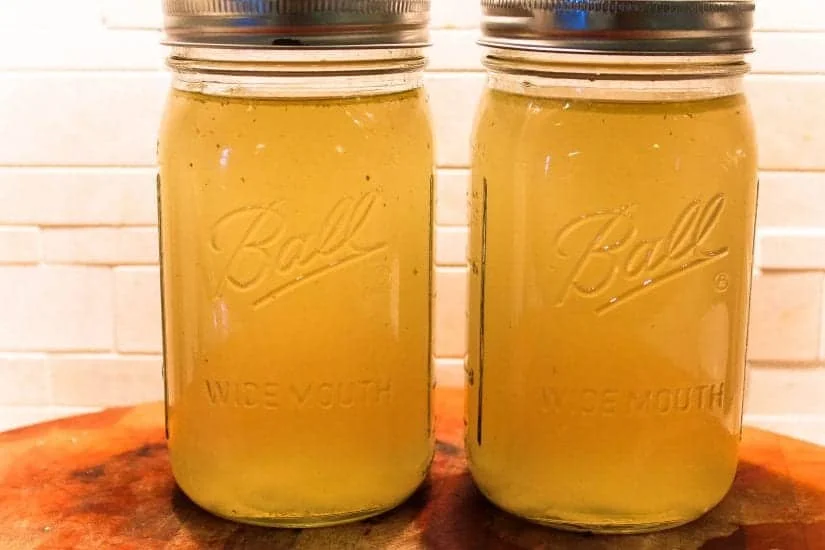
Homemade chicken stock is a gently simmered, savoury base made with chicken bones, vegetables and herbs. Make a batch to add depth to soups, sauces and other recipes that call for stock or broth.
Ingredients
- 1chicken carcass
- 1 largeonion, quartered
- 4carrots, peeled and cut in half
- 4 ribscelery, cut in half
- 1 ear, cut into quarterscorn
- 5 sprigsfresh thyme
- 5 sprigsfresh parsley with stems
- 2bay leaves
- 8peppercorns
- 2 wholegarlic cloves, peeled
- 3.8 L (1 gallon)cold water
- 2dried morita or chipotle chillies (optional)
Instructions
- 1
Start the stock
Pour the water into a large stockpot. Put the chicken, vegetables, herbs and spices in a steamer basket and set it in the water. Heat on high until bubbles begin to break the surface, then lower the heat to medium-low so the stock keeps a gentle simmer.
- 2
Skim the surface
For the first hour, skim off any scum with a spoon or fine-mesh strainer every 10 to 15 minutes. For the following 2 hours, skim twice each hour. Add hot water as needed to keep the bones and vegetables submerged.
- 3
Simmer and strain
Simmer uncovered for 6 to 8 hours. Strain the stock through a fine-mesh strainer into another large stockpot or a heatproof container, and discard the solids. Cool the stock promptly, then refrigerate it overnight.
What is chicken stock?
Chicken stock is a savoury cooking liquid made by simmering bones with vegetables and aromatics, then straining them out. It is a familiar staple in American home cooking, used as a foundation for soups, gravies, sauces and braises.
This version combines chicken carcass with onion, carrots, celery, corn, herbs and spices. A long, gentle simmer draws flavour into the liquid without making the stock boil vigorously.
Nutrition and macros by portion
The nutrition label shows one serving as written: 38 calories, 1g protein, 9g carbs, 1g fat.
| Portion | Adjustment | kcal | Protein | Carbs | Fat |
|---|---|---|---|---|---|
| Lighter | Use less corn | 27 kcal | 1g | 6g | 1g |
| This serving | As written | 38 kcal | 1g | 9g | 1g |
| Hungry | Serve a larger bowl | 57 kcal | 2g | 14g | 2g |
The vegetables and corn contribute most of the carbohydrates, while the chicken carcass supplies savoury flavour and some protein and fat. For a more complete plate, use the stock in a meal with a substantial protein source and vegetables.
Why use a steamer basket?
Keep the ingredients together: the basket lets the chicken, vegetables and aromatics sit in the water while making them easier to lift out and strain. Make sure the ingredients are immersed; top up with hot water if needed.
Keep the simmer gentle
Watch the surface: once bubbles begin to appear, reduce the heat until the liquid simmers quietly. A rolling boil can agitate the ingredients and make the finished stock cloudier.
Skim regularly: foam and residue tend to collect early in cooking. Follow the stated schedule during the first 3 hours, then let the stock continue simmering.
Let the ingredients do their work
Chicken carcass: bones and any attached meat give the stock its savoury base. The recipe does not specify a particular cut or amount of leftover meat.
Vegetables and herbs: onion, carrots, celery and corn add sweetness, while thyme, parsley, bay and peppercorns build a rounded aroma. The optional dried chillies bring a subtle smoky note.
Allow plenty of time
The method calls for a 6 to 8 hour uncovered simmer, followed by straining and overnight chilling. Although the listed total time is 305 minutes, that is shorter than the simmer time specified in the method, so allow for the longer method when planning.
Strain and use
Strain into a heatproof container and discard the cooked solids, which have given much of their flavour to the liquid. Use the stock in place of prepared stock or broth in soups, grains, sauces and braises.
Serve a soup made with this stock alongside bread or a sandwich, or use it to cook rice and other grains as part of a larger meal.
Recipe notes & tips
- Begin with cold water as directed so the stock heats gradually.
- Keep the ingredients submerged by adding hot water when necessary.
- Use a spoon or fine-mesh strainer to remove surface scum during the specified early cooking period.
- Keep the stock at a quiet simmer rather than letting it boil hard.
- Strain into a heatproof container and cool promptly before refrigerating.
Variations
- Smoky chillies: add the optional morita or chipotle chillies for a smoky edge.
- Herb emphasis: keep the thyme and parsley sprigs intact so they are easy to remove when straining.
- For a lighter flavour: omit the optional chillies and keep the remaining ingredients as listed.
- Soup base: use the strained stock as the liquid for a chicken or vegetable soup.
- Grain cooking: replace some of the water used for cooking rice or grains with this stock.
Common mistakes to avoid
- Hard boiling: the liquid can become cloudy; lower the heat to maintain a gentle simmer.
- Skipping the skim: residue can remain in the stock; skim every 10 to 15 minutes for the first hour and twice each hour for the next 2 hours.
- Exposed ingredients: bones and vegetables may dry out above the liquid; add hot water to keep them submerged.
- Rushing the simmer: the method calls for 6 to 8 hours; allow time for the full simmer.
- Leaving solids in: they make the stock difficult to use; strain it into a separate container after cooking.
How to store
Refrigerate the cooled stock promptly in a covered container and use within 3 to 4 days. For longer storage, freeze it in usable portions; thaw in the refrigerator and reheat until steaming hot.
Frequently asked questions
Can I use a different chicken carcass?
Yes. Use a chicken carcass suitable for making stock; the recipe does not require a specific kind.
Can I leave out the dried chillies?
Yes. They are optional, so omit them for a milder stock.
How long should the stock simmer?
The method says to simmer uncovered for 6 to 8 hours. This is longer than the listed total time of 305 minutes, so plan according to the method.
Why does the recipe say to skim the stock?
Skimming removes scum that rises to the surface, especially early in cooking. Use a spoon or fine-mesh strainer and follow the timing in the method.
Can I use the stock straight away?
Yes, once it has been strained and cooled appropriately. The method also recommends refrigerating it overnight.
What can I cook with homemade chicken stock?
Use it in recipes that call for stock or broth, including soups, sauces, braises and cooked grains.
Cook it from the original
This recipe comes from foodfidelity.com. Their page has the author’s own photos, notes and tips — the best place to cook it from.
Open the recipe on foodfidelity.com