
Peruvian roast chicken
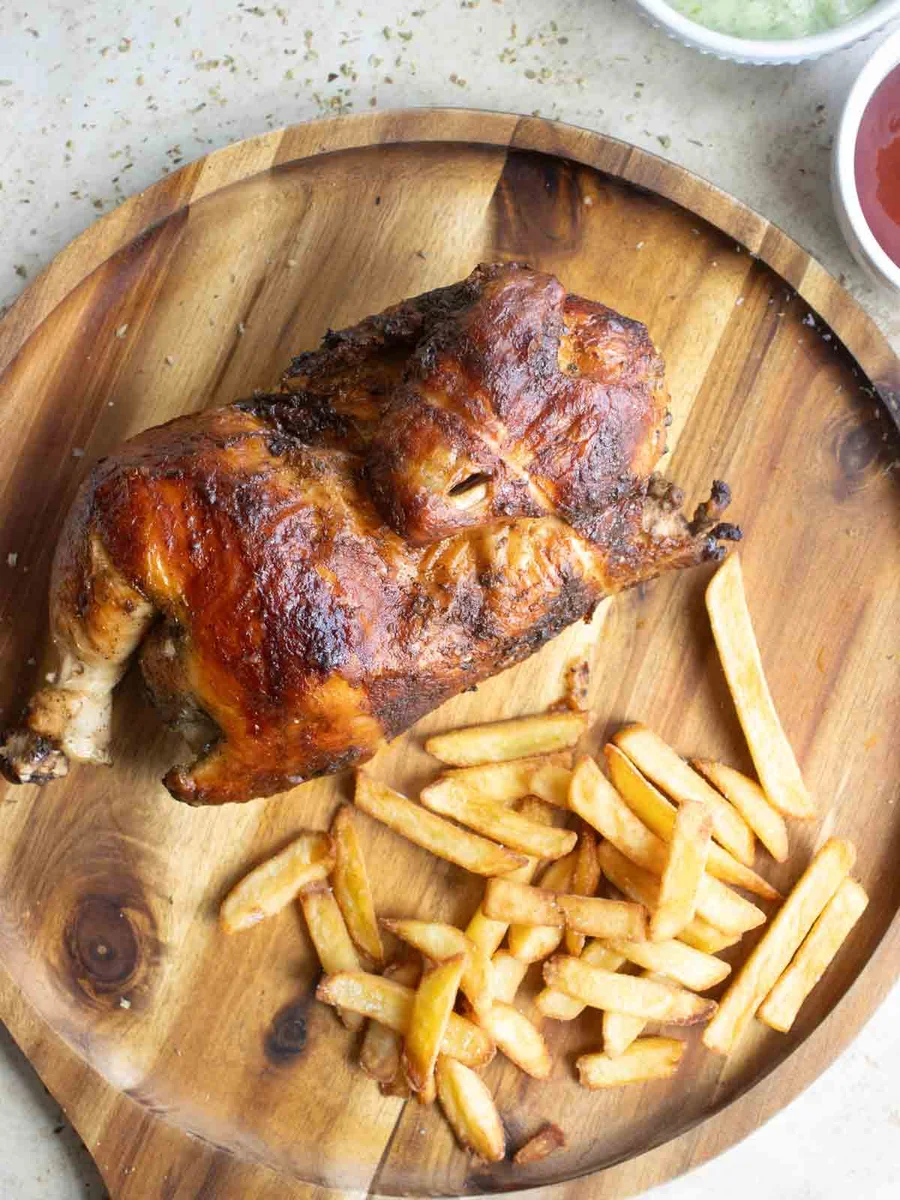
Peruvian roast chicken is a whole bird coated in a savoury marinade of soy, vinegar, garlic and dried herbs, then cooked on a rotisserie. The long roast gives the seasoning time to flavour the chicken and the skin a chance to brown.
Ingredients
- 30 ml (1 fl oz)soft drink
- 1 teaspoon (5 ml)soy sauce
- 1 teaspoon (5 ml)vinegar
- ½ teaspoon (2.5 ml)black pepper
- ½ teaspoon (2.5 ml)ground cumin
- ½ teaspoon (2.5 ml)dried sage
- ½ teaspoon (2.5 ml)dried thyme
- 1 teaspoon (5 ml)dried oregano
- 1 teaspoon (5 ml)chicken stock cube
- 1 tablespoon (15 ml)Ajinomoto seasoning
- 3 tablespoons (45 ml)kosher salt
- 1 tablespoon (15 ml)garlic paste
- 1.8 kg (4 lb)whole chicken
Instructions
- 1
Preheat the oven
Heat the oven to 200°C (400°F).
- 2
Mix the marinade
In a small bowl, combine the soft drink, vinegar, soy sauce, garlic paste and all the seasonings.
- 3
Season the chicken
Remove anything from inside the chicken and pat it dry. Set it in a large container, pour some marinade into the cavity and the rest over the outside, then rub it over the whole bird. Cover and leave to marinate for at least 1 hour.
- 4
Secure the chicken
Use a 30 cm (12-inch) piece of kitchen string to tie the chicken around the breast area and secure the wings. Tie the drumsticks with a second, 15 cm (6-inch) piece. Thread the rotisserie rod through the chicken and secure it at both ends.
- 5
Roast and rest
Cook for 1 hour and 45 minutes. Let the chicken rest for 5 minutes before serving.
What is Peruvian roast chicken?
Peruvian roast chicken, often called pollo a la brasa, is a seasoned whole chicken traditionally cooked over a rotisserie. This version uses a short marinade with garlic, soy, vinegar, salt and dried herbs for a savoury, tangy coating.
The rotisserie turns the bird as it cooks, helping it brown evenly. Marinating for at least an hour gives the seasoning time to cling to the skin and flavour the cavity.
Nutrition and macros by portion
The nutrition label shows one serving as written: 482 calories, 41g protein, 3g carbs, 33g fat.
| Portion | Adjustment | kcal | Protein | Carbs | Fat |
|---|---|---|---|---|---|
| Lighter | More vegetables, less skin | 337 kcal | 29g | 2g | 23g |
| This serving | As written | 482 kcal | 41g | 3g | 33g |
| Hungry | Larger chicken portion | 723 kcal | 62g | 5g | 50g |
The chicken provides most of the protein and fat, while the small amount of soft drink contributes most of the carbohydrates. Pair a portion with vegetables and a moderate serving of potatoes or rice for a more balanced plate.
Building the marinade
Seasonings: the cumin, sage, thyme and oregano bring an earthy, herbal flavour, while black pepper adds a little warmth. Crumble or mix the chicken stock cube and Ajinomoto seasoning thoroughly into the liquid so they are spread through the marinade.
Liquids: the soy sauce and vinegar add savoury and sharp notes, while the soft drink contributes sweetness. Garlic paste makes it easy to coat the chicken without leaving large pieces on the skin.
Getting the chicken ready
Dry skin: pat the chicken thoroughly before adding the marinade. A dry surface helps the seasoning adhere and supports better browning during roasting.
Cavity: pour some marinade inside the chicken as well as over the outside, then rub it around. Keep the bird covered while it marinates for at least 1 hour.
Securing the rotisserie bird
Wings: tie them close to the body with the 30 cm piece of kitchen string so they are held in place as the chicken turns.
Legs: use the 15 cm piece to tie the drumsticks together, then secure the bird firmly on the rotisserie rod at both ends. A snug fit helps it rotate steadily.
Roasting and checking
Cooking time: roast at 200°C (400°F) for 1 hour and 45 minutes, following the recipe’s timing. The bird should turn evenly on the rotisserie and develop browned skin.
Resting: leave the chicken to rest for 5 minutes before carving. This gives the juices a brief chance to settle and makes serving easier.
What to serve with it
Serve the chicken with rice, potatoes or another filling side to make a complete meal. A crisp salad or cooked vegetables add freshness alongside the rich, seasoned skin.
Spoon any collected roasting juices over the carved meat, if available. Keep side dishes simply seasoned so they do not compete with the marinade.
Recipe notes & tips
- Pat the chicken dry before applying the marinade so it coats the skin evenly.
- Cover the chicken while it marinates for at least 1 hour.
- Rub some marinade inside the cavity as well as over the outside.
- Tie the wings and drumsticks securely before placing the chicken on the rotisserie.
- Let the chicken rest for 5 minutes before carving.
Variations
- Citrus note: replace the vinegar with the same amount of citrus juice for a brighter tang.
- Extra garlic: increase the garlic paste slightly for a more pronounced savoury flavour.
- Herb emphasis: adjust the balance of the listed dried herbs to favour your preferred flavour.
- Chilli heat: add a little chilli to the marinade if you want a spicier bird.
- Oven roasting: if you do not have a rotisserie, roast the secured chicken in an oven-safe dish and turn it only if your equipment allows it safely.
Common mistakes to avoid
- Skipping the drying: wet skin can hinder browning; pat the chicken dry before marinating.
- Seasoning only the outside: some areas may taste bland; pour a little marinade into the cavity too.
- Short marinating: the seasoning has less time to cling; leave the covered chicken for at least 1 hour.
- Loose trussing: the wings and legs can move as the bird turns; tie them firmly with kitchen string.
- Carving straight away: juices can run out more readily; rest the chicken for 5 minutes first.
How to store
Refrigerate leftover chicken in a covered container within 2 hours of cooking and use within 3–4 days. Reheat until piping hot throughout, or serve cold from the fridge.
Frequently asked questions
Can I marinate the chicken for longer than 1 hour?
Yes. Keep it covered in the fridge if marinating for longer, then prepare it for the rotisserie when ready to cook.
Can I cook this without a rotisserie?
The method specifies a rotisserie rod. If using another roasting setup, secure the chicken appropriately and follow the equipment’s instructions.
How do I know the chicken is cooked through?
Use a food thermometer in the thickest part of the meat without touching bone, and check that it has reached a safe internal temperature for poultry.
Why tie the chicken before roasting?
Tying holds the wings and drumsticks close to the body, helping the bird stay compact as it rotates.
What can I use instead of kosher salt?
The recipe specifies kosher salt. Other salts have different crystal sizes, so a direct spoon-for-spoon swap may change how salty the marinade tastes.
Cook it from the original
This recipe comes from foodmetamorphosis.com. Their page has the author’s own photos, notes and tips — the best place to cook it from.
Open the recipe on foodmetamorphosis.com