
Roasted Eggplant Halves Recipe
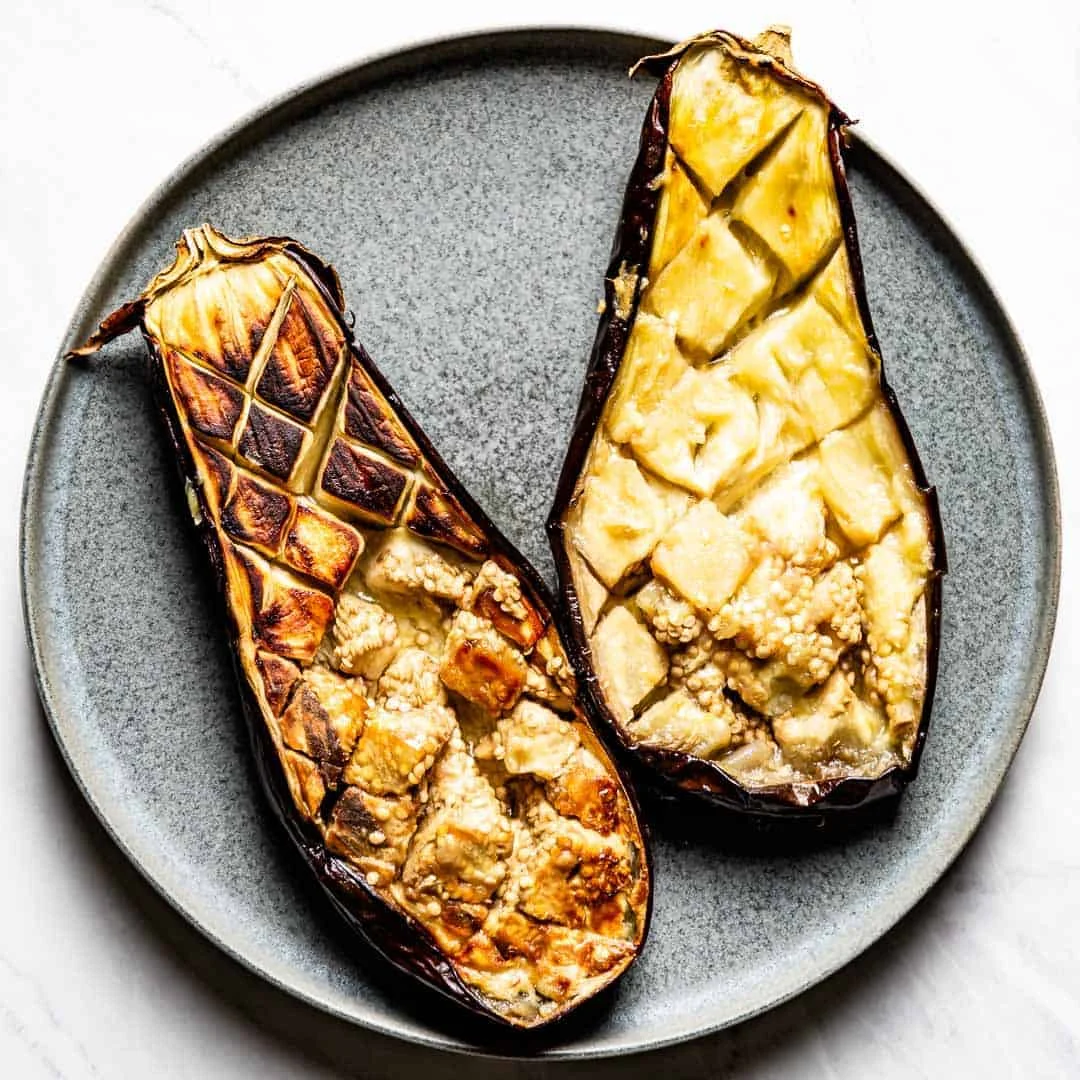
Roasted aubergine halves are salted, scored and baked until soft inside and golden underneath. Prepare them as a useful base for stuffed aubergine recipes, or use the tender flesh in other dishes.
Ingredients
- 2globe aubergines
- 5 ml (1 teaspoon)kosher salt
- 30 ml (2 tablespoons)olive oil
Instructions
- 1
Rinse and dry
Rinse the aubergines under cold water, then dry them with a clean kitchen towel or paper towels.
- 2
Halve and score
Cut each aubergine in half lengthways. Use the tip of a knife to score a diamond pattern into the flesh, about 2.5 cm (1 inch) deep, taking care not to pierce the skin.
- 3
Salt the halves
Set the halves cut-side up on a baking tray lined with parchment paper or aluminium foil. Sprinkle them evenly with the kosher salt.
- 4
Leave to sit
Leave the salted aubergines on the tray for 30 minutes.
- 5
Heat the oven
Preheat the oven to 200°C (400°F).
- 6
Remove moisture
Working over a sink or bowl, gently squeeze the aubergines to release excess moisture. Pat the cut surfaces dry with a paper towel.
- 7
Brush with oil
Brush the cut surfaces evenly with the olive oil.
- 8
Turn cut-side down
Arrange the aubergine halves cut-side down on the baking tray.
- 9
Bake until tender
Bake for 45–60 minutes, until the aubergines collapse and the undersides turn golden brown. Leave them to cool on the work surface for at least 20 minutes.
- 10
Turn and use
Gently turn the halves cut-side up and use them in your chosen recipes.
What are roasted aubergine halves?
This is a simple Mediterranean-style preparation: whole aubergines are halved, seasoned and roasted until their flesh is soft. Roasted aubergine is used in many Mediterranean and Middle Eastern dishes, including recipes where the halves are filled and baked again.
Here, scoring helps the heat reach the flesh, while salting and draining remove some moisture before roasting. The method leaves the aubergine tender enough to scoop or fill, with a browned underside.
Nutrition and macros by portion
The nutrition label shows one serving as written: 119 calories, 2g protein, 13g carbs, 7g fat.
| Portion | Adjustment | kcal | Protein | Carbs | Fat |
|---|---|---|---|---|---|
| Lighter | Use less olive oil | 83 kcal | 1g | 9g | 5g |
| This serving | As written | 119 kcal | 2g | 13g | 7g |
| Hungry | Serve a larger portion | 179 kcal | 3g | 20g | 11g |
The aubergines provide most of the carbohydrates, while the olive oil supplies most of the fat; this recipe has little protein. To balance a portion, serve it with a protein-rich filling or a side of beans or lentils.
Choose and prepare the aubergines
Globe aubergines: Their broad halves make a practical base for stuffing. Choose firm aubergines with smooth skin and no soft patches.
Diamond scoring: Cut into the flesh without breaking through the skin. This helps the halves cook evenly and makes the flesh easier to use once roasted.
Why salt them first?
Salting time: The 30-minute rest draws moisture to the cut surface. The recipe then calls for gently squeezing and patting the halves dry before oiling.
Handle gently: Press only enough to release excess liquid, so the halves keep their shape. Drying the cut face also helps the oil coat the flesh rather than mixing with surface water.
How to judge doneness
Soft flesh: The halves should collapse as they bake, indicating that the inside has become tender. If they still feel firm, continue baking and check again.
Golden underside: Look for browning where the cut face meets the tray. The suggested baking time is 45–60 minutes, but the recipe’s visual cues are the best guide.
Timing and cooling
Oven time: Allow 45–60 minutes at 200°C (400°F), after the 30-minute salting rest. The method also asks for at least 20 minutes of cooling before turning the halves over.
Plan ahead: The stated total time is 80 minutes, but the listed resting, baking and cooling stages alone add up to 95–110 minutes. Allow for the longer sequence if following every step as written.
Use the roasted halves
Stuffed dishes: Once cool enough to handle, turn the halves cut-side up and use them as directed in your stuffing recipe. Their soft flesh can also be scooped out for another preparation.
Serving ideas: Pair the aubergine with grains, pulses or a main dish for a more complete meal. Add other components when serving rather than changing this basic roasting method.
Recipe notes & tips
- Line the tray with parchment paper or foil to make it easier to handle after roasting.
- Keep the knife shallow enough to score the flesh without cutting through the skin.
- Use a bowl to catch the liquid while gently squeezing the aubergine halves.
- Brush the cut faces evenly so the oil reaches the scored flesh.
- Check for both collapsed flesh and a golden underside before taking the aubergines out of the oven.
Variations
- Add garlic: Brush a little minced garlic over the cut faces with the oil before baking.
- Use herbs: Sprinkle dried oregano or thyme over the oiled halves before they go into the oven.
- Add spice: Dust the cut surfaces with paprika or ground cumin along with the salt.
- Finish with lemon: Add a squeeze of lemon juice after the aubergines have cooled.
- Make it a meal: Fill the roasted halves with a prepared grain, pulse or vegetable mixture.
Common mistakes to avoid
- Cutting through the skin: Score only the flesh so the halves stay intact.
- Skipping the rest: Leave the salted halves for 30 minutes, then remove the released moisture as directed.
- Leaving the surface wet: Pat the cut faces dry before brushing them with oil.
- Baking cut-side up: Arrange the halves cut-side down on the tray for roasting.
- Relying only on the clock: Check that the flesh has collapsed and the underside is golden before finishing.
How to store
Cool the roasted halves, then store them in an airtight container in the refrigerator for up to 3 days. Reheat in an oven until hot throughout, or use them cold in another dish.
Frequently asked questions
Do I have to salt the aubergines?
This method includes a 30-minute salting rest, followed by squeezing out excess moisture and patting the cut faces dry. Follow those steps for the result described here.
Can I make the halves ahead?
Yes. Roast and cool them, then refrigerate in an airtight container for up to 3 days. Reheat before serving if your recipe calls for warm aubergine.
How do I know when the aubergines are ready?
The flesh should collapse and the underside should be golden brown. Start checking within the 45–60-minute baking window.
Can I use another type of aubergine?
The quantities and method are written for 2 globe aubergines. Different shapes or sizes may need a different baking time, so use the texture and colour cues.
Why are the halves baked cut-side down?
That is the arrangement specified in this method. It lets the cut surfaces brown against the tray as the aubergines soften.
Cook it from the original
This recipe comes from foolproofliving.com. Their page has the author’s own photos, notes and tips — the best place to cook it from.
Open the recipe on foolproofliving.com