
Sophie Grigson's Orecchiette con Cavolfiore
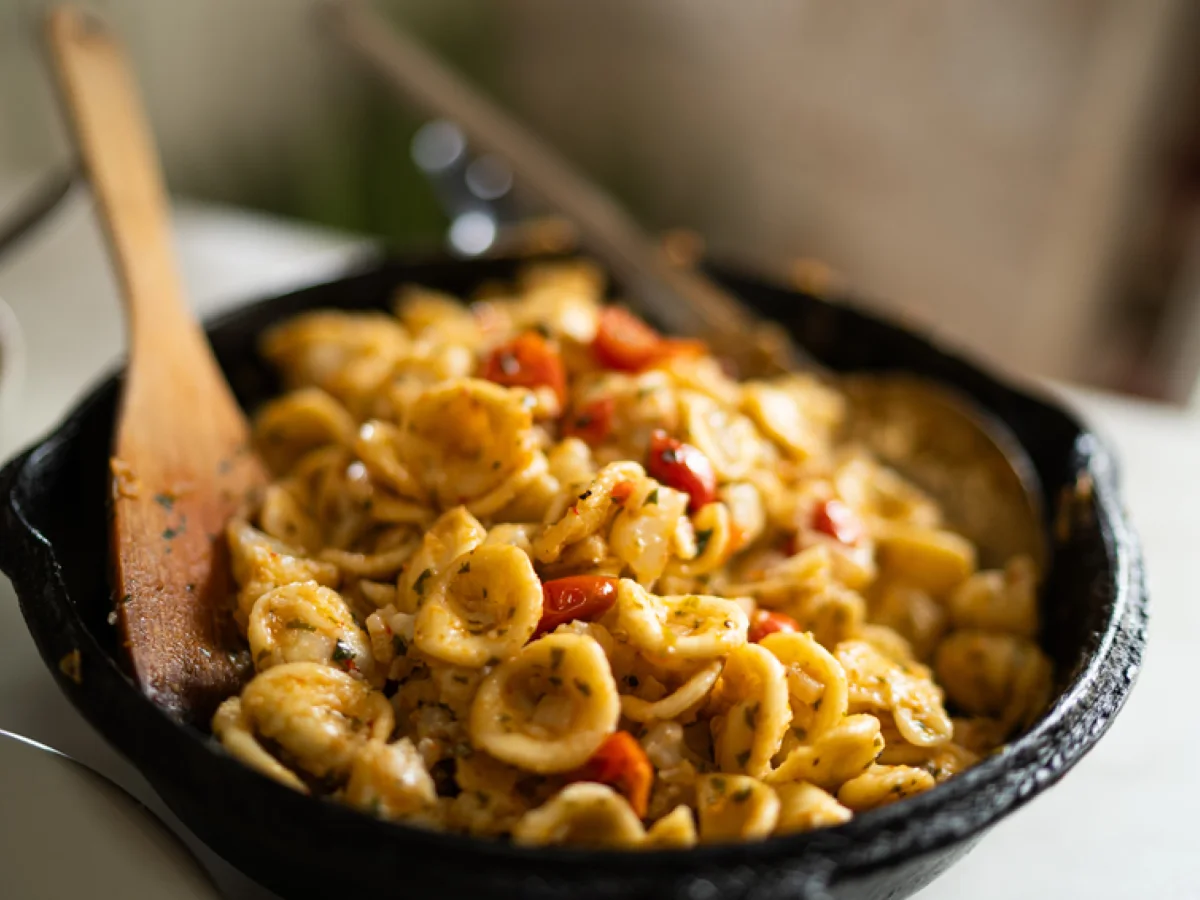
Orecchiette con cavolfiore pairs pasta and cauliflower with a gently cooked tomato, onion and chilli sauce. Finish it with crisp fried breadcrumbs, pecorino or both for a comforting Italian-inspired supper.
Ingredients
- 1 smallhead of cauliflower, preferably the Romano variety with green curds
- 350–400 gdried orecchiette or conchiglie
- 2 tablespoonsextra virgin olive oil
- 1onion, chopped
- 2 clovesgarlic, chopped
- 1fresh red chilli, finely chopped
- 200 gcherry tomatoes, halved
- 2 tablespoonsfinely chopped parsley
- To tasteanchovy
- To tastesalt and pepper
- To servemollica fritta (see below), freshly grated pecorino, or both
- 50 gbreadcrumbs, soft or dry or somewhere in between
- 2 tablespoonsextra-virgin olive oil
Instructions
- 1
Cook pasta and cauliflower
Break the cauliflower into florets about 3–4 cm across and cut the stem into similarly sized pieces. Bring a large pan of well-salted water to a vigorous boil, add the pasta and return it to the boil, then add the cauliflower. Cook for 8–10 minutes more, until the pasta is almost al dente.
- 2
Soften the onion
While the pasta cooks, put the olive oil and onion in a large frying pan. Fry gently until the onion is tender and translucent. Add the garlic, chilli, anchovy and parsley, then fry for about 30 seconds, mashing the anchovy so it dissolves into the mixture.
- 3
Cook the tomatoes
Add the tomatoes, salt and pepper to the frying pan. Cook for a few minutes until the tomatoes soften and break down into the onion mixture. Add a ladleful of pasta water and simmer for a further 3–4 minutes.
- 4
Toss and serve
Scoop out a mugful of pasta water and set it aside. Drain the pasta and cauliflower, then tip them into the frying pan and toss everything together. Add a little more reserved water as needed to keep the mixture moist, then serve at once with fried breadcrumbs, pecorino or both.
- 5
Note on breadcrumbs
Soft breadcrumbs take a little longer to brown than dried ones.
- 6
Fry the breadcrumbs
Put the breadcrumbs and olive oil in a frying pan over a medium heat. Stir until the crumbs have absorbed the oil, then keep stirring until they turn a deep golden brown; stay with the pan as they cook.
- 7
Cool and store
As soon as the breadcrumbs are browned, turn off the heat and scrape them into a bowl. Use them warm or at room temperature. If not using straight away, keep them in an airtight box in a cupboard and use within a day or two.
What is orecchiette con cavolfiore?
Orecchiette con cavolfiore means orecchiette with cauliflower. Orecchiette, whose name refers to their little-ear shape, are associated with Puglia in southern Italy, where pasta is often paired with vegetables and simple, savoury sauces.
This version combines cauliflower with tomatoes, chilli, parsley and anchovy. The pasta water helps bind the ingredients, while fried breadcrumbs or pecorino provide a savoury finish.
Nutrition and macros by portion
The nutrition label shows one serving as written: 480 calories, 16g protein, 81g carbs, 11g fat.
| Portion | Adjustment | kcal | Protein | Carbs | Fat |
|---|---|---|---|---|---|
| Lighter | Use less pasta | 336 kcal | 11g | 57g | 8g |
| This serving | As written | 480 kcal | 16g | 81g | 11g |
| Hungry | Use 400 g pasta | 720 kcal | 24g | 122g | 17g |
Most of the carbohydrate comes from the pasta, with additional amounts in the breadcrumbs and tomatoes. Olive oil and any pecorino contribute much of the fat, while pasta and pecorino provide some protein; cauliflower adds fibre. Balance a serving with a green salad or other vegetables alongside.
Choosing the pasta and cauliflower
Pasta shape: Orecchiette hold small pieces of vegetable and sauce in their shallow centres. Conchiglie are an alternative; use the packet directions as a guide, since shapes can cook at different rates.
Cauliflower: Romano cauliflower is suggested for its green curds, but a small head of ordinary cauliflower works too. Cut the florets and stem into similar-sized pieces so they cook evenly.
Building the sauce
Onion and aromatics: Cook the onion gently until soft and translucent before adding the garlic and chilli. The brief cooking time for these later additions helps them flavour the oil without scorching.
Anchovy and tomatoes: Mash the anchovy into the pan so it blends into the sauce rather than remaining in pieces. Let the halved tomatoes soften before adding pasta water to loosen the mixture.
Getting the timing right
Pasta and cauliflower: Add the cauliflower after the pasta water has returned to the boil. The recipe gives 8–10 minutes more cooking, aiming for pasta that is almost al dente before it is drained.
Sauce and pasta: Make the sauce while the pasta cooks, and reserve cooking water before draining. Toss the drained pasta and cauliflower with the sauce while everything is hot.
Finishing with pasta water
Starchy water: Keep a mugful of pasta water before draining, even though the recipe first adds a ladleful to the tomato sauce. A splash more during tossing helps the sauce coat the pasta and cauliflower.
Texture: Add the reserved water gradually rather than all at once. Stop when the pasta looks lightly coated and moist, not watery.
Making the mollica fritta
Breadcrumbs: Soft crumbs can be used alongside dry ones, but they take longer to brown. Stir the crumbs in the oil over medium heat so they take up the oil evenly.
Colour: Keep stirring and watch the pan closely; the crumbs can go from browned to burnt quickly. Scrape them out as soon as they are a handsome brown.
Serving the dish
Toppings: Serve the pasta straight away with fried breadcrumbs, freshly grated pecorino or a combination. The crunchy crumbs contrast with the soft cauliflower, while pecorino gives a sharper, salty finish.
On the side: A simple green salad or lightly dressed leafy vegetables make a fresh accompaniment without competing with the pasta.
Recipe notes & tips
- Salt the pasta water well, since it seasons both the pasta and cauliflower.
- Cut the cauliflower stem into pieces similar in size to the florets so it cooks at a similar pace.
- Reserve the pasta water before draining; once drained, it is difficult to recreate its starchy quality.
- Add reserved water a little at a time while tossing until the sauce lightly coats the pasta.
- Stir the breadcrumbs continuously and remove them from the pan as soon as they are browned.
- Serve promptly after tossing, while the pasta is hot and the breadcrumbs are still crisp.
Variations
- Use conchiglie: Swap in the alternative pasta shape listed in the recipe and cook until almost al dente.
- Choose another cauliflower: Use a small white cauliflower if Romano is unavailable.
- Add pecorino: Grate it over the finished pasta for a salty, savoury finish.
- Use both toppings: Scatter fried breadcrumbs and pecorino over each serving for crunch and richness.
- Adjust the chilli: Use less or more fresh chilli to suit your preferred level of heat.
Common mistakes to avoid
- Oversized cauliflower pieces: Cut the florets and stem into roughly 3–4 cm pieces so they cook through with the pasta.
- Overcooked pasta: Drain it when almost al dente, as the recipe directs, rather than letting it become soft in the pan.
- Skipping the reserved water: Save a mugful before draining so you can loosen the sauce while tossing.
- Adding too much water: Pour in reserved pasta water gradually and stop when the sauce is moist, not runny.
- Leaving breadcrumbs unattended: Keep stirring over medium heat and take the pan off the heat as soon as they brown.
- Adding dry crumbs at the end: Fry them separately in the oil first so they become crisp and browned.
How to store
Keep any leftover pasta in a covered container in the fridge and eat within 2 days; reheat gently in a pan with a splash of water. Store unused fried breadcrumbs in an airtight box in a cupboard and use within a day or two, as directed.
Frequently asked questions
Can I use conchiglie instead of orecchiette?
Yes. Conchiglie are given as an alternative in the ingredient list; follow the packet timing and check for an almost al dente texture.
Can I use ordinary cauliflower?
Yes. Romano cauliflower is preferred, but another small cauliflower can be cut into similarly sized florets and stem pieces.
How much anchovy should I use?
The method includes anchovy, but the supplied ingredient list gives no quantity. Add it to taste, mashing it into the onion mixture so it dissolves.
Do I need to use pasta water?
Yes, it is used to simmer the tomatoes and to keep the finished pasta moist. Reserve a mugful before draining and add it gradually.
Can I make the fried breadcrumbs ahead?
Yes. The recipe says to store them in an airtight box in a cupboard and use them within a day or two.
Can I serve it without pecorino?
Yes. Fried breadcrumbs are an alternative topping, and the recipe also suggests serving both together.
Cook it from the original
This recipe comes from foodnetwork.co.uk. Their page has the author’s own photos, notes and tips — the best place to cook it from.
Open the recipe on foodnetwork.co.uk