
Puerto Rican rice with pigeon peas
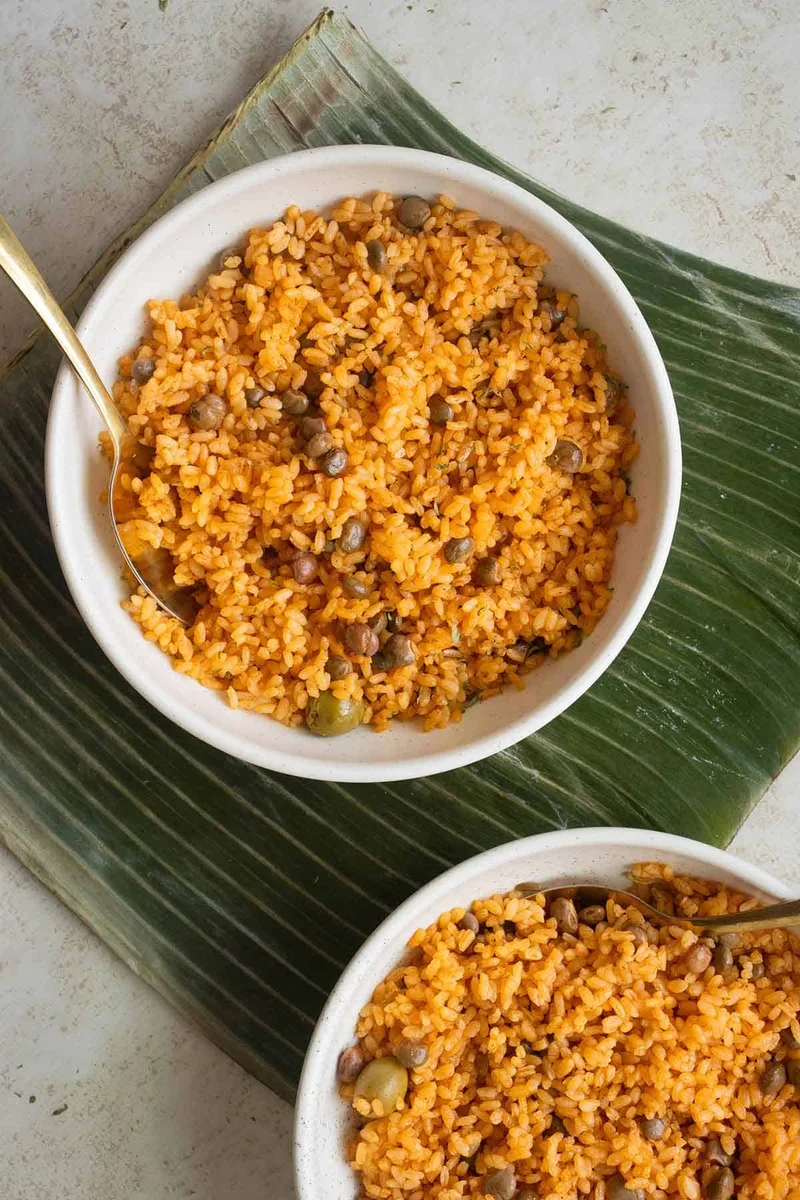
Arroz con gandules is a Puerto Rican rice dish made with pigeon peas and a savoury mix of sofrito, tomato sauce, olives and seasonings. It is especially popular at Christmas and makes a generous one-pot meal for sharing.
Ingredients
- 60 ml (¼ cup)oil
- 120 ml (½ cup)sofrito
- 120 ml (½ cup)tomato sauce
- 60 ml (¼ cup)Manzanilla olives
- 1 teaspoonham bouillon
- 7.5 ml (1½ teaspoons)sazón
- 25 ml (5 teaspoons)adobo
- 425 g (15 oz)pigeon peas, canned
- 1.08 litres (4½ cups)water
- 960 ml (4 cups)medium-grain rice
Instructions
- 1
Cook the seasonings
Set a large caldero over high heat. Add the oil, sofrito, tomato sauce, sazón, adobo, ham bouillon, olives and pigeon peas. Cook for 2 minutes.
- 2
Add the rice
Pour in the water and stir, then wait for it to boil. Rinse the rice. Once the water begins to boil, add the rice, stir and cover. Cook for 10 minutes, or until all the water on the surface has evaporated.
- 3
Finish the cooking
Reduce the heat to medium. Stir the rice, cover the pot again and cook for 20 minutes, until done.
What is arroz con gandules?
Arroz con gandules is a Puerto Rican rice dish cooked with pigeon peas and a seasoned base. It is closely associated with Christmas gatherings, though its straightforward one-pot method suits any shared meal.
This version builds flavour from sofrito, tomato sauce, olives and seasonings, then lets the rice absorb the cooking liquid alongside the peas.
Nutrition and macros by portion
The nutrition label shows one serving as written: 481 calories, 11g protein, 88g carbs, 9g fat.
| Portion | Adjustment | kcal | Protein | Carbs | Fat |
|---|---|---|---|---|---|
| Lighter | Use less oil | 337 kcal | 8g | 62g | 6g |
| This serving | As written | 481 kcal | 11g | 88g | 9g |
| Hungry | Serve a larger portion | 722 kcal | 17g | 132g | 14g |
The rice supplies most of the carbohydrates, while the oil contributes much of the fat; pigeon peas provide some of the protein. Balance a serving with a generous vegetable side, such as salad or cooked greens.
Build the savoury base
Sofrito: this aromatic seasoning mixture forms the base of the dish, while tomato sauce adds another layer of savoury flavour.
Olives and seasonings: Manzanilla olives, sazón, adobo and ham bouillon season the oil and pigeon peas before the rice goes in. Stir them together as they cook so the flavours are distributed through the pot.
Get the rice ready
Rinse first: rinse the medium-grain rice before adding it to the boiling liquid, as directed. Drain it well so you do not add extra water.
Add at the boil: wait until the water is boiling before stirring in the rice. This helps keep the method’s two cooking stages clear: first uncovered at the surface, then covered over lower heat.
Watch the water level
First stage: after covering the pot, cook for 10 minutes or until the water has evaporated from the surface. Keep an eye on the pot rather than relying on the timer alone.
Second stage: reduce the heat to medium, stir and cover again for 20 minutes. The rice should be cooked through and the liquid absorbed; avoid lifting the lid repeatedly while it finishes.
Choose the right pot
A large caldero is specified for this recipe. Use a large, heavy pot with a lid if you do not have one, so the rice has room and can cook covered.
Once the rice is covered for the final stage, keep the heat at medium as instructed and make sure the lid sits securely.
Serve it as a meal
The rice and pigeon peas make this a substantial dish to serve at the centre of a meal. Pair it with a crisp salad or a vegetable side for contrast.
For a festive table, serve it straight from the pot while warm, making sure each portion includes both rice and pigeon peas.
Recipe notes & tips
- Measure the water and rice before you start so they are ready when the pot boils.
- Drain the rinsed rice well before adding it to the pot.
- Stir the rice in once the water is boiling, as the method directs.
- Use a pot large enough to hold the rice and liquid with room to stir.
- Keep the lid on during the final 20-minute cooking stage.
Variations
- More olives: add extra Manzanilla olives for a stronger briny flavour.
- Sofrito choice: use your preferred sofrito to give the rice a slightly different aromatic character.
- Milder seasoning: reduce the adobo to suit your taste.
- Extra pigeon peas: increase the peas for more in each serving.
- Festive side: serve with a fresh salad or cooked vegetables for a contrasting accompaniment.
Common mistakes to avoid
- Adding rice too early: wait until the water boils before stirring in the rinsed rice.
- Skipping the rinse: rinse the rice before cooking, as the recipe instructs.
- Guessing the first stage: cook for 10 minutes or until the surface water has evaporated.
- Leaving the heat high: reduce it to medium after the first stage.
- Lifting the lid repeatedly: keep the pot covered during the final 20 minutes so the rice can finish cooking.
How to store
Refrigerate leftovers promptly in a covered container and use within 3–4 days. Reheat until steaming hot throughout, adding a small splash of water if the rice seems dry.
Frequently asked questions
Can I use a pot instead of a caldero?
Yes. Use a large, heavy pot with a well-fitting lid so you can stir the rice and cover it for the final cooking stage.
Do I need to rinse the rice?
Yes. The method says to rinse it before adding it to the boiling water.
When should I add the rice?
Add it after the water has come to a boil. Stir, cover and cook for 10 minutes, until the surface water has evaporated.
How do I know when the rice is done?
After the first 10-minute stage, reduce the heat to medium, stir and cover for another 20 minutes. The rice should be cooked through with the liquid absorbed.
Can I make this ahead?
You can cook it ahead and refrigerate it in a covered container. Reheat it until steaming hot throughout before serving.
Cook it from the original
This recipe comes from foodmetamorphosis.com. Their page has the author’s own photos, notes and tips — the best place to cook it from.
Open the recipe on foodmetamorphosis.com