
Puerto Rican Rice and Beans
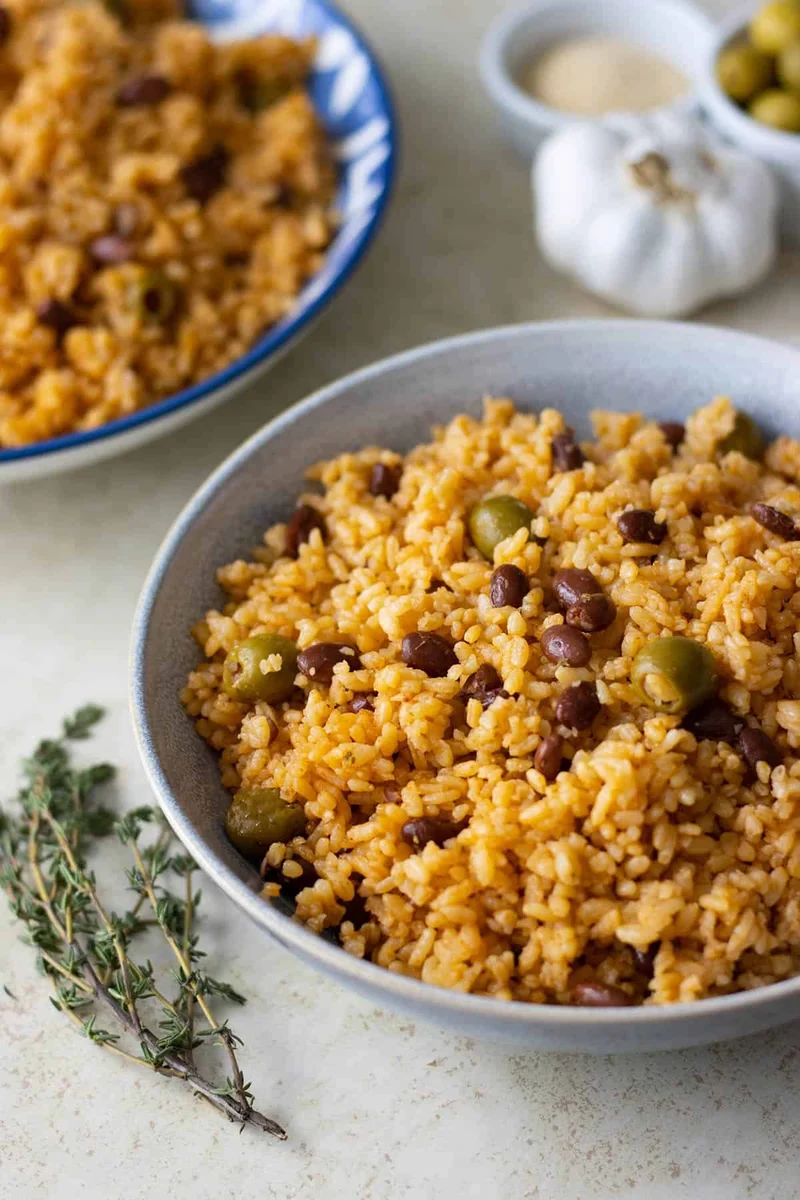
Puerto Rican rice and beans is a one-pot dinner of white rice, pink beans, sofrito, tomato sauce and savoury seasonings. It brings plenty of flavour to the table with a straightforward method and ingredients that cook together in one pot.
Ingredients
- 830 ml (3 1/2 cups)water
- about 740 g (4 cups)white rice
- 60 ml (1/4 cup)oil
- 1 can, about 439 g (15.5 oz)pink beans
- 120 ml (1/2 cup)tomato sauce
- 120 ml (1/2 cup)sofrito
- 5 ml (1 teaspoon)ham flavour concentrate
- 7.5 ml (1 1/2 teaspoons)sazón
- 22.5 ml (1 1/2 tablespoons)adobo
- 60 ml (1/4 cup), about 12Manzanilla olives
Instructions
- 1
Cook the seasonings
Set a large caldero over high heat. Add the oil, tomato sauce, sofrito, olives, beans, ham flavour concentrate, sazón and adobo. Mix well and cook for about 2 minutes.
- 2
Add water and rice
Pour in the water, stir and wait for it to boil. Rinse the rice, then add it when the water is starting to boil. Cover the pot and cook until the water has evaporated, about 8 minutes; keep an eye on it.
- 3
Finish the rice
Once the water has evaporated, lower the heat to medium and stir the rice. Cover the pot and cook for 20 minutes, then serve.
What is Puerto Rican rice and beans?
Puerto Rican rice and beans is a hearty, seasoned rice dish made with beans and a flavour base that includes sofrito. It belongs to the island’s tradition of combining rice, legumes and aromatic seasonings in satisfying everyday meals.
In this version, pink beans, tomato sauce, olives, sazón and adobo cook together before the rice is added. That gives the pot a savoury, tangy seasoning throughout.
Nutrition and macros by portion
The nutrition label shows one serving as written: 417 calories, 7g protein, 76g carbs, 9g fat.
| Portion | Adjustment | kcal | Protein | Carbs | Fat |
|---|---|---|---|---|---|
| Lighter | Less oil, extra vegetables | 292 kcal | 5g | 53g | 6g |
| This serving | As written | 417 kcal | 7g | 76g | 9g |
| Hungry | Larger rice portion | 626 kcal | 11g | 114g | 14g |
The rice supplies most of the carbohydrates, while the oil contributes much of the fat; the beans provide some protein and additional carbohydrates. Serve a moderate scoop with vegetables or salad to add freshness and balance the plate.
The flavour base
Sofrito: this aromatic mixture gives the dish a savoury foundation. Cook it briefly with the tomato sauce and seasonings so its flavour is distributed through the pot.
Olives and seasonings: Manzanilla olives add a briny note, while sazón, adobo and ham flavour concentrate provide the recipe’s distinctive savoury character.
Getting the rice right
Rinsing: rinse the white rice before adding it, as the recipe directs. Drain it well so you do not add extra water to the pot.
Liquid stage: keep watch as the covered rice cooks and the water evaporates. The recipe gives about 8 minutes for this stage, but use the visible water level as your cue.
The covered finish
After the water has evaporated, stir the rice and lower the heat to medium. Cover it for the final 20 minutes so the grains can finish cooking in the seasoned pot.
Keep the lid on during this stage where possible; lifting it repeatedly releases steam and makes the cooking less consistent.
What to serve alongside
Serve the rice and beans as the centre of the meal, or pair it with a simple green salad or cooked vegetables for freshness. The olives and seasonings already bring plenty of savoury flavour, so a lightly dressed side works well.
For a larger meal, serve it alongside a protein of your choice without changing the pot itself.
Timing and texture cues
The stated total time is 35 minutes, including the brief seasoning cook, the water-evaporation stage and the covered finish. Have the ingredients ready before you start, since the early steps move quickly.
The key visual cue is that the water has evaporated before you stir and cover the rice for its final 20 minutes. At the end, the rice should be cooked through and the beans incorporated throughout.
Recipe notes & tips
- Rinse the rice just before cooking and drain it well.
- Measure the water carefully, since the recipe relies on it evaporating before the final covered cook.
- Keep an eye on the pot during the roughly 8-minute evaporation stage.
- Stir once the water has evaporated, then cover the pot for the full 20-minute finish.
- Use a large, heavy pot or caldero so the ingredients have room to cook together.
Variations
- Use another bean: swap pink beans for a similar canned bean, keeping the quantity the same.
- Add vegetables: serve with cooked vegetables on the side for a fresher plate.
- Make it milder: reduce the adobo to suit your preference.
- Boost the olives: add a few extra Manzanilla olives for a more pronounced briny flavour.
- Serve with protein: pair the rice and beans with your preferred cooked protein.
Common mistakes to avoid
- Skipping the rinse: rinse the rice before adding it, as directed.
- Adding rice too early: wait until the water is starting to boil.
- Walking away during evaporation: check the pot as the water cooks off, since the timing can vary.
- Leaving the heat high: lower it to medium once the water has evaporated.
- Opening the lid repeatedly: keep the pot covered during the final 20-minute cook.
How to store
Refrigerate leftovers promptly in a covered container and use within 3 days. Reheat until steaming hot throughout, adding a small splash of water if the rice seems dry.
Frequently asked questions
Can I use a different type of bean?
Yes. A similar canned bean can stand in for the pink beans; keep the quantity the same.
Do I need to rinse the rice?
Yes, the method calls for rinsing it before adding it to the pot. Drain it well first.
How do I know when to lower the heat?
Lower the heat to medium once the water has evaporated, then stir and cover the pot for 20 minutes.
Can I make this without a caldero?
Yes. Use a large, heavy pot with a lid and follow the same cooking stages.
Can I prepare it ahead?
You can cook it ahead and refrigerate it in a covered container. Reheat it until steaming hot throughout before serving.
Cook it from the original
This recipe comes from foodmetamorphosis.com. Their page has the author’s own photos, notes and tips — the best place to cook it from.
Open the recipe on foodmetamorphosis.com