
Kale & Goat Cheese Quiche
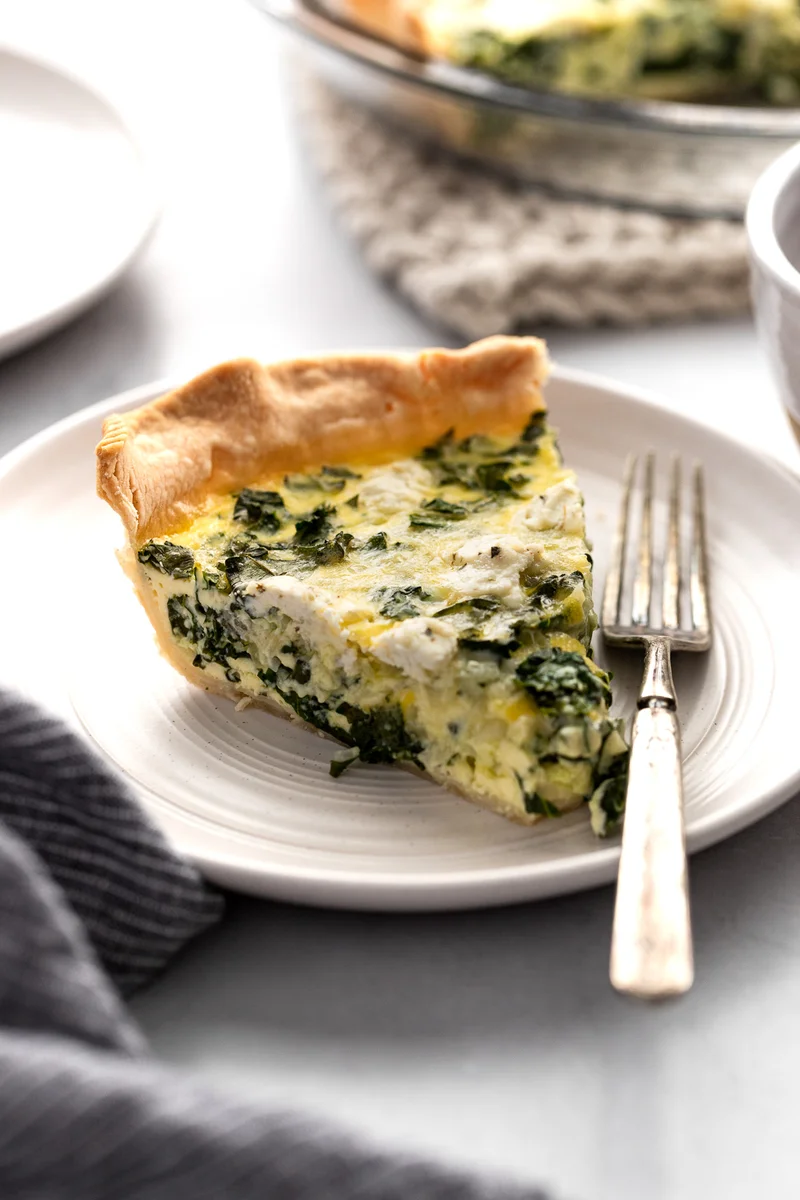
This vegetarian quiche pairs a flaky, buttery crust with a creamy egg filling, tender kale, caramelised shallots and herb and garlic goat’s cheese. Serve it warm for brunch or enjoy a slice cold for lunch.
Ingredients
- 203 g (1½ cups + 2 tablespoons)plain flour
- 1 teaspoonkosher salt
- 113 g (½ cup; 1 stick), cold and cubedunsalted butter
- 75 ml (5 tablespoons)ice water
- 1pie crust, thawed if previously frozen or chilled if homemade
- 28 g (2 tablespoons)unsalted butter
- 1 cup, finely chopped (about 3 bulbs)shallot
- 3 cloves, mincedgarlic
- A dash, optionalred pepper flakes
- 2 cups, choppedkale
- 5eggs
- 240 ml (1 cup)half-and-half
- ⅓ cup, freshly shreddedParmesan
- ½ teaspoonkosher salt
- 57 g (2 ounces)herb and garlic goat’s cheese
Instructions
- 1
Make the pastry
Sift the flour and salt together. Cut in the cold butter with a pastry blender, or use a food processor, until the mixture forms pea-sized crumbs. Slowly add the ice water until the dough just comes together, taking care not to overwork it. Shape it into a round disc, wrap in cling film and refrigerate for at least 1 hour and up to 1 day. Roll the chilled dough on a lightly floured surface into an 11-inch (28 cm) circle.
- 2
Blind-bake the crust
Heat the oven to 190°C (375°F). Fit the crust, homemade or shop-bought, into a 9-inch (23 cm) pie tin, trim the edges and crimp them as needed. Line the crust with baking parchment and fill with pie weights or dried beans. Bake for 8–10 minutes, until the edges are lightly golden.
- 3
Cook the filling
Meanwhile, melt the butter in a frying pan over medium heat. Add the shallots and cook for 4–5 minutes. Stir in the garlic, red pepper flakes and a pinch of salt, then cook for 1–2 minutes more. Add the kale and cook until it has wilted slightly.
- 4
Whisk the eggs
Whisk the eggs well for 1–2 minutes, then whisk in the half-and-half for another 1–2 minutes. Finally, whisk in the Parmesan, salt and pepper.
- 5
Fill the crust
Spread the kale mixture over the base of the partly baked crust. Pour the egg mixture over it, taking care not to push all the kale to one side. Dot the goat’s cheese across the top.
- 6
Bake the quiche
Reduce the oven temperature to 165°C (325°F). Bake for 34–38 minutes, until the crust edges are golden and the filling is mostly set. A slight wobble in the centre is fine; it will firm up as it rests. The centre should reach at least 74°C (165°F).
- 7
Rest before slicing
Set the tin on a cooling rack and leave the quiche to rest for at least 25 minutes before slicing, so it can set and cut neatly. Refrigerate cooled leftovers or wrap them well and freeze.
What is kale and goat’s cheese quiche?
Quiche is a savoury baked tart with a pastry shell and an egg-and-cream filling, a style of dish associated with French cooking that has become a familiar brunch and lunch option in the United States. This version brings together greens, sweet shallots and tangy goat’s cheese.
The partly baked crust helps keep the pastry distinct from the moist filling, while the kale and shallots add savoury depth. Goat’s cheese provides a creamy, herby finish.
Nutrition and macros by portion
The nutrition label shows one serving as written: 578 calories, 15g protein, 48g carbs, 37g fat.
| Portion | Adjustment | kcal | Protein | Carbs | Fat |
|---|---|---|---|---|---|
| Lighter | Smaller slice, more greens | 405 kcal | 11g | 34g | 26g |
| This serving | As written | 578 kcal | 15g | 48g | 37g |
| Hungry | Larger slice | 867 kcal | 23g | 72g | 56g |
The pastry and butter contribute most of the carbohydrates and fat, while the eggs, half-and-half and cheeses provide protein as well as additional fat. Pair a slice with a generous salad or other vegetables for a more balanced plate.
Building the pastry
Cold butter: cut it into the flour until you have small, pea-sized crumbs; keeping the pieces cool helps the pastry bake up tender.
Light handling: add the ice water gradually and stop as soon as the dough holds together. Chilling it before rolling gives the dough time to firm up and makes it easier to handle.
Preparing the vegetables
Shallots: give them 4–5 minutes in the pan to soften before adding the garlic, so their flavour has time to develop.
Kale: cook it only until slightly wilted. It will continue cooking in the oven, and starting with wilted greens makes them easier to distribute through the filling.
Getting a creamy filling
Eggs and half-and-half: whisk them thoroughly for the stated times to combine them into a smooth base. Add the Parmesan, salt and pepper at the end.
Even filling: spread the kale mixture across the crust before pouring in the eggs, then dot the goat’s cheese over the surface. This helps each slice contain a mix of greens and cheese.
Baking to the right point
The crust is partly baked before filling, which gives it a head start and helps prevent a raw, soft base. Pie weights or dried beans hold it in place during this first bake.
Look for golden crust edges and a mostly set filling. A small movement in the centre is expected; the quiche will continue to firm as it rests, and the recipe calls for an internal temperature of at least 74°C (165°F).
Serving and timing
The quiche takes 75 minutes in total, but homemade pastry also needs at least 1 hour of chilling, with the option to refrigerate it for up to 1 day. Allow at least 25 minutes of resting after baking before cutting.
Serve it warm or cold for breakfast, brunch or a light lunch. A crisp green salad or lightly dressed vegetables make a fresh accompaniment.
Recipe notes & tips
- Keep the butter cold when making homemade pastry.
- Add the ice water slowly and stop mixing as soon as the dough comes together.
- Use parchment and pie weights or dried beans when partly baking the crust.
- Let the shallots soften before adding the garlic, which cooks more quickly.
- Leave the baked quiche to rest for at least 25 minutes before slicing.
- For more even slices, spread the kale across the crust rather than piling it in one area.
Variations
- Use shop-bought pastry: fit a thawed crust into the tin and continue with the partly baking step.
- Change the greens: use another leafy green in place of the kale, cooking it until just wilted.
- Adjust the heat: leave out the red pepper flakes for a milder filling.
- Swap the cheese: use another soft, tangy cheese in place of the herb and garlic goat’s cheese.
- Add fresh herbs: scatter chopped herbs over the filling before baking for an extra herbal note.
Common mistakes to avoid
- Overworking the pastry: it can become tough, so stop mixing once the dough just holds together.
- Skipping the chill: warm dough is harder to roll, so refrigerate it for at least 1 hour.
- Filling an unweighted crust: the pastry can puff or slump, so line it with parchment and pie weights or dried beans.
- Cooking the garlic too long: add it after the shallots and cook for only 1–2 minutes before adding the kale.
- Baking until the centre is completely firm: remove the quiche when it is mostly set and allow its slight central wobble to settle while resting.
- Cutting too soon: the filling may not hold its shape, so wait at least 25 minutes after baking.
How to store
Once cooled, cover leftover slices and refrigerate them; use within 3–4 days. The recipe also says to wrap slices well and freeze them; thaw in the refrigerator and reheat gently in the oven, or serve cold.
Frequently asked questions
Can I make the pastry ahead?
Yes. Wrap the dough disc and refrigerate it for up to 1 day before rolling it out.
Can I use a shop-bought crust?
Yes. Use a thawed crust if it was frozen, fit it into the pie tin and follow the partly baking step.
How can I tell when the quiche is done?
The crust edges should be golden and the filling mostly set, with only a slight movement in the centre. The recipe specifies an internal temperature of at least 74°C (165°F).
Why does the quiche need to rest?
Resting for at least 25 minutes helps the filling firm up, making it easier to cut neat slices.
Can I serve this quiche cold?
Yes. It can be enjoyed warm or cold, making it suitable for breakfast, brunch or lunch.
Cook it from the original
This recipe comes from forkinthekitchen.com. Their page has the author’s own photos, notes and tips — the best place to cook it from.
Open the recipe on forkinthekitchen.com