
Puerto Rican pernil
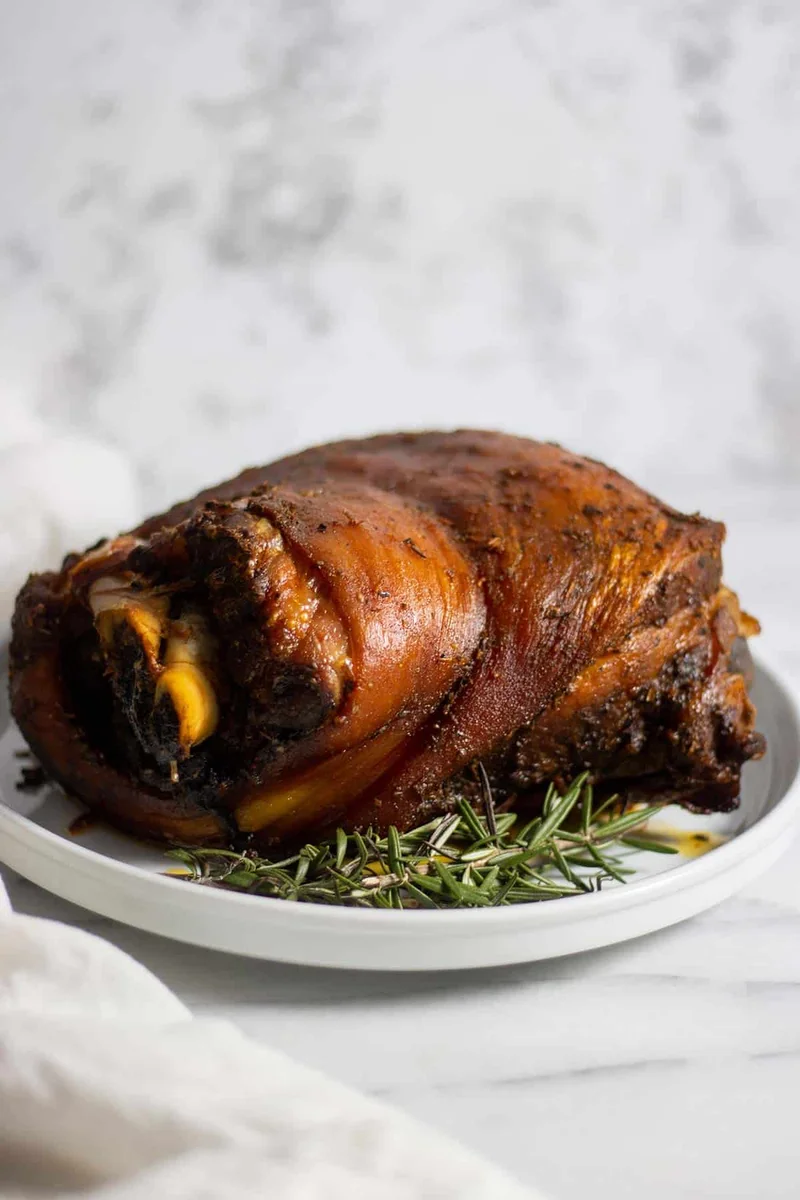
Puerto Rican pernil is pork seasoned with garlic, herbs and savoury spice blends, then slow-roasted until tender. The final blast of high heat helps crisp the skin, making this a celebratory centrepiece that is also satisfying on its own.
Ingredients
- 3,175 g (7 lb)pork pernil
- 60 ml (¼ cup)oil
- 2 tablespoonssalt
- 2 tablespoonsadobo seasoning
- 3 teaspoons (or 2 sachets)sazón seasoning
- 3 clovesgarlic
- 1 teaspoonground thyme
- 1 tablespoondried oregano
Instructions
- 1
Preheat the oven
Heat the oven to 100°C (250°F).
- 2
Mix the seasoning
Grind the garlic and put it in a small bowl. Add the oil, salt, adobo, sazón, thyme and oregano, then mix everything together.
- 3
Season the pork
Turn the pork so the skin faces down. Make 4–6 deep cuts with a knife, taking care not to pierce the skin. Season all the meat, working the mixture into every cut. Transfer the pork to a lidded ovenproof dish, cover and cook for 4 hours.
- 4
Roast until crisp
After 4 hours, increase the oven temperature to 180°C (350°F). Uncover the pork and cook for 3 hours. For very crisp skin, raise the temperature to 230°C (450°F) and cook for a further 15 minutes.
What is Puerto Rican pernil?
Pernil is a Puerto Rican and wider Caribbean way of preparing a large, seasoned cut of pork, traditionally served for gatherings and special meals. Its name is associated with the pork leg, though cuts and family methods can vary.
This version uses garlic, adobo, sazón and dried herbs, then cooks the pork slowly before a short high-heat finish. That combination gives the meat time to become tender while the skin can turn crisp.
Nutrition and macros by portion
The nutrition label shows one serving as written: 348 calories, 38g protein, 1g carbs, 20g fat.
| Portion | Adjustment | kcal | Protein | Carbs | Fat |
|---|---|---|---|---|---|
| Lighter | Serve with more vegetables | 244 kcal | 27g | 1g | 14g |
| This serving | As written | 348 kcal | 38g | 1g | 20g |
| Hungry | Add a larger portion | 522 kcal | 57g | 2g | 30g |
Most of the carbohydrates come from the small amount in the seasoning, while the pork provides most of the protein and fat. Pair a serving with vegetables or beans for a more balanced plate.
The seasoning blend
Garlic: grind it before mixing so it can be worked evenly into the cuts in the meat.
Adobo and sazón: these bring the recipe's characteristic savoury, seasoned flavour. Their saltiness can differ between brands, so use the stated amounts and taste the blend before applying if you wish.
Getting seasoning into the pork
Make 4–6 deep cuts on the meat side, keeping the knife clear of the skin. Pushing the seasoning into those cuts helps flavour the interior as well as the surface.
The skin needs to stay intact for the final crisping stage. Take care when turning and cutting the pork, especially if the cut is heavy.
Slow roasting and crisp skin
Covered cooking: the first 4 hours are spent with the dish covered, followed by 3 hours uncovered at the higher oven setting. Keep the dish covered only for the initial stage, as instructed.
Final finish: the optional 15-minute roast at 230°C (450°F) is the step for extra-crisp skin. Watch closely during this short, hot stage so the surface does not burn.
How to check it is ready
The recipe relies on a long cooking time to tenderise a large piece of pork. Check that the meat is tender before serving; if it still feels firm, it may need more time in the oven.
For crisp skin, look for a dry, browned surface after the final high-heat stage. The meat and skin can finish at different rates, so use tenderness and the appearance of the skin as separate cues.
Serving pernil
The recipe notes that the pork can be eaten without sides. For a fuller plate, serve it with rice, beans or vegetables, which complement the savoury meat.
Let the roast rest briefly before carving so it is easier to handle. Slice or pull the tender meat and serve the crisp skin alongside it.
Recipe notes & tips
- Use a dish with a lid that fits securely for the first part of the roast.
- Keep the knife away from the skin when making the cuts in the meat.
- Work the seasoning into every cut rather than leaving it only on the surface.
- Use oven gloves when uncovering or moving the heavy roasting dish.
- Watch the pork closely during the optional high-temperature finish.
Variations
- More garlic: add extra garlic to the seasoning mixture for a stronger garlic flavour.
- Herb emphasis: adjust the balance of thyme and oregano to suit your taste.
- Milder seasoning: use less adobo or sazón if you prefer a gentler savoury flavour.
- Crispier finish: use the optional 15-minute roast at 230°C (450°F), keeping a close eye on the skin.
Common mistakes to avoid
- Cutting through the skin: keep the 4–6 cuts on the meat side so the skin remains whole for crisping.
- Seasoning only the surface: press the mixture into every cut to season the interior too.
- Uncovering too early: keep the dish covered for the first 4 hours as directed.
- Skipping the uncovered stage: uncover after 4 hours and continue for 3 hours at 180°C (350°F).
- Leaving the final roast unattended: check the skin during the 15-minute high-heat finish to prevent burning.
How to store
Refrigerate leftover pork in a covered container and use within 3–4 days. Reheat until steaming hot; warm the meat gently and use a hot oven briefly to refresh the skin.
Frequently asked questions
Can I make pernil without the final high-heat step?
Yes. The recipe's 15-minute finish at 230°C (450°F) is specifically for extra-crisp skin, so you can omit it if that is not your preference.
How do I keep the skin from getting pierced?
Turn the pork with care and make the 4–6 cuts only on the meat side. Stop each cut before it reaches the skin.
Can I season the pork ahead of time?
The method does not specify advance seasoning. If you prepare it ahead, keep the seasoned pork covered in the refrigerator and allow enough time for it to be ready for roasting.
What should I serve with pernil?
It can be served on its own, or alongside rice, beans or vegetables for a more complete meal.
How can I tell when the pork is tender?
Check the meat after the roasting time; it should be tender rather than firm. If it is not yet tender, continue cooking and check again.
Cook it from the original
This recipe comes from foodmetamorphosis.com. Their page has the author’s own photos, notes and tips — the best place to cook it from.
Open the recipe on foodmetamorphosis.com