
Michel Roux's Pears In Red Wine
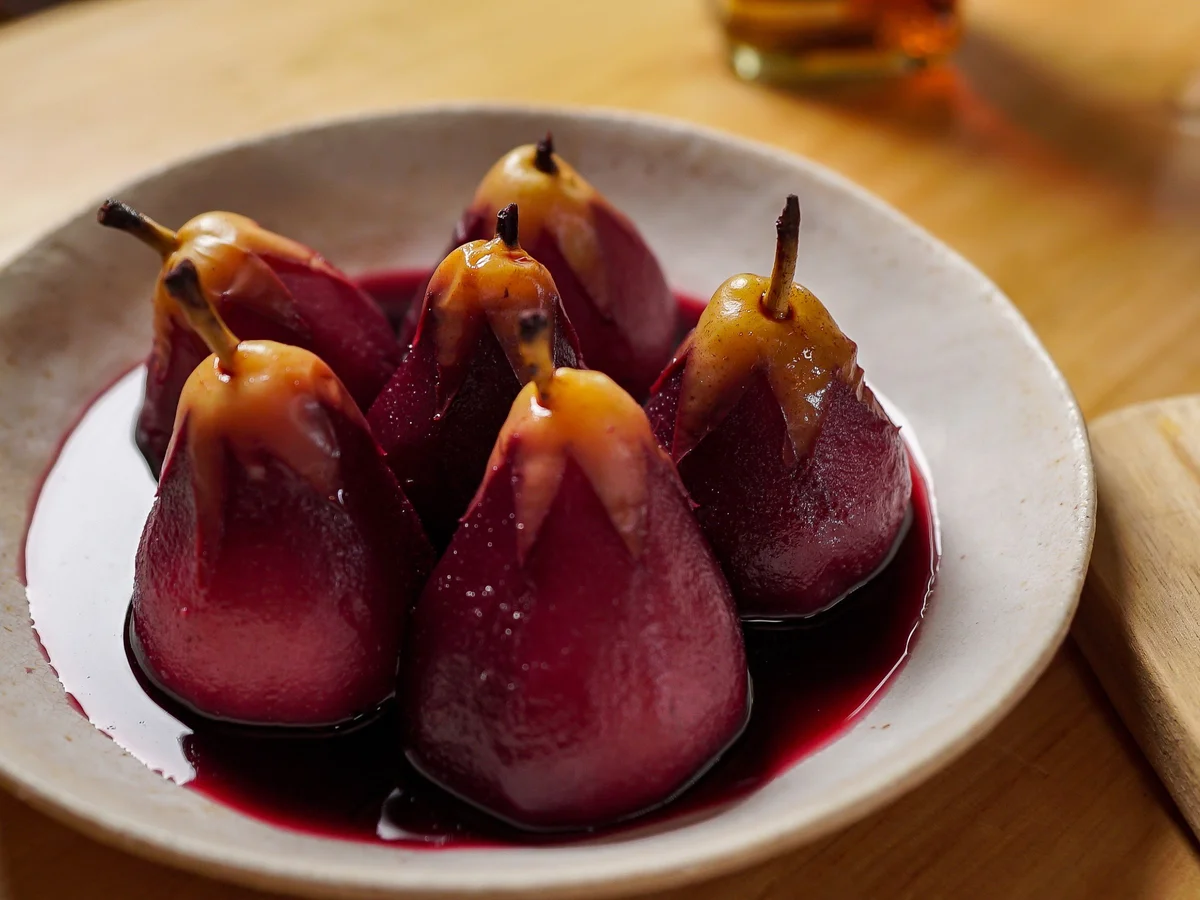
Pears are gently poached in red wine with warming spices, then served under a glossy wine-and-cassis glaze. It is an elegant make-ahead dessert that lets the fruit and wine provide plenty of flavour.
Ingredients
- 6pears, still a little firm
- 1 bottlered wine (Châteauneuf-du-Pape)
- 200 gcaster sugar
- 1cinnamon stick
- 1vanilla pod, split
- 6black peppercorns
- 2 stripsorange peel
- 4 tablespoonscrème de cassis
Instructions
- 1
Prepare the pears
Peel and core the pears, keeping their stalks attached.
- 2
Heat the poaching liquid
Put all the remaining ingredients except the crème de cassis into a pan and bring to the boil.
- 3
Poach the pears
Add the pears, ensuring they are submerged, and cover with greaseproof paper. Simmer for 15–20 minutes, or until just tender.
- 4
Reduce the liquid
Stir in the crème de cassis, then lift the pears into a serving bowl. Strain the liquid into another pan and boil until reduced by a third.
- 5
Glaze and cool
Pour the reduced liquid over the pears and leave them to cool until ready to serve.
What are pears in red wine?
Pears in red wine are a classic French-style dessert: whole fruit is gently poached until tender and served with the spiced cooking liquid reduced to a glaze. This version uses Châteauneuf-du-Pape, a wine from France’s Rhône region, alongside crème de cassis for a deep, fruity finish.
Keeping the stalks on gives the pears an elegant look, while the brief poaching time helps them hold their shape. The reduction concentrates the wine and spices into a sauce that coats the fruit.
Nutrition and macros by portion
The nutrition label shows one serving as written: 275 calories, 1g protein, 65g carbs, 0g fat.
| Portion | Adjustment | kcal | Protein | Carbs | Fat |
|---|---|---|---|---|---|
| Lighter | Use less glaze | 193 kcal | 1g | 46g | 0g |
| This serving | As written | 275 kcal | 1g | 65g | 0g |
| Hungry | Serve two pears | 413 kcal | 2g | 98g | 0g |
The pears and caster sugar provide most of the carbohydrates, while the wine and crème de cassis contribute additional energy and sugars to the glaze. The dish contains very little fat or protein on its own, so serve a pear with a modest spoonful of yoghurt or crème fraîche for a more balanced plate.
Choose pears that hold their shape
Fruit: Choose pears that are ripe enough to eat but still a little firm, as very soft ones can collapse during poaching. Similar-sized pears are helpful so they cook at roughly the same rate.
Wine: The recipe calls for Châteauneuf-du-Pape; use a red wine you enjoy drinking, since its flavour carries through into the glaze.
Keep the pears submerged
Coverage: Arrange the pears so they sit beneath the poaching liquid, then lay greaseproof paper over the pan. This helps the exposed parts cook more evenly.
Tenderness: Begin checking at 15 minutes. The pears should be just tender rather than soft enough to break apart.
Build a glossy glaze
Straining: Once the pears are out, strain the liquid into a separate pan to remove the spices and orange peel. This leaves a smooth sauce for serving.
Reduction: Boil the strained liquid until it has reduced by a third, as directed. Pour it over the pears while it is still fluid so it can coat them.
Let the flavours settle
Cooling: Leave the pears in their glaze until cool, as the recipe directs. This also gives the fruit time to take on more of the spiced wine flavour.
Make-ahead: The pears can be prepared before serving and kept chilled; bring them out in time to lose some of their chill if you prefer them less cold.
What to serve alongside
Cream: A spoonful of crème fraîche or softly whipped cream makes a mellow contrast to the wine and cassis.
Crunch: Serve with crisp biscuits or a thin almond tuile for a contrast in texture. Keep the accompaniment simple so the poached fruit remains the focus.
Recipe notes & tips
- Pick pears of a similar size so they are likely to become tender together.
- Keep the stalks attached when peeling and coring for a neat presentation.
- Use greaseproof paper over the pan to help keep the pears submerged.
- Start checking tenderness at 15 minutes to avoid overcooking.
- Strain the liquid carefully before reducing it for a smooth glaze.
- Pour the glaze over the pears while it is still fluid.
Variations
- Use another red wine: Choose a full-bodied red that you would be happy to drink.
- Add citrus: Include a little extra orange peel for a brighter aromatic note.
- Serve with crème fraîche: Add a spoonful alongside each pear for a tangy contrast.
- Add toasted almonds: Scatter a few over the pears just before serving for crunch.
- Use vanilla extract: If you do not have a vanilla pod, add a little extract to the liquid.
Common mistakes to avoid
- Using very soft pears: They can lose their shape; start with pears that are still a little firm.
- Leaving fruit exposed: The uncovered parts may cook unevenly; keep the pears submerged beneath greaseproof paper.
- Boiling too long: The pears may become mushy; check from 15 minutes and stop when just tender.
- Skipping the straining: Whole spices and peel can end up in the glaze; strain the liquid before reducing.
- Reducing too far: The glaze can become overly thick; stop when the liquid has reduced by a third.
How to store
Store the pears and glaze covered in the refrigerator and use within 3 days. Serve chilled or let them stand briefly at room temperature; warm gently in a pan if you prefer them warm.
Frequently asked questions
Can I make the pears ahead?
Yes. Cool them in the glaze, cover and refrigerate until ready to serve.
How can I tell when the pears are done?
They should be just tender when tested, but still hold their shape. Begin checking at 15 minutes.
Do I have to use Châteauneuf-du-Pape?
That is the wine specified in the recipe. If substituting, choose a red wine whose flavour you enjoy, as it will carry through into the sauce.
Why cover the pan with greaseproof paper?
It helps keep the pears beneath the poaching liquid so they cook more evenly.
Can I serve these pears warm?
Yes. The recipe says to cool them until serving, but you can warm them gently with some of the glaze if you prefer.
Cook it from the original
This recipe comes from foodnetwork.co.uk. Their page has the author’s own photos, notes and tips — the best place to cook it from.
Open the recipe on foodnetwork.co.uk