
Roasted Garlic Hummus
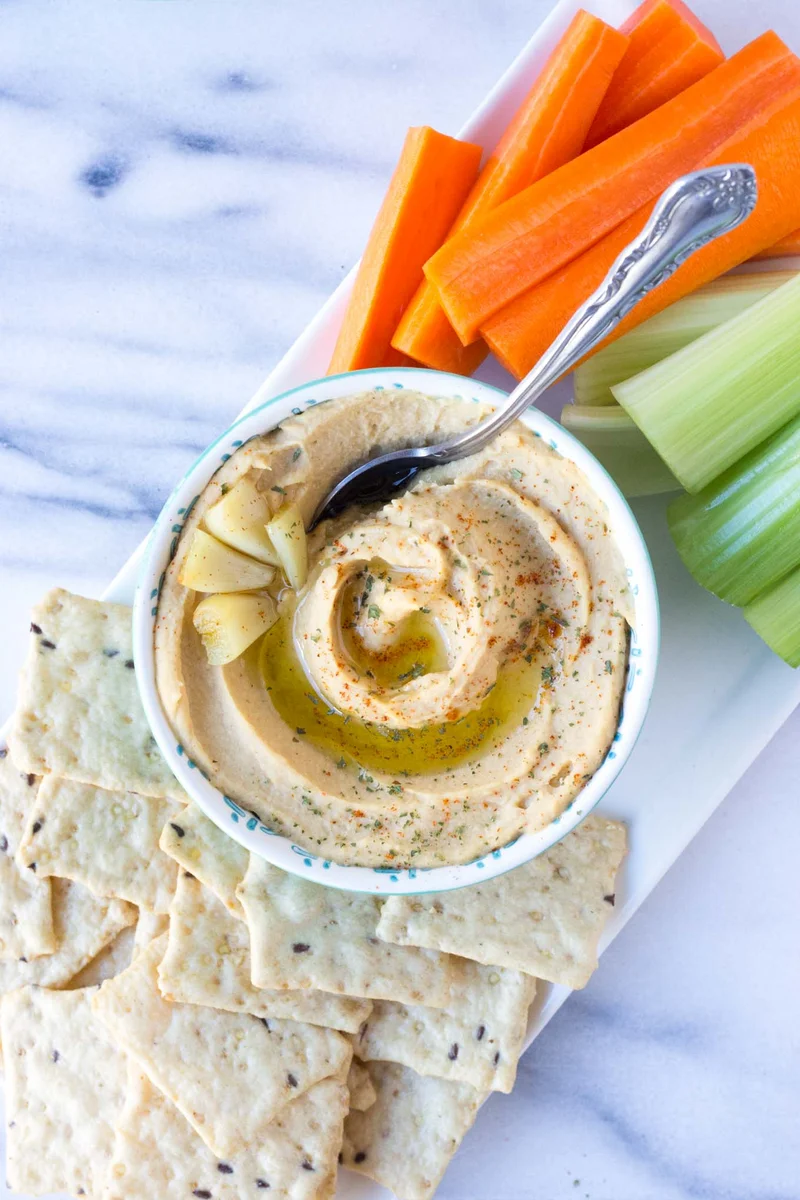
This smooth hummus blends chickpeas and tahini with mellow, deeply flavoured roasted garlic. Serve it as a dip, spread it in a sandwich or pack it for lunch.
Ingredients
- 1 can (425 g / 15 oz)chickpeas, drained and rinsed, skins removed
- 2garlic bulbs
- about 20 mlolive oil
- 10 mllemon juice
- 12.5 mltahini
- 0.6 mlcayenne pepper, or a dash to start if sensitive to spice
- 2.5 ml, plus more to tastesea salt
- 30 mlreserved chickpea liquid or water
- 30 mlolive oil
Instructions
- 1
Roast the garlic
Heat the oven to 200°C (400°F). Remove the loose outer paper from each garlic bulb and slice off the top so the clove ends are exposed. Set each bulb on its own piece of foil, drizzle with about 10 ml olive oil per bulb, and wrap. Roast for 35–40 minutes, until tender and the cloves squeeze out easily.
- 2
Prepare chickpeas
Meanwhile, drain and rinse the chickpeas, reserving 30 ml of the liquid if you wish to use it. Remove the skins.
- 3
Add ingredients
When the garlic is roasted, put the chickpeas, lemon juice, tahini and cayenne in a food processor. Turn each garlic bulb upside down and squeeze the cloves into the processor.
- 4
Blend until smooth
Pulse until combined, then add the reserved chickpea liquid or water. With the processor running, drizzle in the remaining 30 ml olive oil. Scrape down the sides as needed, then taste and adjust the salt, cayenne and consistency, adding more water or olive oil if needed. Serve with extra cayenne, olive oil or parsley flakes, if desired.
What is roasted garlic hummus?
Hummus is a chickpea-and-tahini dip associated with the cuisines of the Levant and wider Middle East. This version builds on that familiar base with roasted garlic, which brings a sweet, mellow savouriness rather than the sharper bite of raw garlic.
The method keeps the ingredient list simple: roast the garlic, then blend it with chickpeas, tahini, lemon and oil. Removing the chickpea skins helps the finished dip feel especially smooth.
Nutrition and macros by portion
The nutrition label shows one serving as written: 247 calories, 10g protein, 32g carbs, 15g fat.
| Portion | Adjustment | kcal | Protein | Carbs | Fat |
|---|---|---|---|---|---|
| Lighter | Use less finishing oil | 173 kcal | 7g | 22g | 11g |
| This serving | As written | 247 kcal | 10g | 32g | 15g |
| Hungry | Serve a larger portion | 371 kcal | 15g | 48g | 23g |
Chickpeas provide most of the carbohydrates and some protein, while olive oil and tahini contribute most of the fat; the garlic adds flavour and a smaller share of the energy. Pair a portion with plenty of crunchy vegetables and a protein-rich accompaniment if serving it as part of a meal.
Roasting the garlic
Foil parcels: keep each bulb wrapped so it softens in its own steam and the oil. The recipe calls for about 10 ml oil per bulb; coat the exposed cloves without drenching them.
Doneness: roast for 35–40 minutes at 200°C (400°F). The cloves should be tender enough to squeeze from the bulb easily.
Preparing the chickpeas
Rinsing: drain and rinse the canned chickpeas, saving 30 ml of the liquid if you plan to use it for blending. Water works as an alternative.
Skins: removing them is a small but useful step for a silkier texture. Take care not to discard the chickpeas while sorting through them.
Getting the texture right
Start blending: pulse the chickpeas with the lemon juice, tahini, cayenne and squeezed-out roasted garlic until combined. Add the reserved liquid or water, then drizzle in the final 30 ml olive oil while blending.
Adjust gradually: scrape the processor bowl as needed and check the texture before adding more liquid or oil. Add small amounts at a time so the hummus does not become thinner or richer than you want.
Balancing the flavour
Lemon and salt: taste after blending, since the chickpeas and tahini can soften the sharpness of the lemon. Add salt to taste, bearing in mind that canned chickpeas may already contribute some salt.
Cayenne: the stated amount gives the dip a little heat. If you are sensitive to spice, begin with a dash and add more only after tasting.
Serving and timing
Serving: offer the hummus as an appetiser with vegetables or bread, or use it as a sandwich spread. A drizzle of olive oil, extra cayenne or parsley flakes can finish it, as suggested in the method.
Schedule: allow 35–40 minutes for roasting the garlic, with the chickpeas prepared while it cooks. The recipe gives a total time of 45 minutes.
Recipe notes & tips
- Reserve the chickpea liquid before rinsing if you want to use it to loosen the hummus.
- Roast the garlic until the cloves squeeze out easily rather than relying on colour alone.
- Squeeze the bulbs from the base so the softened cloves come out cleanly.
- Add the blending liquid gradually and pause to check the consistency.
- Taste for salt and cayenne once the hummus is blended.
- Serve with extra olive oil, cayenne or parsley flakes if desired.
Variations
- More lemon: Add a little extra lemon juice after blending for a brighter finish.
- Gentler heat: Start with a dash of cayenne and increase it to taste.
- Herb finish: Sprinkle parsley flakes over the hummus just before serving.
- Thicker dip: Begin with less chickpea liquid or water and add only as needed.
- Smoother texture: Take time to remove the chickpea skins before processing.
Common mistakes to avoid
- Exposed garlic left uncovered: Wrap each bulb in foil so it softens without drying out.
- Garlic removed too early: Roast until the cloves are tender and squeeze out easily.
- Chickpea liquid discarded: Set aside 30 ml before rinsing if you want to use it in the dip.
- Too much liquid at once: Add it gradually and check the texture between additions.
- Cayenne added without tasting: Start with a dash if you are sensitive to spice, then adjust after blending.
- Hummus not checked for seasoning: Taste it at the end and adjust salt and cayenne to suit.
How to store
Transfer leftover hummus to an airtight container and refrigerate for up to 4 days. Stir before serving; if it has thickened, mix in a little water to loosen it. This dip is usually served chilled or at room temperature rather than reheated.
Frequently asked questions
Can I use water instead of chickpea liquid?
Yes. The recipe allows either reserved chickpea liquid or water to help the ingredients blend.
Do I have to remove the chickpea skins?
The method includes removing them to help make the hummus smoother. You can leave them on, though the texture may be less silky.
How can I tell when the garlic is ready?
After 35–40 minutes at 200°C (400°F), the cloves should be tender and easy to squeeze out of the bulb.
How do I make the hummus less spicy?
Begin with a dash of cayenne or leave it out, then taste and add more if you want extra heat.
What can I serve with roasted garlic hummus?
Serve it as an appetiser with vegetables or bread, or spread it in a sandwich. Extra olive oil, cayenne or parsley flakes make optional toppings.
Cook it from the original
This recipe comes from forkinthekitchen.com. Their page has the author’s own photos, notes and tips — the best place to cook it from.
Open the recipe on forkinthekitchen.com