
Roasted Butternut Squash Cubes
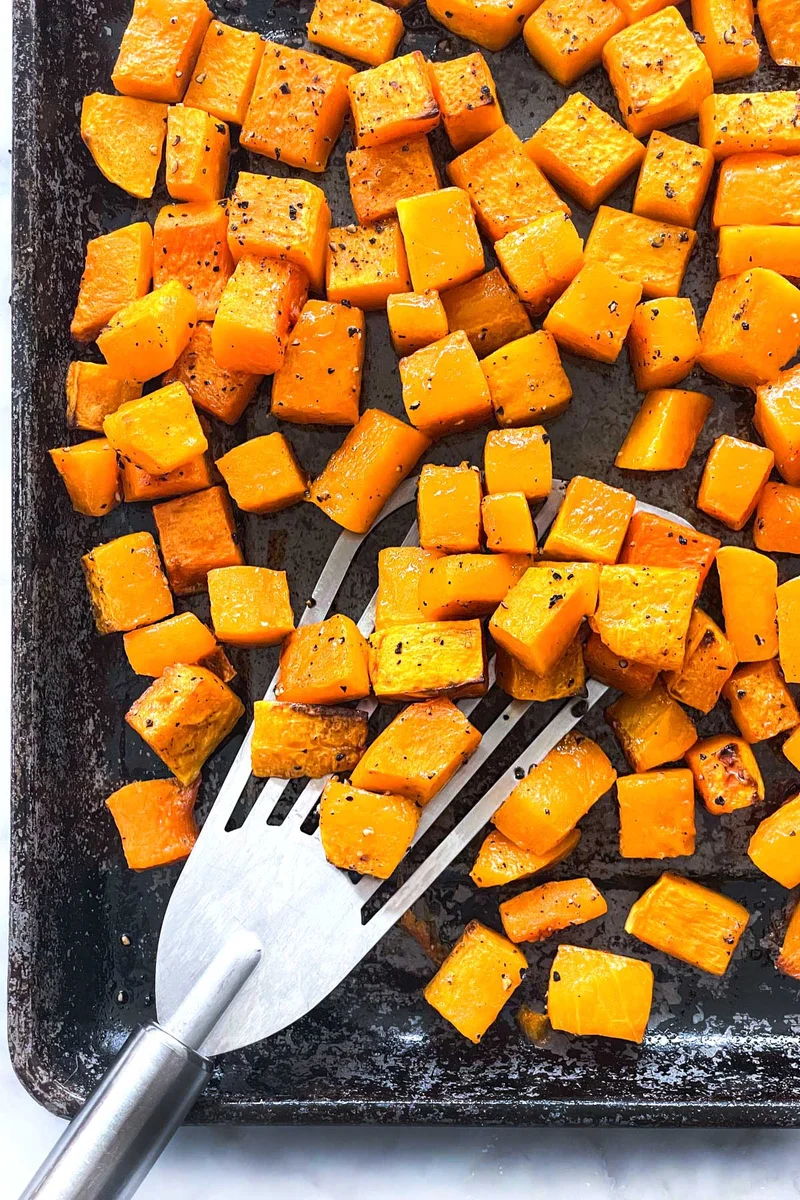
These oven-roasted butternut squash cubes turn tender inside and golden at the edges, with a sweet, caramelised flavour. They make a simple side dish and are also easy to add to salads, pasta or grain bowls.
Ingredients
- 907 g (2 lb)butternut squash
- 52.5 ml (3½ tablespoons)extra-virgin olive oil
- 3.75 ml (¾ teaspoon)kosher salt
- 1.25 ml (¼ teaspoon)freshly ground black pepper
Instructions
- 1
Heat the oven
Preheat the oven to 220°C (425°F).
- 2
Prepare the squash
Set the squash on its side on a chopping board and carefully trim off the top and bottom with a sharp knife. Peel it, then cut it in half from stem to base. Scoop out the seeds and stringy insides with a sturdy spoon and discard them.
- 3
Cube and season
Cut the squash into 2.5 cm (1-inch) cubes and spread them on a large baking tray. Drizzle with the olive oil, then season with the salt and pepper. Toss with your hands until coated, then arrange the cubes in a single, even layer.
- 4
Roast until golden
Roast for about 15–20 minutes, until the squash is golden and the undersides are caramelised. Taste and add more salt or pepper if desired.
What are roasted butternut squash cubes?
Butternut squash is a sweet, firm-fleshed winter squash associated with North American cooking. This American-style side keeps the preparation straightforward: peel, cube and roast the squash with oil and seasoning.
High oven heat helps the edges brown while the centres soften, bringing out the squash’s natural sweetness. The cubes are versatile enough to serve alongside a main or mix into other dishes.
Nutrition and macros by portion
The nutrition label shows one serving as written: 262 calories, 3g protein, 40g carbs, 13g fat.
| Portion | Adjustment | kcal | Protein | Carbs | Fat |
|---|---|---|---|---|---|
| Lighter | Use less olive oil | 183 kcal | 2g | 28g | 9g |
| This serving | As written | 262 kcal | 3g | 40g | 13g |
| Hungry | Serve a larger portion | 393 kcal | 5g | 60g | 20g |
The squash supplies most of the carbohydrates, while olive oil contributes most of the fat; the dish has relatively little protein on its own. For a more balanced plate, serve it with a protein-rich main and another vegetable.
Choosing and preparing the squash
Size: A 907 g squash gives you enough cubes for four side portions. Choose one that feels firm and heavy for its size, with intact skin.
Peeling: Use a sharp peeler or knife, and trim both ends first so the squash sits more steadily while you work. Scoop out the seeds and stringy flesh before cutting it into cubes.
Getting the browning right
Cube size: Cut the pieces to roughly 2.5 cm so they cook at a similar pace. Smaller pieces may soften sooner, while larger ones can need extra time.
Spacing: Spread the cubes in one layer with a little room between them. Crowded pieces tend to soften in their own moisture rather than caramelise.
Checking for doneness
Colour: Look for golden surfaces and caramelised undersides as the main visual cue. Start checking at 15 minutes, since the exact timing depends on the pieces and your oven.
Texture: A fork should slide into a cube without it falling apart. If the centres are still firm, return the tray to the oven and check again shortly.
Seasoning and serving
Oil and seasoning: Toss the cubes thoroughly so each one gets a light coating of olive oil, salt and pepper. Taste at the end and adjust the seasoning if needed.
Serving ideas: Serve them warm as a side, or let them cool slightly before adding them to salads, pasta or grain bowls. They pair well with simply cooked grains and a source of protein.
Timing and useful equipment
Preparation: Peeling and cutting take most of the hands-on work. A large, stable chopping board and a sharp knife make that stage easier to manage.
Roasting: The oven is set to 220°C (425°F), and the squash roasts for about 15–20 minutes. Use a large baking tray so the cubes can brown rather than steam.
Recipe notes & tips
- Use a sharp knife and a steady board when trimming and cutting the squash.
- Keep the cubes similar in size so they roast evenly.
- Toss the squash well to distribute the oil and seasoning.
- Leave space between pieces on the tray to encourage browning.
- Check the undersides as well as the tops for caramelisation.
- Taste before serving and adjust the salt and pepper if needed.
Variations
- Add herbs: Toss the cubes with chopped rosemary or thyme before roasting.
- Bring in spice: Add a pinch of smoked paprika or ground cumin with the salt and pepper.
- Add garlic: Toss with finely chopped garlic for the final few minutes of roasting so it does not burn.
- Finish with citrus: Squeeze a little lemon juice over the roasted cubes just before serving.
- Add crunch: Scatter toasted pumpkin seeds over the squash at the table.
Common mistakes to avoid
- Uneven cubes: Pieces of different sizes cook at different speeds; aim for cubes around 2.5 cm.
- Crowding the tray: Packed squash steams instead of browning; use a larger tray if necessary.
- Skipping the toss: Dry or unevenly seasoned pieces are less flavourful; coat all sides with oil and seasoning.
- Under-roasting: Firm centres need more time; return the tray to the oven and check again shortly.
- Over-roasting: Very soft cubes can lose their shape; start checking at 15 minutes.
How to store
Cool the squash, then refrigerate it in an airtight container for up to 4 days. Reheat on a baking tray in a 200°C oven until warmed through, or microwave it; the oven helps restore some browning.
Frequently asked questions
Can I leave the skin on?
This method calls for peeling the squash before cubing it. The skin can be tough, so peel it for the texture intended here.
How do I know when the squash is ready?
The cubes should be golden with caramelised undersides and tender centres. Check them from 15 minutes and roast longer if they are still firm.
Can I prepare the squash ahead?
You can peel and cube it ahead of time, then keep the pieces covered in the refrigerator until ready to roast. For the best browning, coat and season them just before they go into the oven.
Can I use frozen butternut squash?
Yes, but frozen cubes may release more moisture and brown less evenly. Roast them from frozen in a single layer and allow extra time if needed.
What can I serve with roasted butternut squash?
Serve it as a side with a protein-rich main, or add it to salads, pasta and grain bowls. Its sweet, savoury flavour works with a range of simple meals.
Can I make the cubes crispier?
Cut the squash into even pieces, avoid crowding the tray and roast until the undersides are caramelised. The cubes will be tender rather than crisp all the way through.
Cook it from the original
This recipe comes from foodiecrush.com. Their page has the author’s own photos, notes and tips — the best place to cook it from.
Open the recipe on foodiecrush.com