
Michel Roux's Buche de Noel
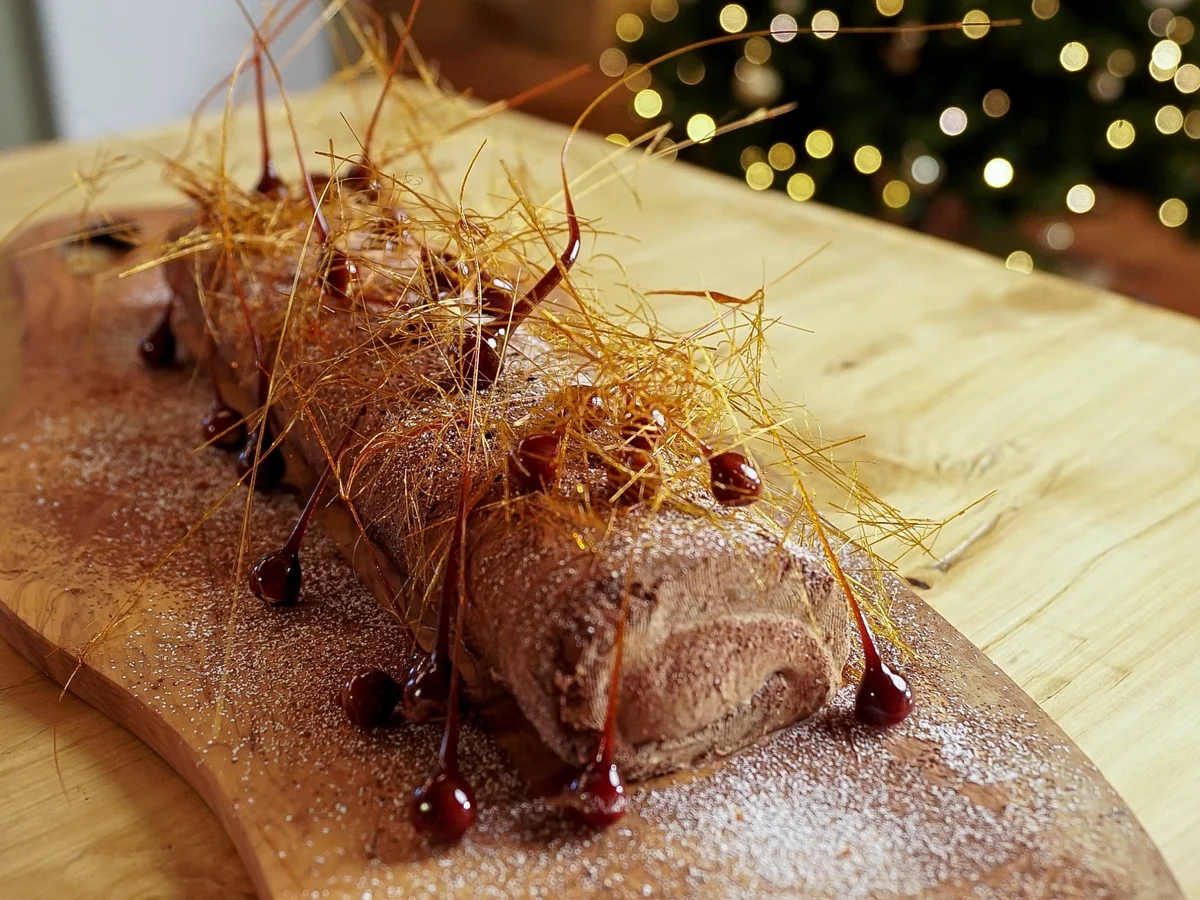
Michel Roux’s bûche de Noël is a rolled chocolate sponge filled with whipped caramel-chocolate ganache and topped with caramelised hazelnuts. It makes a festive centrepiece, with a light sponge and rich, crisp-sweet decorations.
Ingredients
- 6large free-range eggs, separated
- 150 gcaster sugar
- 70 gplain flour
- 30 gpure cocoa powder
- A pinchsalt
- 30 gbutter, melted and cooled
- Extracaster sugar, for sprinkling
- Extracocoa powder, for dusting
- Extramelted butter, for greasing the tray
- 250 mlcream
- 250 gValrhona Caramelia chocolate buttons
- 80 gwhole peeled hazelnuts, toasted
- 200 gcaster sugar
- As neededwooden toothpicks, to prick the nuts
Instructions
- 1
Prepare the tin
Heat the oven to 180°C fan. Grease a 30 x 40 cm Swiss roll tin with melted butter and line it with non-stick baking paper.
- 2
Mix the yolks
Whisk the egg yolks with 100 g of the sugar in a stand mixer for around 3–4 minutes, until pale, fluffy and at ribbon stage. Sift the flour, cocoa and salt into a bowl. Fold half of this dry mixture gently into the yolks, then fold in the rest. Add the cooled melted butter and fold it through.
- 3
Whisk the whites
In a clean bowl, whisk the egg whites until frothy. Add the remaining 50 g sugar and beat until stiff peaks form. Mix one-third of the whites into the chocolate mixture, then gently fold in the rest until combined.
- 4
Bake the sponge
Working quickly, pour the mixture into the lined tin and spread it evenly. Bake for 12–15 minutes. While it bakes, lay out a clean tea towel and dust it evenly and generously with caster sugar.
- 5
Roll the sponge
Turn the baked sponge out onto the sugared tea towel and carefully peel away the baking paper. Sprinkle the exposed side with a little extra caster sugar, then roll the sponge lengthways, using the towel to help shape it. Leave it to cool slightly in the towel.
- 6
Make the ganache
Heat the cream in a saucepan over a medium heat until it simmers. Put the chocolate buttons in a heatproof bowl, pour the hot cream over them and stir until smooth. Leave the ganache to cool, then whisk it with electric beaters until light and fluffy.
- 7
Fill and chill
Unroll the sponge and spread the ganache evenly over it. Roll it up again and refrigerate to set, if time allows.
- 8
Caramelise hazelnuts
Put the sugar for the hazelnuts in a small saucepan over a high heat and melt it to make a dry caramel. When it reaches a deep golden brown, take it off the heat; you can dip the base of the pan in cold water to stop it cooking further. Dip the nuts in one at a time and let the caramel drip into a long strand. Prick each nut with a wooden toothpick and suspend the toothpicks in a piece of polystyrene so the caramel strands can set.
- 9
Decorate the log
Transfer the Swiss roll to a serving board or platter. Dust it with cocoa powder and icing sugar, then arrange the caramelised hazelnuts on top like twigs.
What is a bûche de Noël?
A bûche de Noël is a French Christmas cake shaped like a log, traditionally made from rolled sponge and decorated to suggest bark and branches.
This version pairs cocoa sponge with a caramel-chocolate ganache and hazelnuts suspended in caramel. The sponge is rolled while warm so it can take shape before the filling goes in.
Nutrition and macros by portion
The nutrition label shows one serving as written: 740 calories, 10g protein, 93g carbs, 36g fat.
| Portion | Adjustment | kcal | Protein | Carbs | Fat |
|---|---|---|---|---|---|
| Lighter | Smaller slice, berries alongside | 518 kcal | 7g | 65g | 25g |
| This serving | As written | 740 kcal | 10g | 93g | 36g |
| Hungry | Larger slice | 1110 kcal | 15g | 140g | 54g |
The sponge’s carbohydrates come mainly from sugar and flour, while the ganache, butter and hazelnuts contribute much of the fat. Eggs, chocolate and hazelnuts provide some protein. Serve a slice with fresh berries for a bright contrast, or alongside a lighter meal.
Building a light sponge
Separate the eggs carefully: even a little yolk in the whites can make them harder to whip. The yolks are beaten with most of the sugar until pale and thick, while the whites are whipped separately with the rest.
Dry ingredients: sift the flour, cocoa and salt, then fold them in gently in two additions. Mixing in one-third of the whipped whites first loosens the chocolate mixture, making the remaining whites easier to fold through without losing too much air.
Rolling without cracking
Sugar the tea towel before the sponge comes out of the oven, so you can turn it out and roll it while it is still warm and flexible. Roll it lengthways with the towel inside to guide the shape.
Handle the sponge gently when removing the baking paper. A small crack is not a disaster: the ganache and decorations can disguise it once the cake is assembled.
Getting the ganache right
Hot cream: bring it just to a simmer, then pour it over the chocolate and stir until smooth. Let the mixture cool before whipping; warm ganache will not hold the same light texture.
Whip only until the ganache turns fluffy and spreadable. If it becomes very firm, it can be difficult to spread evenly over the delicate sponge.
Checking the sponge
The sponge bakes for 12–15 minutes at 180°C fan. Start checking at the shorter end of the range, as a dry sponge is more likely to crack when rolled.
The surface should feel set rather than wet, and the cake should still give slightly when pressed. Follow the recipe’s cooling instruction: leave it rolled in the towel until slightly cooled before unrolling.
Working with caramel
Caramel: watch the sugar closely as it melts, and take the pan off the heat when it reaches a deep golden-brown colour. It continues cooking from the heat held in the pan, so work promptly.
Dip each toasted hazelnut individually and suspend it so the caramel can form a long strand. Take care with hot caramel, which can cause burns, and keep the toothpicks and setting support ready before you start.
Serving the bûche
The rolled cake is rich, so small slices work well after a festive meal. Serve it on its own or with fresh berries to add a tart contrast.
For neater slices, chill the filled roll until set and use a sharp knife, wiping the blade between cuts. Add the caramelised nuts shortly before serving to keep their strands crisp.
Recipe notes & tips
- Have the sugared tea towel ready before the sponge finishes baking.
- Use a clean bowl and beaters for the egg whites so they whip to stiff peaks.
- Fold the whites in gently to keep as much air as possible in the sponge.
- Let the ganache cool fully before whipping it.
- Prepare the toothpicks and a stable place to suspend the caramelised nuts before melting the sugar.
- Use care when handling hot caramel, and do not touch the strands until they have set.
Variations
- Add orange: fold a little finely grated orange zest into the ganache for a citrus note.
- Use dark chocolate: swap in dark chocolate buttons for a less sweet, more cocoa-forward filling.
- Change the nuts: use toasted almonds instead of hazelnuts, keeping the same caramel method.
- Serve with berries: add raspberries or redcurrants beside each slice for a sharp contrast.
- Skip the caramel twigs: decorate with toasted chopped hazelnuts for a simpler finish.
Common mistakes to avoid
- Overbeating the flour mixture: it can make the sponge dense; fold only until the dry ingredients are incorporated.
- Leaving the sponge to cool flat: it may crack when rolled; shape it in the sugared towel while still warm.
- Spreading warm ganache: it can be too soft to hold; cool it before whipping and filling.
- Overbaking the sponge: it becomes less flexible; begin checking at 12 minutes.
- Cooking the caramel too far: it can turn bitter; remove it from the heat at a deep golden brown.
- Handling caramel strands too soon: they can break or stick; let them set before arranging them.
How to store
Keep the assembled bûche covered in the refrigerator and eat within 2–3 days. The caramelised hazelnut strands are best added shortly before serving, as refrigeration can make them sticky. Serve chilled; reheating is not suitable for this cake.
Frequently asked questions
Can I make the bûche ahead?
You can make and fill it in advance and refrigerate it to set. Add the caramelised hazelnuts near serving time so their strands stay as crisp as possible.
Why did my sponge crack?
It may have cooled too much before rolling or baked for too long. Roll it while warm and take it out once the surface is set but still flexible.
Can I make it without a stand mixer?
Yes. Use a hand-held electric whisk to beat the yolks and whites separately, then fold the mixtures together by hand.
How do I know when the ganache is ready to whip?
It should be cool rather than warm. Whip until it looks lighter and fluffy, stopping when it is spreadable.
Do I need to refrigerate the cake?
Yes, the ganache-filled roll should be refrigerated to set and kept covered there until serving.
Can I leave out the caramelised hazelnuts?
Yes. The cake can be served with a cocoa and icing sugar dusting alone, or topped with toasted chopped hazelnuts.
Cook it from the original
This recipe comes from foodnetwork.co.uk. Their page has the author’s own photos, notes and tips — the best place to cook it from.
Open the recipe on foodnetwork.co.uk