
Thai Pumpkin Curry with Chicken
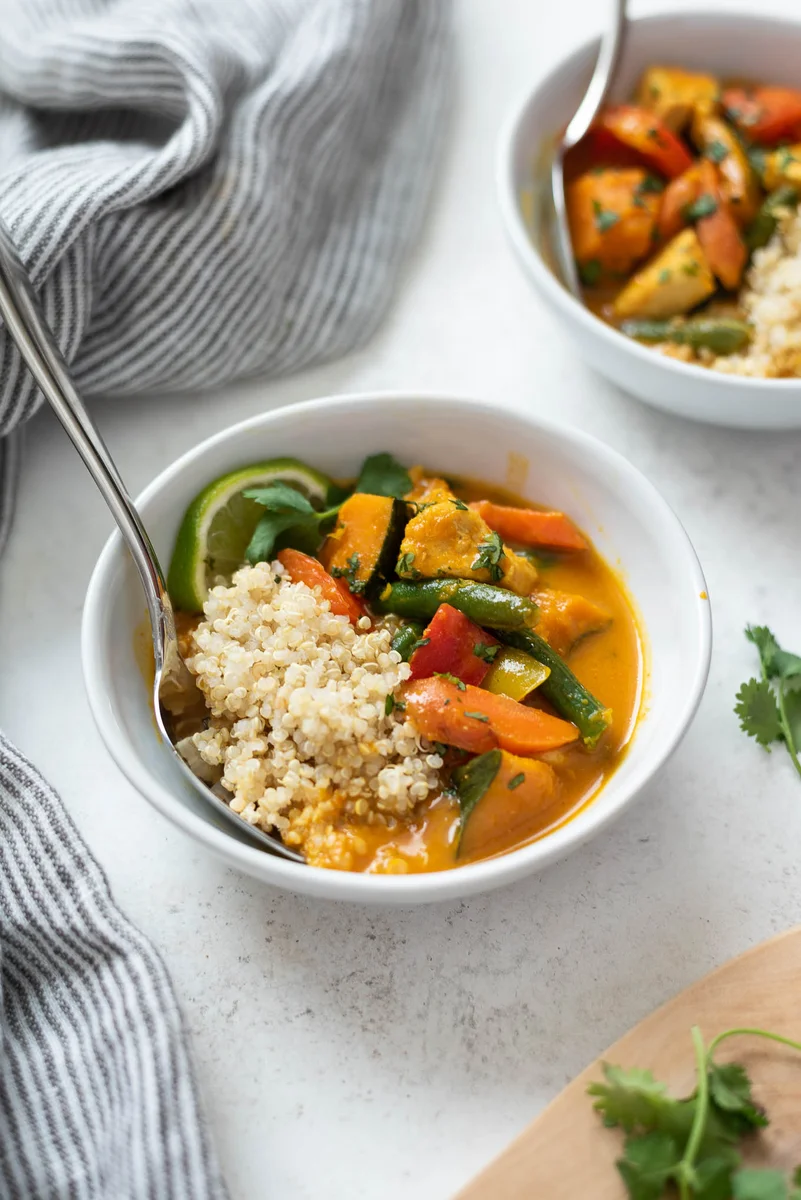
This Thai-inspired chicken curry combines tender chicken, pumpkin and vegetables in a coconut and red curry sauce. It makes a warming one-pot dinner, with rice or quinoa on the side if you like.
Ingredients
- 2 tablespoons (30 ml)olive oil
- 1 large, cut into 2.5 cm piecesboneless, skinless chicken breast
- 1 mediumonion
- 2 mediumcarrots
- 3 clovesgarlic
- 2 tablespoons (30 ml)freshly grated ginger
- 1 tablespoon (15 ml)ground turmeric
- 1 cup (about 160 g)cubed kabocha squash
- 1red bell pepper
- 8 ounces (227 g), trimmed and cut into 5 cm piecesgreen beans
- 2 tablespoons (30 ml)Thai red curry paste
- 13.5 ounces (383 g)full-fat coconut milk
- 1 cup (240 ml)water
- 1 tablespoon (15 ml)lime juice
- 1/4 cup (about 4 g), choppedfresh coriander
- Cooked, optionalrice or quinoa
- To tastesalt and black pepper
Instructions
- 1
Cook the chicken
Heat 1 tablespoon (15 ml) of olive oil in a large pot or Dutch oven over medium heat. Add the chicken and season with salt and pepper to taste. Sauté for about 5 minutes, until cooked through. Transfer to a plate and cover loosely with foil.
- 2
Soften the vegetables
Add the remaining 1 tablespoon (15 ml) of olive oil to the pot. Add the onion and carrots and cook for about 5 minutes, until softened. Stir in the garlic, ginger and turmeric, then sauté for 30 seconds.
- 3
Add more vegetables
Add the bell pepper, pumpkin and green beans, then sauté for 1 minute.
- 4
Simmer the curry
Return the chicken to the pot and add the red curry paste, coconut milk and water. Stir to combine and bring to the boil. Lower the heat to medium-low and simmer for 10–15 minutes, until the pumpkin is tender and the sauce has thickened.
- 5
Finish and season
Take the pot off the heat and stir in the lime juice and coriander. Season with salt and pepper to taste.
What is Thai pumpkin curry?
Thai curries are known for their aromatic curry pastes, which are cooked with ingredients such as coconut milk to make a fragrant sauce. This version pairs red curry paste with chicken, pumpkin and a mix of vegetables.
The pumpkin softens as it simmers and helps give the sauce body, while lime and fresh coriander bring a bright finish.
Nutrition and macros by portion
The nutrition label shows one serving as written: 264 calories, 7g protein, 15g carbs, 21g fat.
| Portion | Adjustment | kcal | Protein | Carbs | Fat |
|---|---|---|---|---|---|
| Lighter | Less coconut milk | 185 kcal | 5g | 11g | 15g |
| This serving | As written | 264 kcal | 7g | 15g | 21g |
| Hungry | Add rice or quinoa | 396 kcal | 11g | 23g | 32g |
The coconut milk and olive oil contribute most of the fat, while pumpkin, carrots and any rice or quinoa provide carbohydrates. Chicken supplies protein, though the listed per-serving figure is modest; serve with a more generous portion of chicken or add a protein-rich side if you want a more balanced plate.
Choosing the ingredients
Pumpkin: Kabocha squash is specified here for its dense, sweet flesh. Cut it into evenly sized cubes so they cook at a similar rate.
Curry paste: Thai red curry paste brings the main seasoning. Paste strengths vary, so taste the finished curry before adding extra.
Coconut milk: Full-fat coconut milk makes the sauce creamy. Stir the tin before measuring if the thicker coconut cream has separated.
Build flavour in stages
Chicken: Sauté the pieces first, then lift them out while the vegetables cook. This gives the chicken a head start without leaving it in the pot for the entire simmer.
Aromatics: Give the onion and carrots time to soften, then cook the garlic, ginger and turmeric briefly. The method’s short 30-second sauté helps warm the aromatics before the other vegetables go in.
Get the texture right
Cutting: Keep the chicken pieces and pumpkin cubes reasonably even in size. This helps them cook predictably and makes the finished curry easier to serve.
Doneness: The pumpkin should be tender when pierced, and the sauce should have thickened after its 10–15-minute simmer. If the pumpkin needs more time, continue simmering until tender.
Timing the simmer
The vegetables get a brief sauté before the coconut milk and water go in. Once the liquid reaches a boil, reduce the heat to medium-low so the curry simmers rather than boils hard.
The chicken goes back into the pot for the simmer, giving it time to warm through as the pumpkin cooks and the sauce thickens.
Serving the curry
Serve the curry on its own or spoon it over cooked rice or quinoa, both listed as optional accompaniments. A bowl of rice is especially useful for catching the coconut curry sauce.
Add the coriander and lime juice off the heat, as directed, for a fresh, citrusy finish.
Recipe notes & tips
- Cut the pumpkin into similarly sized cubes so the pieces become tender together.
- Keep the garlic, ginger and turmeric moving during their brief sauté to prevent them catching.
- Stir the curry paste into the liquid well so it is distributed throughout the sauce.
- Check the pumpkin for tenderness before taking the curry off the heat.
- Season with salt and pepper after adding the lime and coriander, then taste and adjust.
Variations
- Use another squash: Swap the kabocha for a similarly sized amount of another firm pumpkin or squash.
- Adjust the heat: Use less red curry paste for a milder curry or add more to taste.
- Add leafy greens: Stir in a handful of spinach near the end and let it wilt in the hot curry.
- Try a different protein: Use chicken thigh pieces in place of breast, checking that they are cooked through.
- Make it vegetarian: Leave out the chicken and add chickpeas or extra vegetables.
Common mistakes to avoid
- Crowding the chicken: Cook it in a single layer where possible so it sautés rather than steams.
- Adding aromatics too early: Add the garlic, ginger and turmeric after the onion and carrots have softened, then sauté for only 30 seconds.
- Cutting pumpkin unevenly: Large pieces may stay firm while small ones soften; aim for evenly sized cubes.
- Boiling the sauce hard: Reduce the heat after bringing it to the boil so the curry simmers gently.
- Skipping the final taste: Season with salt and pepper after adding the lime and coriander, then adjust to suit.
How to store
Cool leftovers promptly and refrigerate in a covered container for up to 3 days. Reheat gently in a saucepan until piping hot, stirring occasionally; add a splash of water if the sauce has thickened too much. The recipe description says it is freezer-friendly, so freeze cooled portions in suitable containers and thaw in the fridge before reheating.
Frequently asked questions
Can I use a different type of pumpkin?
Yes. Choose a firm pumpkin or squash and cut it into evenly sized cubes. Cooking time may vary slightly, so check for tenderness as it simmers.
How spicy is Thai red curry paste?
The heat varies between brands. If you are unsure, start with the recipe amount and taste the curry before serving.
Can I make the curry ahead?
Yes. Cool it and refrigerate it in a covered container, then reheat gently until piping hot. The vegetables may soften a little more when reheated.
What should I serve with it?
Cooked rice or quinoa are both suggested options. Either works well with the creamy sauce.
How do I know when the curry is ready?
The pumpkin should be tender when pierced, and the sauce should have thickened after 10–15 minutes of simmering. Make sure the chicken is cooked through as well.
Can I freeze leftovers?
Yes, the recipe description says it is freezer-friendly. Freeze cooled portions in suitable containers and thaw in the fridge before reheating.
Cook it from the original
This recipe comes from flavorthemoments.com. Their page has the author’s own photos, notes and tips — the best place to cook it from.
Open the recipe on flavorthemoments.com