
Homemade Meat Sauce
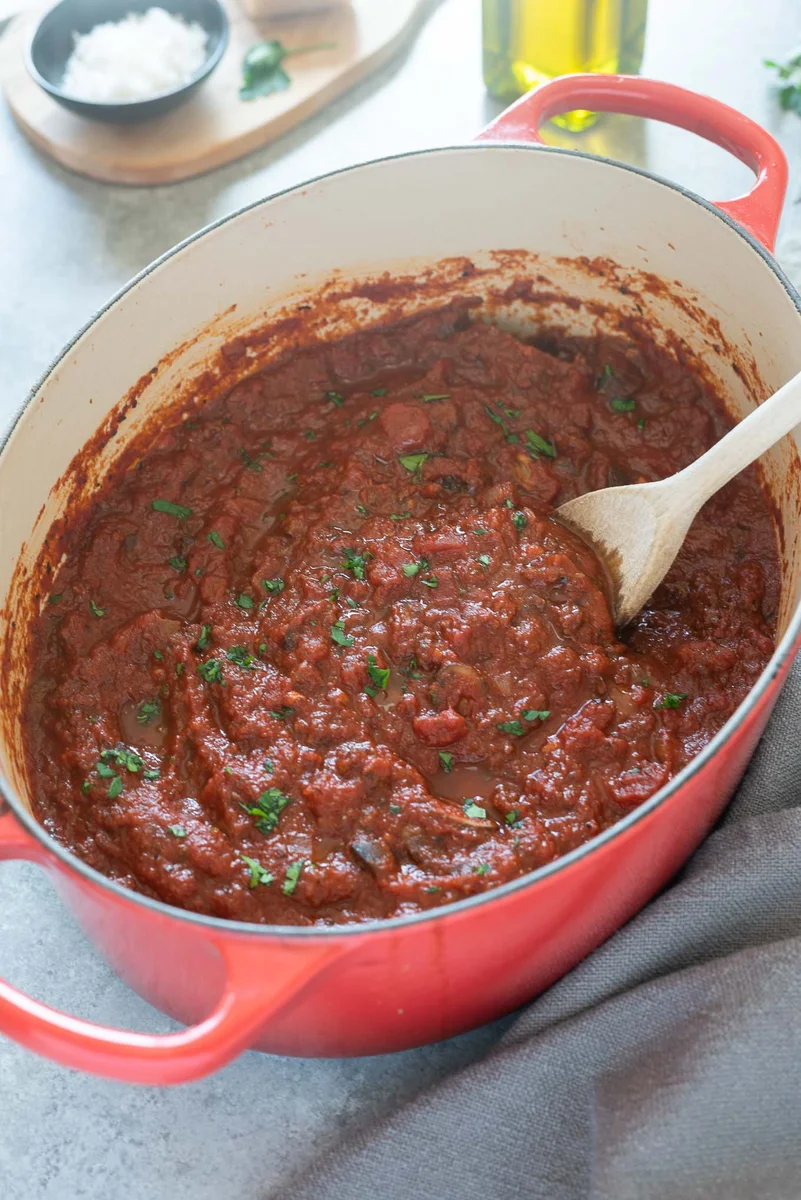
This slow-simmered meat sauce combines beef, mushrooms, tomatoes, red wine and herbs into a thick, savoury topping. Make a generous pot for spaghetti, polenta or vegetable noodles, then save portions for another meal.
Ingredients
- 15 ml (1 tablespoon)extra-virgin olive oil
- 680 g (1½ lb)lean minced beef
- 454 g (16 ounces)baby bella mushrooms, stems removed and sliced
- 1 largeonion, peeled and chopped
- 4 clovesgarlic, minced
- 60 ml (4 tablespoons)tomato purée
- 240 ml (1 cup)dry red wine
- 794 g (28 ounces)crushed tomatoes
- 794 g (28 ounces)tomato passata
- 1 tablespoondried basil
- 2 teaspoonsdried oregano
- 1bay leaf
- to tastesalt and pepper
Instructions
- 1
Brown the beef
Heat the olive oil in a large saucepan or Dutch oven over a medium heat. Add the minced beef, breaking it into chunks, and cook for about 2 minutes. Add the onion and mushrooms and cook until the mushrooms have released their liquid and the onion has softened. Drain off excess fat if needed. Stir in the garlic and tomato purée and cook for a further 30 seconds.
- 2
Simmer the sauce
Pour in the red wine and cook for 3–5 minutes, or until it has reduced by half. Add the crushed tomatoes, passata, herbs and bay leaf, then stir to combine. Bring to the boil, lower the heat and simmer for 1–2 hours with the lid slightly ajar, stirring often, until thick and rich.
- 3
Season and serve
Take the pan off the heat and remove the bay leaf. Season with salt and pepper to taste, and stir in another 1–2 tablespoons of olive oil if you would like a richer texture. Serve.
What is meat sauce?
Meat sauce is a tomato-based sauce cooked with meat and aromatics, often served with pasta. This version draws on the Italian tradition of slow-cooked ragù, with beef, wine and herbs giving the tomatoes a fuller flavour.
Mushrooms add savoury depth and extra texture, while using both crushed tomatoes and passata gives the sauce a balance of body and smoothness.
Nutrition and macros by portion
The nutrition label shows one serving as written: 224 calories, 20g protein, 19g carbs, 7g fat.
| Portion | Adjustment | kcal | Protein | Carbs | Fat |
|---|---|---|---|---|---|
| Lighter | Use less olive oil | 157 kcal | 14g | 13g | 5g |
| This serving | As written | 224 kcal | 20g | 19g | 7g |
| Hungry | Serve a larger portion | 336 kcal | 30g | 29g | 11g |
The beef supplies most of the protein, while the tomatoes, onion and mushrooms contribute carbohydrates. Olive oil and the beef provide much of the fat. Serve it with a generous portion of vegetables alongside your chosen base to balance the plate.
Why use two kinds of tomato?
Crushed tomatoes: These bring small pieces of tomato and a slightly rustic texture to the finished sauce.
Passata: This adds a smooth tomato base that helps the sauce become thick and cohesive as it simmers.
Build flavour in stages
Beef and vegetables: Give the beef a brief start in the pan, then cook the onion and mushrooms until softened and their excess liquid has come away.
Tomato purée and wine: Cooking the purée briefly helps blend it into the aromatics. Let the wine reduce by half before adding the tomatoes so its flavour becomes more concentrated.
How to judge the texture
The sauce is ready when it looks thick and rich rather than watery. Stir regularly, particularly as it reduces, so the bottom does not catch.
The mushrooms should be tender and the onion softened. If the sauce still seems loose, continue simmering with the lid slightly ajar.
Allow time to simmer
The recipe gives a simmering time of 1–2 hours, with frequent stirring and the lid left slightly ajar. A longer simmer within that range gives the ingredients more time to meld and the sauce to reduce.
Keep the heat low once the sauce reaches a boil; a gentle simmer is easier to manage and helps prevent sticking.
Ways to serve it
Pasta: Spoon the sauce over spaghetti or another pasta shape, and add a little pasta cooking water if you want it to cling more easily.
Other bases: It also works over polenta or vegetable noodles. Add a side of vegetables or a simple salad to round out the meal.
Recipe notes & tips
- Use a large, heavy-based pot to make stirring and slow simmering easier.
- Slice the mushrooms evenly so they soften at a similar rate.
- Let the wine reduce by half before adding the tomatoes.
- Keep the lid slightly ajar while the sauce simmers to help it thicken.
- Stir often, scraping along the bottom of the pot.
- Add the optional extra olive oil at the end for a richer texture.
Variations
- Fresh herbs: Use twice the amount of chopped fresh basil or oregano in place of the dried herb.
- Tomato swaps: Replace the crushed tomatoes with tomato sauce or passata, or swap the passata for tomato sauce or crushed tomatoes.
- San Marzano tomatoes: Choose San Marzano tomatoes for the best quality, as suggested in the recipe.
- Vegetable noodles: Serve the sauce over vegetable noodles instead of spaghetti.
- Polenta: Spoon it over polenta for an alternative to pasta.
Common mistakes to avoid
- Adding wine too late: Pour it in after cooking the tomato purée, then reduce it by half before adding the tomatoes.
- Skipping the reduction: Give the wine 3–5 minutes to reduce, or until about half remains.
- Cooking too hot: Lower the heat after bringing the sauce to the boil and keep it at a gentle simmer.
- Leaving it unstirred: Stir often during the long simmer to help prevent the sauce catching on the bottom.
- Forgetting the bay leaf: Remove and discard it before seasoning and serving.
How to store
Cool the sauce and store it in a covered container in the fridge for up to 3 days. Reheat in a saucepan over a low heat, stirring occasionally, until piping hot; add a splash of water if it has thickened too much. Freeze portions in suitable containers for up to 3 months and defrost in the fridge before reheating.
Frequently asked questions
Can I use fresh basil or oregano?
Yes. The recipe suggests using twice the amount of chopped fresh basil or oregano in place of the corresponding dried herb.
Can I replace the crushed tomatoes or passata?
Yes. The recipe allows tomato sauce or passata in place of crushed tomatoes, and tomato sauce or crushed tomatoes in place of passata.
How do I know when the sauce is done?
It should be thick and rich after simmering for 1–2 hours. Stir frequently and keep the lid slightly ajar as it cooks.
Do I have to add extra olive oil at the end?
No. The additional 1–2 tablespoons are optional and are there for a richer texture.
What can I serve with meat sauce?
Serve it with spaghetti, polenta or vegetable noodles. A side of vegetables or salad also works well.
Cook it from the original
This recipe comes from flavorthemoments.com. Their page has the author’s own photos, notes and tips — the best place to cook it from.
Open the recipe on flavorthemoments.com