
Baked Butternut Squash Risotto
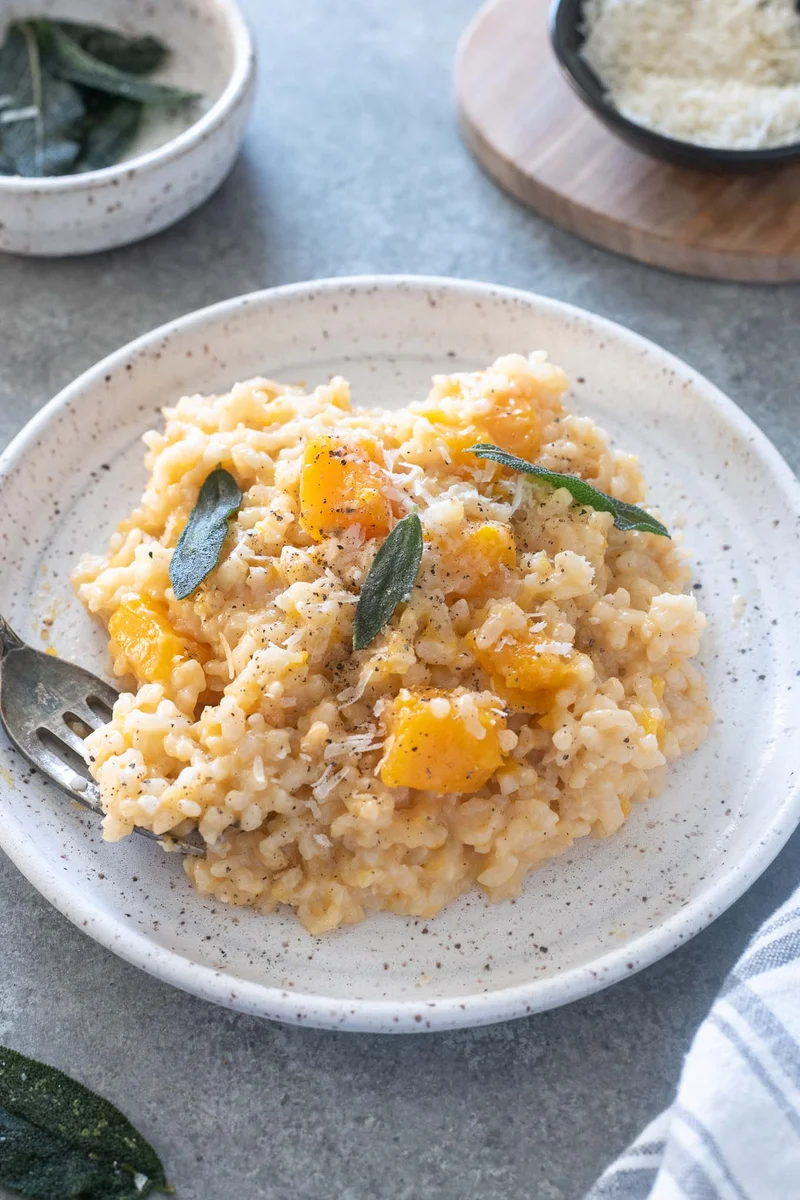
This American-style baked risotto combines Arborio rice and butternut squash in a creamy, comforting one-pot dish. Baking it instead of stirring it over the hob makes it a practical choice for an easy dinner.
Ingredients
- 30 ml (2 tablespoons), dividedolive oil
- ½onion, chopped
- 3 clovesgarlic, minced
- 960 ml (4 cups)vegetable stock
- 300 g (1½ cups)Arborio rice
- 280 g (2 cups), cut into 1.3 cm (½-inch) cubesbutternut squash
- 240 ml (1 cup)water
- 120 ml (½ cup)dry white wine, such as Sauvignon Blanc (optional)
- 50 g (½ cup)grated Parmesan cheese
- 28 g (2 tablespoons), softened to room temperaturebutter
- 2.5 ml (½ teaspoon), or to tastesalt
- 1.25 ml (¼ teaspoon), or to tasteblack pepper
- 10sage leaves
Instructions
- 1
Soften the aromatics
Heat the oven to 175°C (350°F). Warm 15 ml (1 tablespoon) of olive oil in a large oven-safe pot or Dutch oven over medium heat. Add the onion and sauté for about 4–5 minutes, until softened. Stir in the garlic and cook for another 30 seconds. Add the vegetable stock, cover the pot and bring it to a boil.
- 2
Bake the risotto
Take the pot off the heat and stir in the rice and butternut squash. Cover and bake for 50–55 minutes, until the rice is tender and has absorbed the liquid. The surface may look partly dry.
- 3
Stir in additions
Remove the pot from the oven and take off the lid. Add the water, wine, Parmesan, salt and pepper. Stir vigorously for 1–2 minutes, until the risotto has absorbed the added liquid.
- 4
Fry the sage
While the risotto bakes, heat the remaining 15 ml (1 tablespoon) of olive oil in a pan over medium heat until it shimmers. Add the sage leaves and fry just until dark, not brown. Transfer them to a plate lined with kitchen paper.
- 5
Serve the risotto
Top the risotto with extra Parmesan and the crisp sage leaves, if desired, and serve.
What is baked butternut squash risotto?
Risotto is an Italian rice dish traditionally made by gradually adding liquid and stirring as the rice cooks. This American-style baked version takes a hands-off approach, cooking Arborio rice and squash together in a covered pot.
The rice’s starch creates a creamy texture when the final additions are stirred in. Sweet squash, savoury Parmesan and crisp sage bring contrasting flavours and textures.
Nutrition and macros by portion
The nutrition label shows one serving as written: 340 calories, 6g protein, 50g carbs, 11g fat.
| Portion | Adjustment | kcal | Protein | Carbs | Fat |
|---|---|---|---|---|---|
| Lighter | Less butter and Parmesan | 238 kcal | 4g | 35g | 8g |
| This serving | As written | 340 kcal | 6g | 50g | 11g |
| Hungry | Larger portion | 510 kcal | 9g | 75g | 17g |
The rice and squash supply most of the carbohydrates, while olive oil, butter and Parmesan contribute much of the fat. Parmesan also provides some protein, though this dish is not especially protein-rich. Pair a portion with greens and a protein-rich side such as beans or chicken to make a more balanced plate.
Choosing the rice and squash
Arborio rice: its short, starchy grains suit risotto and help the finished dish turn creamy. Avoid rinsing it, as that removes some of the surface starch.
Butternut squash: cut it into evenly sized 1.3 cm cubes so it cooks alongside the rice. Smaller pieces may soften more and blend into the risotto.
Why the stock is boiled first
Hot stock: bringing the stock to a boil before adding the rice helps the covered pot get the bake underway without a long warm-up. Use a pot that can safely go from the hob to the oven.
Covered pot: the lid holds in steam while the rice absorbs the stock. Keep it on during baking, then uncover only when it is time to stir in the finishing ingredients.
Finishing the creamy texture
Water and wine: add these after baking, as directed, rather than before the rice goes into the oven. The wine is optional; if you leave it out, the recipe still includes the measured water.
Vigorous stirring: stir for the full 1–2 minutes so the rice releases starch and takes up the added liquid. The mixture should look creamy rather than loose and watery.
Getting the timing right
Rice doneness: check that the grains are tender after 50 minutes, then bake for the remaining time if needed. The top can look semi-dry before the water and wine are stirred through.
Sage leaves: fry them while the pot is in the oven. Take them out as soon as they darken, before they turn brown, and drain them on kitchen paper.
Serving ideas
Finish each portion with the crispy sage and, if you like, extra Parmesan. A crisp green salad or simply cooked greens make a fresh accompaniment to the rich, soft risotto.
Serve soon after stirring, while the texture is at its creamiest. If it thickens as it stands, loosen it with a small splash of hot water.
Recipe notes & tips
- Use a large oven-safe pot with a lid that fits securely.
- Cut the squash into evenly sized cubes so the pieces cook at a similar rate.
- Keep the pot covered throughout baking to retain the steam.
- Taste a few grains after 50 minutes and continue baking if they are still firm.
- Stir vigorously after adding the finishing liquids to help the risotto turn creamy.
- Fry the sage leaves until dark but not brown, then drain them on kitchen paper.
Variations
- Skip the wine: leave it out if preferred and continue with the measured water.
- Add extra herbs: finish with chopped parsley alongside the sage.
- Use another hard cheese: swap the Parmesan for a similar finely grated cheese.
- Add greens: fold in a handful of spinach after baking and stir until wilted.
- Make it vegetarian: check that the Parmesan is made with vegetarian-friendly rennet.
Common mistakes to avoid
- Lifting the lid repeatedly: this lets steam escape; keep the pot covered while baking.
- Uneven squash pieces: they cook at different rates; cut them into similar-sized cubes.
- Undercooked rice: it may need more time; check at 50 minutes and bake a little longer if firm.
- Skipping the final stir: the rice may remain less creamy; stir vigorously for 1–2 minutes.
- Over-frying the sage: brown leaves can taste bitter; remove them once dark, before browning.
How to store
Refrigerate leftovers in a covered container for up to 3 days. Reheat gently on the hob or in the microwave, stirring in a splash of water to loosen the rice; the sage is best added just before serving.
Frequently asked questions
Can I leave out the white wine?
Yes. The wine is optional, so omit it if you prefer. The recipe also includes water, which is stirred in after baking.
How do I know when the rice is done?
After 50 minutes, taste a few grains; they should be tender. If they are still firm, cover the pot and bake for the remaining time, checking again.
Why does the top look dry after baking?
The recipe notes that the surface may look semi-dry before the finishing ingredients are added. Stir in the water, wine, cheese, salt and pepper as directed.
Can I make the crispy sage ahead?
It is best fried shortly before serving so it stays crisp. Drain the leaves on kitchen paper after frying.
Can I use a different type of rice?
Arborio is specified for its starchy, creamy result. Other rice varieties may cook differently, so the texture and baking time can change.
Can I freeze the leftovers?
The recipe does not specify freezing, and risotto can lose its creamy texture after thawing. Refrigerating and reheating within 3 days is the better option for this dish.
Cook it from the original
This recipe comes from flavorthemoments.com. Their page has the author’s own photos, notes and tips — the best place to cook it from.
Open the recipe on flavorthemoments.com