
How to Spatchcock a Chicken
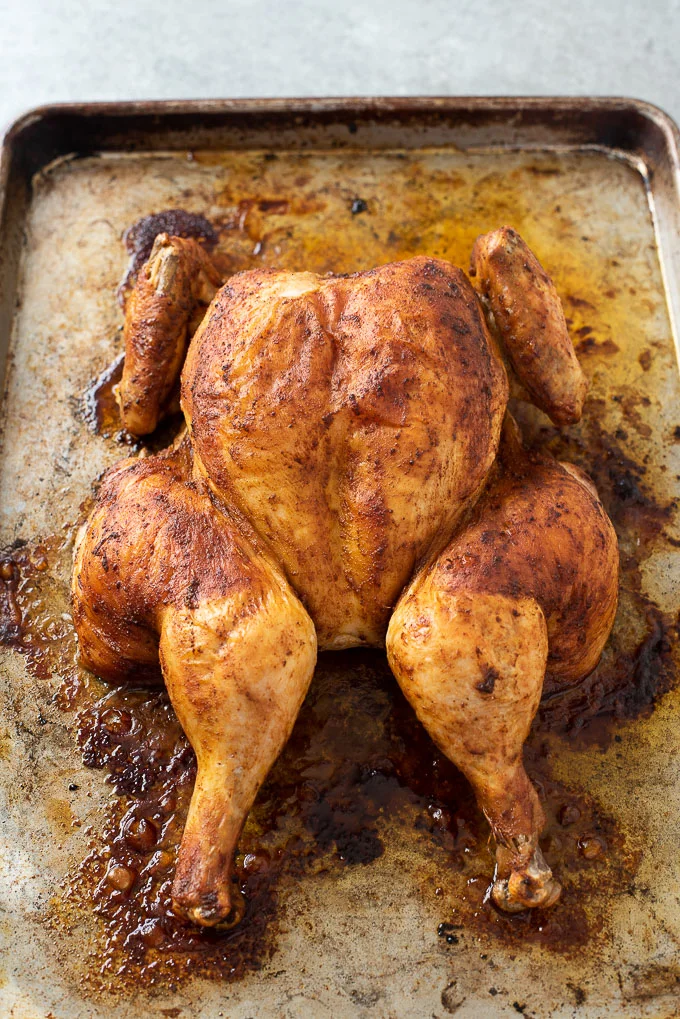
Spatchcocking removes the backbone and flattens a whole chicken so it roasts in a single layer with crisp, well-seasoned skin. This American-style version uses smoked paprika, garlic and olive oil for a straightforward roast that is easier to carve than a traditional whole bird.
Ingredients
- 1.81 kg (4 lb)whole chicken, giblets removed and patted dry
- 30 ml (2 tablespoons)olive oil
- 10 ml (2 teaspoons)smoked paprika
- 5 ml (1 teaspoon)garlic powder
- 7.5 ml (1½ teaspoons)kosher salt
- 2.5 ml (½ teaspoon)freshly ground black pepper
Instructions
- 1
Cut one side
Set the chicken breast-side down on a cutting board. With sharp kitchen shears, cut along one side of the backbone.
- 2
Remove backbone
Turn the chicken around and cut along the other side of the backbone to remove it.
- 3
Loosen breastbone
With a paring knife, make a 1.3 cm (½-inch) cut from the tip of the breastbone down on either side. This helps the chicken flatten.
- 4
Flatten chicken
Turn the chicken breast-side up. Place your hands over the centre of the breast and press down firmly to flatten it.
- 5
Mix the seasoning
Heat the oven to 200°C (400°F). Put the olive oil, smoked paprika, garlic powder, salt and pepper in a small bowl and stir to combine.
- 6
Coat the chicken
Place the chicken on a large rimmed baking tray and rub the olive oil mixture evenly over it.
- 7
Roast and rest
Bake for one hour, until golden brown. Check that a thermometer inserted into the thickest part of the thigh reads 79°C (175°F), or that the breast reads 71–74°C (160–165°F). Loosely cover the chicken with foil and leave it to rest for at least 15 minutes.
- 8
Carve the chicken
Cut through the joints between the thighs and breasts to remove the thigh-and-leg portions, then cut through the joints between each thigh and drumstick to separate them. Cut through the joints between the wings and breast to remove the wings. Cut down the middle of the breasts, then use a sharp paring knife to cut along each side of the breastbone and remove the breasts.
What is spatchcock chicken?
Spatchcocking is a way of preparing a whole bird by removing its backbone and pressing it flat. The name is commonly used for this method of cooking poultry, and it is especially handy when you want a roast chicken that is simpler to portion.
This version keeps the seasoning direct: olive oil carries smoked paprika, garlic, salt and pepper across the skin. Flattening the bird lets it sit evenly on the tray while it roasts.
Nutrition and macros by portion
The nutrition label shows one serving as written: 522 calories, 42g protein, 1g carbs, 38g fat.
| Portion | Adjustment | kcal | Protein | Carbs | Fat |
|---|---|---|---|---|---|
| Lighter | Use less olive oil | 365 kcal | 29g | 1g | 27g |
| This serving | As written | 522 kcal | 42g | 1g | 38g |
| Hungry | Serve a larger portion | 783 kcal | 63g | 2g | 57g |
The chicken provides most of the protein and fat, while the olive oil adds further fat; the seasonings contribute very little carbohydrate. Serve a portion with vegetables and a source of carbohydrate such as potatoes for a more balanced plate.
Removing the backbone
Kitchen shears: cut close to one side of the backbone, then repeat on the other side. Keeping the cuts alongside the bone helps remove it in one piece.
Breastbone: the small cuts beside its tip make the chicken easier to press flat. Use a stable board and take care with the paring knife.
Flattening the bird
Press firmly over the centre of the breast until the chicken sits flatter on the board. A more even shape helps the bird make steady contact with the tray as it roasts.
If it resists flattening, check that the backbone has been cut free and that the small cuts beside the breastbone are in place. Avoid forcing the knife through bone.
Seasoning and roasting
Even coating: stir the oil and dry seasonings together before rubbing them over the chicken. Work the mixture across the whole surface so the seasoning is not concentrated in one spot.
Tray space: use a large rimmed baking tray that can hold the flattened bird without crowding it. The oven should be at 200°C (400°F) before the chicken goes in.
Checking when it is done
Temperature: check the thickest part of the thigh for 79°C (175°F), or the breast for 71–74°C (160–165°F), as specified in the method. Keep the thermometer tip away from bone for a useful reading.
Colour alone: a golden surface is a helpful visual cue, but use a thermometer to check the internal temperature. Once cooked, resting under a loose foil cover gives the juices time to settle before carving.
Carving and serving
Joints first: separate the legs and wings where they meet the body, then divide each thigh from its drumstick. Cutting through the joints is easier than trying to slice through the bones.
Breasts last: cut down the middle and follow the breastbone with a sharp knife to lift off each breast. Serve with roast potatoes, vegetables or a crisp salad to make a complete meal.
Recipe notes & tips
- Pat the chicken dry before seasoning so the oil mixture coats it evenly.
- Use sharp kitchen shears and keep the chicken steady on a secure cutting board.
- Save the removed backbone for stock if you wish.
- Check the temperature in the thickest part of the meat without touching bone.
- Rest the chicken for at least 15 minutes before carving.
- Use a rimmed tray to contain the juices as the chicken roasts.
Variations
- Add lemon: rub finely grated lemon zest into the oil mixture for a citrus note.
- Use fresh garlic: replace the garlic powder with finely grated garlic and spread it evenly over the chicken.
- Change the paprika: use sweet paprika instead of smoked paprika for a milder flavour.
- Add herbs: mix chopped thyme or rosemary into the oil seasoning.
- Make it peppery: add a little extra freshly ground black pepper to the seasoning.
Common mistakes to avoid
- Dull shears: they can make backbone removal difficult; use sharp kitchen shears and cut along each side of the bone.
- Uneven flattening: a raised centre can roast less evenly; press firmly over the breast until the bird lies flatter.
- Patchy seasoning: missed areas stay less flavoured; rub the oil mixture over the chicken evenly.
- Guessing doneness: colour does not confirm the internal temperature; check the thigh or breast with a thermometer.
- Skipping the rest: carving straight away can release the juices; leave the chicken loosely covered for at least 15 minutes.
How to store
Refrigerate leftover chicken in an airtight container within two hours of cooking and use within 3–4 days. Reheat until piping hot throughout, adding a splash of stock or water if the meat seems dry.
Frequently asked questions
Can I spatchcock the chicken ahead of time?
Yes. You can remove the backbone and flatten the chicken ahead, then keep it covered in the refrigerator until you are ready to season and roast it.
Do I need kitchen shears to remove the backbone?
Sharp kitchen shears are the method used here and make the cuts more manageable. A sturdy pair designed for kitchen use is preferable to ordinary scissors.
Can I roast the chicken without flattening it?
This recipe relies on flattening the chicken for its spatchcocked shape. If left whole, it will need a different roasting approach and cooking time.
How do I know when the chicken is cooked?
Use a thermometer and check for 79°C (175°F) in the thickest part of the thigh, or 71–74°C (160–165°F) in the breast, as directed in the recipe.
Why does the chicken need to rest?
Resting for at least 15 minutes gives the juices time to settle before carving. Cover it loosely with foil so it does not cool too quickly.
What can I do with the backbone?
Keep it for making stock, or discard it if you do not need it.
Cook it from the original
This recipe comes from flavorthemoments.com. Their page has the author’s own photos, notes and tips — the best place to cook it from.
Open the recipe on flavorthemoments.com