
Easy Instant Pot Ratatouille
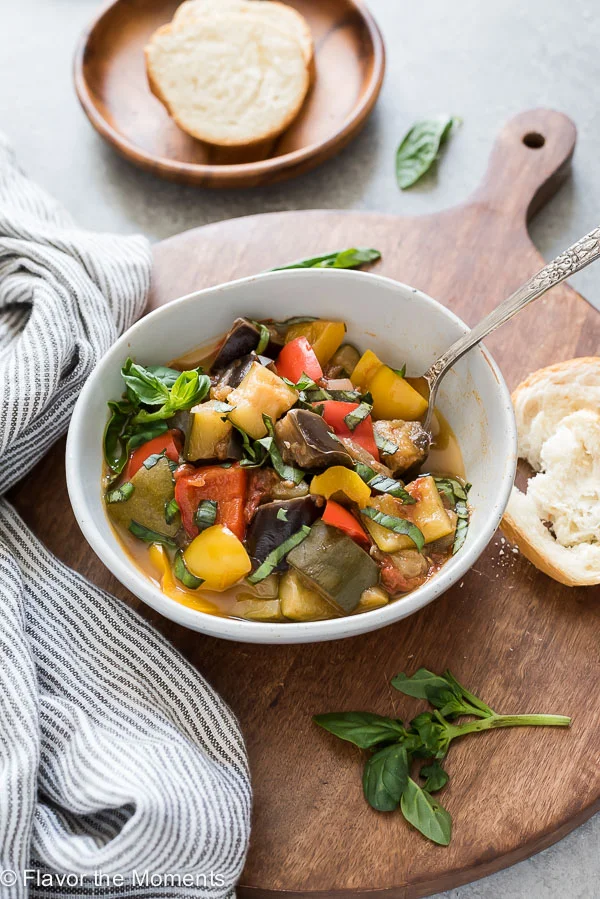
This French-inspired ratatouille brings aubergine, peppers, courgette and tomatoes together in a pressure cooker for a colourful vegetable stew. It is a handy way to make a generous batch in about 30 minutes, with little time spent stirring at the hob.
Ingredients
- 60 ml (4 tablespoons), dividedextra-virgin olive oil
- 1onion, peeled, halved and sliced along the lines
- 2 clovesgarlic, minced
- 1 medium aubergine (or 3 small Japanese aubergines), cut into 2.5 cm cubesaubergine
- 1red pepper, chopped into 2.5 cm chunks
- 1yellow pepper, chopped into 2.5 cm chunks
- 2 mediumcourgettes, cut into 2.5 cm pieces
- 397 g (14 ounces)low-sodium diced tomatoes
- 15 ml (1 tablespoon)tomato purée
- 1bay leaf
- 2 sprigs (or 1 teaspoon dried)fresh thyme
- 1 sprig (or 1 teaspoon dried)fresh rosemary
- to tastesalt and freshly ground black pepper
- 5 ml (1 teaspoon)capers
- 15 g (¼ cup)fresh basil, chopped
Instructions
- 1
Sauté aromatics
Choose Sauté on the Instant Pot and set it for 7 minutes. Add 15 ml (1 tablespoon) of the olive oil. Once hot, add the onion and garlic and sauté for 2 minutes, until the onion has softened slightly.
- 2
Cook aubergine
Add 30 ml (2 tablespoons) more olive oil and the aubergine. Sauté for a further 4 minutes.
- 3
Add peppers
Pour in the final 15 ml (1 tablespoon) olive oil, then add the peppers and courgettes. Sauté for 1 minute.
- 4
Stir in tomatoes
Add the diced tomatoes, tomato purée, bay leaf, herbs, salt and black pepper to taste. Stir to combine.
- 5
Pressure cook
Secure the Instant Pot lid and cook at High Pressure for 2 minutes. When cooking is complete, quick-release the pressure; remove the lid only once the pressure has fully released.
- 6
Finish the stew
Take out the bay leaf and herb sprigs. Stir in the capers and fresh basil, then taste and adjust the seasoning if needed.
- 7
Serve warm
Serve with crusty bread or spoon it over pasta, quinoa or polenta.
What is ratatouille?
Ratatouille is a vegetable stew associated with Provence in southern France, traditionally made with ingredients such as aubergine, courgette, peppers and tomatoes. It is a practical way to let several summer vegetables share the same pot.
This version uses an Instant Pot to shorten the cooking time. Briefly sautéing the vegetables first builds flavour before pressure cooking them together.
Nutrition and macros by portion
The nutrition label shows one serving as written: 173 calories, 3g protein, 22g carbs, 10g fat.
| Portion | Adjustment | kcal | Protein | Carbs | Fat |
|---|---|---|---|---|---|
| Lighter | Use less olive oil | 121 kcal | 2g | 15g | 7g |
| This serving | As written | 173 kcal | 3g | 22g | 10g |
| Hungry | Serve over quinoa | 260 kcal | 5g | 33g | 15g |
The tomatoes, onion and other vegetables provide most of the carbohydrate, while the olive oil is the main source of fat. Protein is modest in this vegetable-based stew; serving it with quinoa or adding a protein-rich side can make the plate more substantial.
Why sauté the vegetables first?
Aromatics: Onion and garlic get a short head start in olive oil, softening before the firmer vegetables go in.
Aubergine: Giving it 4 minutes in the pot helps it take on some oil and start cooking before the tomatoes are added.
Peppers and courgettes: These need only a minute of sautéing here, so they join later and have less time to soften before pressure cooking.
The pressure-cooking step
Use the stated 2 minutes at High Pressure, then quick-release the pressure when the programme ends. Wait until the pressure indicator has dropped before opening the lid.
The ingredients continue to soften under pressure, so cut them into similarly sized pieces for more even results. The finished vegetables should be tender but still recognisable.
Building the tomato base
Tomatoes: Diced tomatoes supply the liquid and acidity for the stew. Choose a low-sodium tin so you can season to your own taste.
Tomato purée: Stir it in thoroughly with the tomatoes to give the base a concentrated tomato flavour.
Herbs: Thyme, rosemary and a bay leaf infuse the mixture as it cooks. Remove the whole herbs and bay leaf before serving.
Finishing with capers and basil
Capers go in after pressure cooking, adding a sharp, salty note without becoming overly soft in the pot. If they are packed in brine, drain them before adding.
Fresh basil is also stirred in at the end, which keeps its flavour lively. Taste the stew after adding both, then decide whether it needs more salt or pepper.
What to serve with it
Bread: Crusty bread is an easy way to catch the tomato-rich juices. It also makes the stew a simple, satisfying meal.
Grains and pasta: Spoon it over pasta, quinoa or polenta as suggested in the method. Choose a plain base so the vegetables and herbs remain the focus.
Recipe notes & tips
- Cut the vegetables into even 2.5 cm pieces so they cook at a similar rate.
- Have all the vegetables chopped before starting the sauté, as the early cooking stages move quickly.
- Scrape and stir the pot well after adding the tomatoes and tomato purée.
- Keep the quick release and wait for the pressure indicator to drop before opening the lid.
- Taste after adding the capers, as they contribute saltiness.
Variations
- Use dried herbs: Replace the fresh thyme and rosemary with the listed teaspoon measures of dried herbs.
- Choose Japanese aubergine: Use 3 small Japanese aubergines in place of 1 medium aubergine.
- Add chilli: Stir in a little chilli with the garlic for gentle heat.
- Serve with polenta: Spoon the finished stew over soft or firm polenta for a different base.
- Use fresh tomatoes: Replace the tinned tomatoes with chopped fresh tomatoes, keeping in mind that the result may be less uniform.
Common mistakes to avoid
- Cutting uneven pieces: Large chunks may stay firmer while small ones soften too much; aim for pieces about 2.5 cm across.
- Skipping the sauté: Adding everything at once misses the initial softening and flavour-building stages; follow the separate sauté timings.
- Opening too soon: Do not remove the lid until the pressure has fully released.
- Leaving in the bay leaf: Remove it and the herb sprigs before serving.
- Over-seasoning early: Capers add a salty taste, so check the seasoning again after stirring them in.
How to store
Refrigerate leftovers in a covered container and use within 3–4 days. Reheat gently in a saucepan or microwave until piping hot, stirring partway through.
Frequently asked questions
Can I use dried herbs instead of fresh?
Yes. The ingredient list gives 1 teaspoon dried thyme in place of the sprigs and 1 teaspoon dried rosemary in place of the fresh sprig.
Do I need to peel the aubergine?
The recipe does not call for peeling it, so leave the skin on and cut the aubergine into cubes.
Can I make this without an Instant Pot?
This method is written for an Instant Pot, including its timed pressure cooking. For a hob version, use a suitable stew method and cook until the vegetables are tender, checking them as they cook.
How can I tell when the ratatouille is done?
After the pressure has released, the vegetables should be tender while still holding their shape. If they are firmer than you like, simmer briefly using the Sauté function.
What can I serve with ratatouille?
The recipe suggests crusty bread, pasta, quinoa or polenta. Choose whichever suits the meal and the texture you want.
Can I prepare it ahead?
Yes. Cook it, cool it promptly and refrigerate it in a covered container. Add the basil at the end of cooking for the freshest flavour.
Cook it from the original
This recipe comes from flavorthemoments.com. Their page has the author’s own photos, notes and tips — the best place to cook it from.
Open the recipe on flavorthemoments.com