
Mixed Seafood Risotto
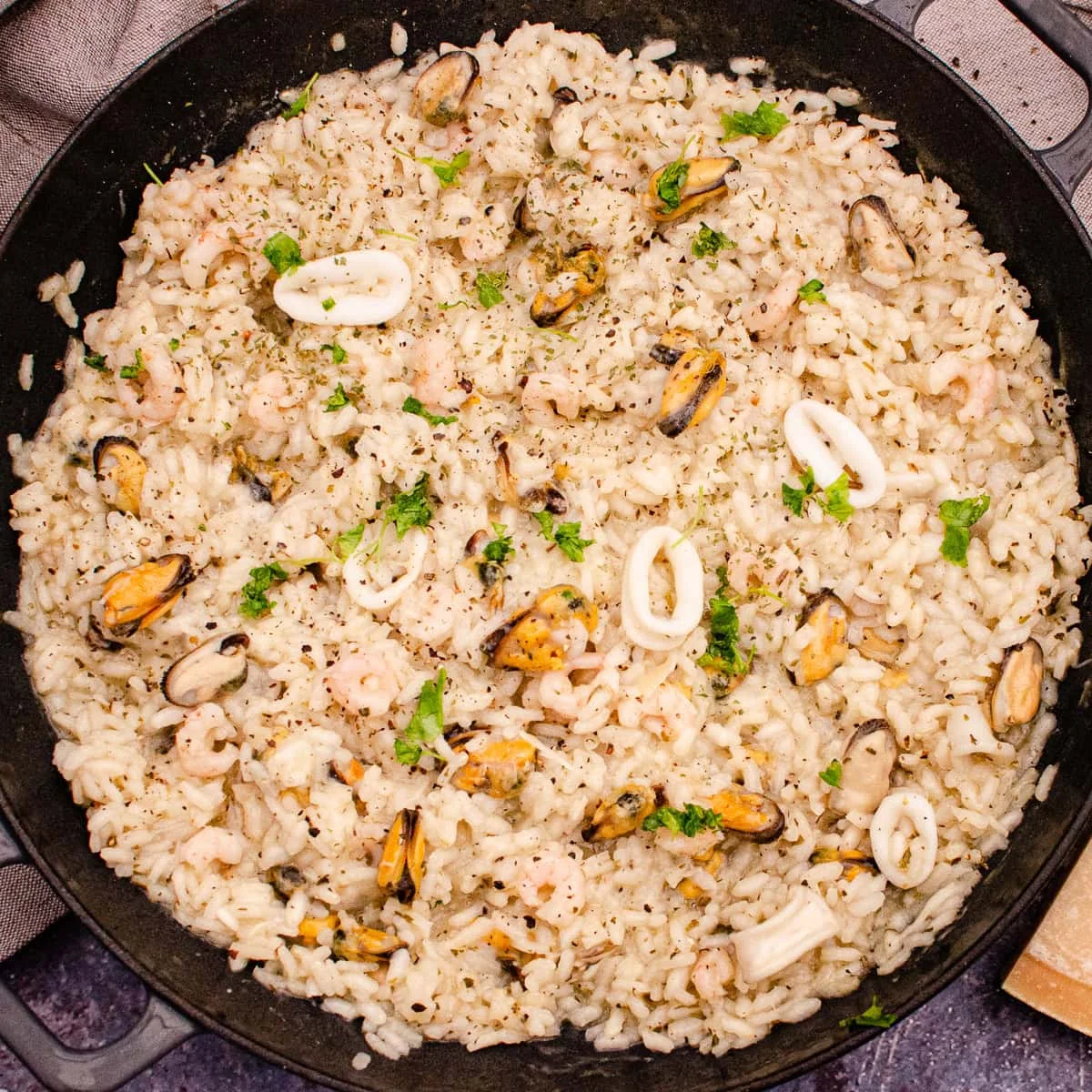
This creamy Italian-style seafood risotto combines Arborio rice with mussels, squid and prawns, finished with Parmesan and oregano. The gradual addition of stock takes attention, but the clear steps make it manageable for a comforting meal.
Ingredients
- 1 tbspolive oil
- 50 g (⅓ cup)butter
- 4 clovesgarlic, minced
- 350 g (1¾ cups)Arborio risotto rice
- 1.3 litres (5½ cups)fish stock, or chicken or vegetable stock
- 300 gcooked seafood mix of mussels, squid and prawns, defrosted if frozen
- 2 tbsp fresh, or 1 tbsp driedoregano, chopped if fresh
- 60 g (⅔ cup), plus extra to serveParmesan, grated
- to tastesalt and pepper
Instructions
- 1
Melt the butter
Over a low heat, warm 1 tbsp olive oil and 50 g butter in a pan until the butter has melted. Stir in 4 cloves of minced garlic.
- 2
Toast the rice
Add 350 g Arborio rice and stir to coat it in the oil, butter and garlic for 2 minutes.
- 3
Add the first stock
Raise the heat to medium-high and heat 1.3 litres of fish stock. Add one ladleful at a time, stirring about every 30 seconds until the stock is absorbed.
- 4
Repeat with stock
Add another ladleful only after the previous addition has been absorbed, stirring every 30 seconds to prevent sticking. Continue until the rice is cooked; this takes about 20 minutes, or roughly 3–4 minutes per addition.
- 5
Heat the seafood
Reduce the heat to medium-low. Add 300 g cooked seafood mix and 2 tbsp chopped fresh oregano, then stir for 3–4 minutes to heat through. If using raw seafood mix, cook it for about 8 minutes.
- 6
Finish the risotto
Turn off the heat. Season with salt and pepper, add 60 g grated Parmesan and stir until it melts.
- 7
Garnish and serve
Serve with extra oregano and a sprinkle of Parmesan.
What is seafood risotto?
Risotto is an Italian rice dish, associated particularly with northern Italy, made by gradually cooking short-grain rice with stock. This version brings together mussels, squid and prawns, with Parmesan and oregano for a savoury finish.
Arborio rice releases starch as it is stirred and cooked, helping the stock form a creamy coating. Adding the seafood near the end gives it time to warm without leaving it in the pan throughout the rice’s cooking.
Nutrition and macros by portion
The nutrition label shows one serving as written: 631 calories, 33g protein, 74g carbs, 21g fat.
| Portion | Adjustment | kcal | Protein | Carbs | Fat |
|---|---|---|---|---|---|
| Lighter | Less butter and Parmesan | 442 kcal | 23g | 52g | 15g |
| This serving | As written | 631 kcal | 33g | 74g | 21g |
| Hungry | Larger portion | 947 kcal | 50g | 111g | 32g |
Most of the carbohydrates come from the Arborio rice, while the butter, olive oil and Parmesan contribute much of the fat. Seafood and Parmesan provide protein. A green salad or a portion of vegetables alongside adds a fresh contrast without changing the risotto itself.
Choose the right rice and stock
Arborio rice: its short, starchy grains are suited to risotto and help create a creamy texture while retaining some bite. Avoid rinsing it, as that would wash away surface starch.
Stock: fish stock complements the seafood, while chicken or vegetable stock are alternatives listed in the recipe. Keep it hot before adding it so the rice continues cooking steadily.
Add stock gradually
Small additions: ladle in stock a little at a time, waiting for each addition to be absorbed before adding the next. This gives you control over the rice’s texture and helps prevent a soupy result.
Regular stirring: stir about every 30 seconds, as directed, to help prevent the rice sticking to the pan. The recipe estimates about 20 minutes for this stage.
Check the rice and seafood
Rice: taste a grain towards the end of cooking; it should be tender but still have a slight firmness at the centre. If it is not ready, continue cooking with stock added gradually.
Seafood: the recipe uses cooked seafood and heats it through for 3–4 minutes. Raw seafood needs about 8 minutes according to the method; check that it is cooked through before serving.
Finish for a creamy texture
Parmesan: stir in the grated cheese after turning off the heat, so it melts into the hot risotto. Season with salt and pepper at this point, tasting first because stock and cheese can already be salty.
Serving: garnish with extra oregano and Parmesan, then serve while warm. Risotto thickens as it stands, so have bowls ready before finishing the dish.
What to serve alongside
A simple green salad or lightly cooked vegetables make a fresh contrast to the rich, creamy rice. Serve them alongside rather than stirring them into the risotto, so the seafood and rice remain the focus.
Recipe notes & tips
- Warm the stock before you begin adding it to the rice.
- Defrost frozen seafood fully before adding it to the pan.
- Stir regularly and scrape the base of the pan to help prevent sticking.
- Taste the rice near the end of the stock-adding stage to check its texture.
- Taste before adding salt, especially if your stock and Parmesan are salty.
- Serve promptly, as the risotto thickens as it cools.
Variations
- Use another stock: chicken or vegetable stock can replace the fish stock.
- Choose dried oregano: use 1 tbsp dried oregano instead of 2 tbsp fresh.
- Adjust the seafood: use a different cooked seafood selection while keeping the stated total amount.
- Add raw seafood: cook it for about 8 minutes instead of heating cooked seafood for 3–4 minutes.
- Finish with extra Parmesan: offer more at the table for a stronger savoury finish.
Common mistakes to avoid
- Adding all the stock at once: add it one ladleful at a time and wait for each addition to absorb.
- Letting the rice stick: stir about every 30 seconds and check the base of the pan.
- Adding cold stock: heat it first so it does not interrupt the steady cooking.
- Overcooking cooked seafood: add it near the end and heat through for 3–4 minutes.
- Seasoning too early: taste after adding Parmesan and stock, then adjust the salt and pepper.
How to store
Refrigerate leftovers promptly in a covered container and use within 1–2 days. Reheat thoroughly until piping hot, stirring as needed; add a small splash of stock or water if the rice has thickened.
Frequently asked questions
Can I use frozen seafood?
Yes. Defrost the seafood mix before adding it, as directed in the recipe.
Can I use a different stock?
Yes. The recipe allows chicken or vegetable stock instead of fish stock.
How long does the rice take to cook?
The stock-adding stage takes about 20 minutes, with each addition taking roughly 3–4 minutes to absorb. Check the rice for tenderness before finishing.
Can I make it with raw seafood?
Yes. The method says to cook raw seafood mix for about 8 minutes rather than heating cooked seafood for 3–4 minutes. Check that it is cooked through.
What can I use instead of fresh oregano?
Use 1 tbsp dried oregano in place of 2 tbsp fresh oregano.
Why is my risotto thicker after standing?
The rice continues to absorb liquid as it sits, so risotto naturally thickens. Serve it promptly for the creamiest consistency.
Cook it from the original
This recipe comes from flawlessfood.co.uk. Their page has the author’s own photos, notes and tips — the best place to cook it from.
Open the recipe on flawlessfood.co.uk