
Roast Pork Loin Joint
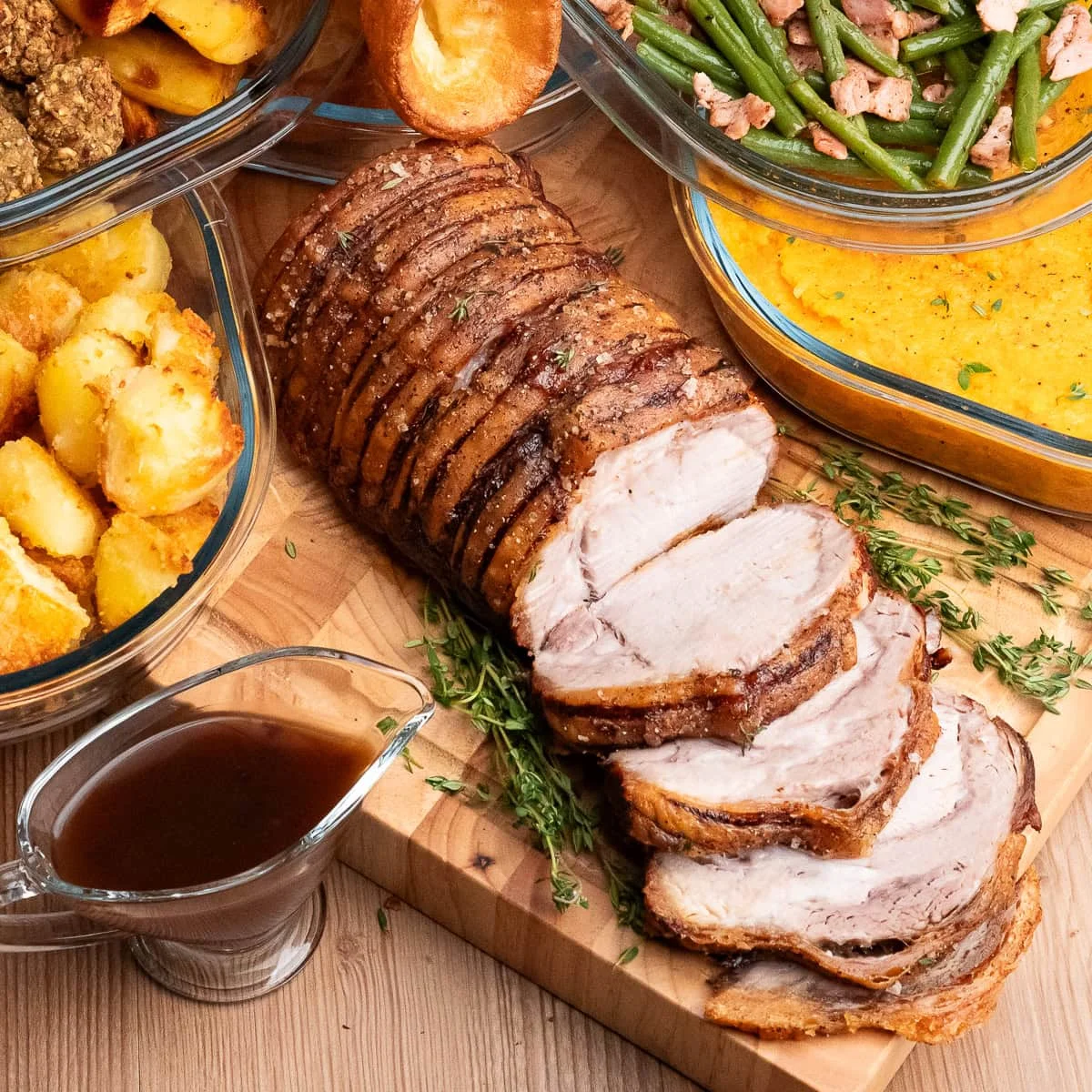
This British roast pork loin is seasoned simply and cooked in two stages for tender meat and a crisp, savoury outer layer. Drying the skin or fat before roasting and resting the joint before carving are key to a good result.
Ingredients
- 2 kgpork loin joint
- to tastesalt and black pepper
- 15 ml (1 tbsp)olive oil
Instructions
- 1
Dry the joint
For the crispiest crackling, choose a pork loin joint with the skin attached. A joint with only a fat layer will produce a softer, though still tasty, crackling. Open the packaging a few hours ahead or the day before cooking, pat the joint dry and leave it uncovered in the fridge so the skin or fat can dry.
- 2
Bring to temperature
Take the joint out of the fridge 30 minutes to 1 hour before cooking. Preheat the oven to 210°C fan / 230°C / 450°F or gas mark 8.
- 3
Score the skin
Check whether the butcher has already scored the joint. If not, carefully make deep cuts through the skin and fat, about a finger's width apart, taking care not to cut into the meat.
- 4
Rub with oil
Rub 15 ml (1 tbsp) olive oil over the scored skin or fat.
- 5
Season well
Sprinkle generous pinches of salt and black pepper over the skin and into the cuts.
- 6
Set on a rack
Place the joint skin-side up on a roasting rack set inside a baking tray. If you do not have a rack, arrange chunky-cut root vegetables such as carrots and onions in the tray and rest the joint on top.
- 7
Roast at high heat
Put the tray in the middle of the preheated oven and roast at 230°C / 210°C fan / 450°F or gas mark 8 for 30 minutes.
- 8
Lower the heat
After 30 minutes, reduce the oven to 180°C / 160°C fan / 350°F or gas mark 4. Continue cooking according to the joint's size: 1 kg for 1 hour, 1.5 kg for 1 hour 30 minutes, 2 kg for 2 hours, or 2.5 kg for 2 hours 30 minutes.
- 9
Rest the pork
Once cooked, remove the joint from the oven and leave it to rest uncovered for 30 minutes.
- 10
Remove the string
Take off the string before carving.
- 11
Carve the joint
Slice the roasted pork to your preferred thickness.
- 12
Serve with sides
Serve with your favourite roast dinner sides and gravy.
What is roast pork loin?
Roast pork loin is a British Sunday-lunch favourite: a large joint roasted whole, then carved into slices for sharing. This version keeps the seasoning simple and uses a hot start followed by a lower oven temperature.
Skin attached: A joint with skin is the best choice for crackling. A fat layer without skin can still crisp, but the result will be softer.
Nutrition and macros by portion
The nutrition label shows one serving as written: 346 calories, 56g protein, 0g carbs, 12g fat.
| Portion | Adjustment | kcal | Protein | Carbs | Fat |
|---|---|---|---|---|---|
| Lighter | Smaller slice, more vegetables | 242 kcal | 39g | 0g | 8g |
| This serving | As written | 346 kcal | 56g | 0g | 12g |
| Hungry | Larger slice, extra potatoes | 519 kcal | 84g | 0g | 18g |
The pork provides most of the protein, while the olive oil contributes most of the fat; the listed ingredients contain virtually no carbohydrate. Serve a slice with vegetables and a suitable portion of potatoes or other roast sides to make a more rounded plate.
Drying and scoring the surface
Dry skin: Leaving the joint uncovered in the fridge helps its surface dry before roasting. Pat it dry first, and allow a few hours or overnight if you can.
Even cuts: Score the skin and fat about a finger's width apart if the butcher has not already done so. Keep the cuts shallow enough to avoid slicing into the meat.
Seasoning the joint
Olive oil: Rub the measured oil over the scored surface so the seasoning can cling to it.
Salt and pepper: Season generously over the surface and between the cuts. The simple seasoning leaves room for the pork and roast accompaniments to shine.
Using a rack
Airflow: A roasting rack lifts the joint above the fat that drains into the tray and lets heat circulate around it. Set the pork skin-side up.
No rack: A layer of chunky carrots and onions can act as a makeshift base. Arrange the vegetables in the tray, then place the joint on top.
Two-stage roasting
Hot start: The first 30 minutes at 230°C, or 210°C fan, give the outside a burst of high heat.
Longer cook: Lower the oven to 180°C, or 160°C fan, for the remaining cooking time. For the 2 kg joint in this recipe, the stated time at the lower temperature is 2 hours.
Resting and carving
Rest uncovered: Leave the cooked joint for 30 minutes before slicing, without covering it. This gives you time to prepare the sides while the pork rests.
Carve neatly: Remove the string first, then slice the joint to your preferred thickness. Serve the slices with gravy and roast dinner accompaniments.
What to serve alongside
Classic sides: Carrot and swede mash, stuffing, roast potatoes and honey roast parsnips all suit this simply seasoned pork.
Gravy: Serve gravy at the table alongside the carved meat and sides for a traditional roast dinner.
Recipe notes & tips
- Choose a joint with skin attached if crackling is your priority.
- Unwrap and dry the joint several hours ahead, or the day before.
- Check whether the butcher has scored the surface before cutting it yourself.
- Keep the pork skin-side up on the rack or vegetable base.
- Set a timer for the 30-minute high-heat stage before lowering the oven.
- Leave the joint uncovered while it rests for 30 minutes.
Variations
- Vegetable base: Use chunky carrots and onions under the joint if you do not have a roasting rack.
- Root vegetable sides: Serve with carrot and swede mash for a classic accompaniment.
- Stuffing: Add stuffing to the roast dinner spread alongside the pork.
- Honey roast parsnips: Pair the joint with honey roast parsnips for a sweet, savoury side.
- Roast potatoes: Add roast potatoes and gravy for a traditional plate.
Common mistakes to avoid
- Damp skin: Pat the joint dry and leave it uncovered in the fridge to help the surface dry.
- Cutting too deep: Score the skin and fat only; avoid cutting into the pork meat.
- Skipping the rack: Lift the joint above the tray fat with a rack or a bed of chunky vegetables.
- Missing the temperature change: Lower the oven after the first 30 minutes at high heat.
- Covering during the rest: Rest the joint uncovered for the full 30 minutes.
- Carving with string on: Remove the string before slicing.
How to store
Refrigerate leftover pork in a covered container and use within 3 days. Reheat until piping hot, taking care not to dry out the slices.
Frequently asked questions
Do I need a joint with skin for crackling?
For the crispiest crackling, choose a joint with skin attached. A joint with only a fat layer can still make a tasty, softer crackling.
How long should I leave the pork out before cooking?
Take it out of the fridge 30 minutes to 1 hour before cooking to bring it towards room temperature.
How long does a 2 kg pork loin joint cook?
The method starts with 30 minutes at high heat, followed by 2 hours at 180°C / 160°C fan for a 2 kg joint.
What if I do not have a roasting rack?
Arrange chunky-cut root vegetables such as carrots and onions in the baking tray, then place the joint on top.
Should I cover the pork while it rests?
No. Rest it uncovered for 30 minutes before carving.
What sides go well with roast pork loin?
Try carrot and swede mash, stuffing, roast potatoes, honey roast parsnips and gravy.
Cook it from the original
This recipe comes from flawlessfood.co.uk. Their page has the author’s own photos, notes and tips — the best place to cook it from.
Open the recipe on flawlessfood.co.uk