
25-Minute Pasta Pomodoro Sauce (With Fresh or Canned Tomatoes)
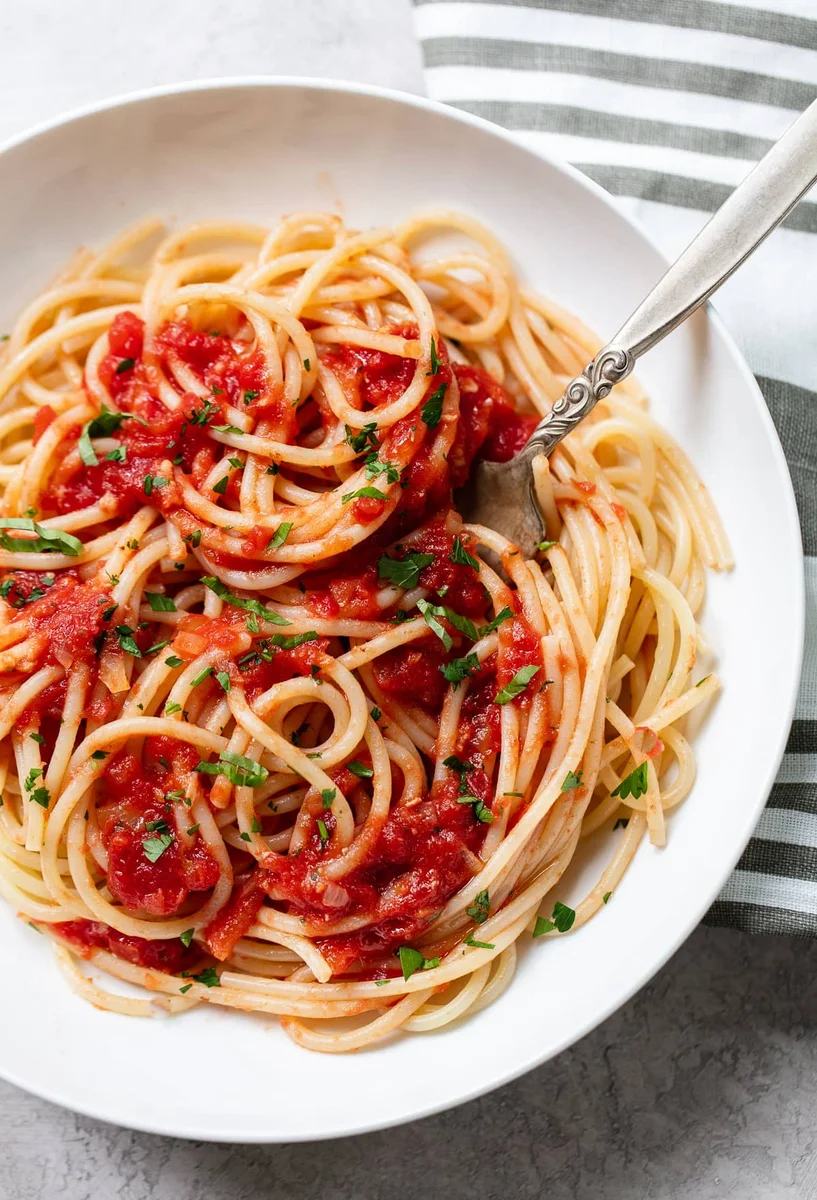
This Italian-style pasta pomodoro pairs pasta with a quick tomato sauce flavoured with olive oil, onion, garlic and fresh basil. It is a straightforward weeknight meal, and the sauce works with either fresh or canned tomatoes.
Ingredients
- 45 ml (3 tablespoons)extra-virgin olive oil
- 75 g (½ cup)finely chopped onion
- 30 g (2 tablespoons)grated or minced fresh garlic
- 2 × 794 g (2 × 28-ounce cans)crushed tomatoes (or whole peeled tomatoes, crushed)
- 1 teaspoongranulated sugar (optional)
- to tastekosher salt and freshly ground black pepper
- 454 g (1 pound)dried pasta, long or short cut
- 50 g (½ cup), plus extra for servingfreshly grated Parmesan or Pecorino Romano
- a handfulfresh basil leaves, torn if large
Instructions
- 1
Soften the onion
Put the oil and onion in a large saucepan over medium heat. Cook, stirring, until the onion is soft, about 5 minutes. Add the garlic and stir for 15–20 seconds, until fragrant.
- 2
Simmer the sauce
Add the tomatoes, 1–2 teaspoons of salt, black pepper and the sugar to the pan. Bring to a simmer, breaking the tomatoes into pieces with a spoon. Cook uncovered for about 20 minutes, until the sauce has thickened slightly.
- 3
Check the seasoning
Taste the sauce and add more salt or pepper as needed.
- 4
Cook the pasta
Meanwhile, bring 5–6 quarts of water to the boil in a large pot and add 3 tablespoons of salt. Cook the pasta until al dente, following the packet directions, then drain well.
- 5
Toss and serve
Put the pasta in a large serving bowl and ladle over about half the sauce. Add the cheese and toss to coat, then sprinkle with basil. Serve with extra cheese.
What is pasta pomodoro?
Pomodoro means tomato in Italian, and pasta al pomodoro is a familiar Italian combination of pasta and a simple tomato sauce. This version builds flavour with onion, garlic, olive oil and basil.
Canned tomatoes make the sauce practical year-round, while fresh tomatoes can be used when available. A short simmer keeps the method manageable for a weeknight.
Nutrition and macros by portion
The nutrition label shows one serving as written: 181 calories, 6g protein, 23g carbs, 7g fat.
| Portion | Adjustment | kcal | Protein | Carbs | Fat |
|---|---|---|---|---|---|
| Lighter | Less pasta, more salad | 127 kcal | 4g | 16g | 5g |
| This serving | As written | 181 kcal | 6g | 23g | 7g |
| Hungry | Larger pasta portion | 272 kcal | 9g | 35g | 11g |
The pasta supplies most of the carbohydrates, while olive oil and cheese contribute much of the fat. The cheese also adds some protein, with smaller amounts coming from the pasta and tomatoes. Pair a serving with a green salad or vegetables to round out the plate.
The tomato choice
Canned tomatoes: Crushed tomatoes are ready to simmer as they are. If using whole peeled tomatoes, break them up with the spoon as the sauce cooks.
Fresh tomatoes: The recipe description allows fresh tomatoes, though the ingredient list gives no quantity or preparation details for them. Use a comparable amount and crush or chop them so they can simmer into a sauce.
Build the flavour gently
Onion: Give it about 5 minutes over medium heat, stirring until soft. This creates the base for the sauce without needing to brown it.
Garlic: Add it after the onion and stir for just 15–20 seconds, until fragrant. Adding it at this point helps keep it from scorching during the longer simmer.
Simmer to the right texture
The sauce cooks uncovered for about 20 minutes, with the aim of a slight thickening rather than a very dense reduction. Stir and break up larger tomato pieces as needed.
Taste after simmering and adjust the salt and pepper. The optional sugar can soften the sharpness of the tomatoes, but it is not essential.
Cook the pasta al dente
Use a large pot with 5–6 quarts of boiling water and add the specified 3 tablespoons of salt. Follow the packet directions and begin checking near the stated cooking time.
Drain the pasta well, then toss it with about half the sauce and the cheese. Keeping some sauce aside lets diners add more at the table.
Finish with cheese and basil
The grated Parmesan or Pecorino Romano is tossed through the pasta so it coats the noodles along with the sauce. Offer extra cheese when serving.
Add the basil after tossing, as directed, so its fresh aroma remains noticeable. Tear larger leaves into smaller pieces.
What to serve alongside
A crisp green salad or simply dressed vegetables make an easy accompaniment to the pasta. Crusty bread can also be served for any sauce left in the bowl.
For a fuller meal, add a side of beans or another protein-rich dish. Keep the pasta portion in mind if serving substantial sides.
Recipe notes & tips
- Measure the salt added to the pasta water as directed, then season the sauce gradually to taste.
- Stir the onion regularly so it softens evenly without catching on the pan.
- Break up whole peeled tomatoes as they simmer for a more even sauce.
- Check the pasta before the end of the packet cooking time so it stays al dente.
- Reserve some of the sauce for serving rather than mixing all of it into the pasta at once.
- Tear large basil leaves just before adding them to the finished dish.
Variations
- Use fresh tomatoes: Chop or crush them before adding them to the pan in place of canned tomatoes.
- Choose your pasta: Use a long shape such as spaghetti or a short shape such as penne.
- Try another cheese: Use Parmesan or Pecorino Romano, as listed, and pass extra at the table.
- Make it garlicky: Add the full 2 tablespoons of garlic and take care not to let it brown.
- Add chilli: Stir a pinch of chilli flakes into the sauce with the garlic for a little heat.
Common mistakes to avoid
- Browning the garlic: It can turn bitter; stir it for only 15–20 seconds before adding the tomatoes.
- Reducing the sauce too far: It should thicken slightly after about 20 minutes, not become dry.
- Skipping the taste: Tomato acidity and saltiness vary, so check the seasoning before serving.
- Overcooking the pasta: Follow the packet guidance and stop when the pasta is al dente.
- Adding all the sauce at once: Start with about half, toss, then serve the rest alongside.
How to store
Refrigerate leftover pasta and sauce in a covered container for up to 3 days. Reheat gently in a pan or microwave until hot, adding a splash of water if the pasta seems dry. Store extra sauce separately when possible.
Frequently asked questions
Can I use fresh tomatoes instead of canned?
Yes. The recipe description allows fresh tomatoes, though it does not specify their quantity or preparation. Chop or crush them before simmering so they break down into a sauce.
Can I use whole peeled canned tomatoes?
Yes. The ingredient list suggests whole peeled tomatoes as an alternative; break them into pieces with a spoon while the sauce simmers.
Which pasta shapes work best?
The recipe works with either long or short pasta. Cook whichever shape you choose according to its packet directions.
Do I have to add the sugar?
No. The sugar is optional. Taste the sauce after simmering and decide whether you want to include it.
Can I make the sauce ahead?
Yes. Prepare the sauce ahead and refrigerate it in a covered container for up to 3 days. Reheat it gently while you cook the pasta.
How much sauce should I mix into the pasta?
The method calls for about half the sauce to be tossed with the pasta. Serve the rest alongside so everyone can add more.
Cook it from the original
This recipe comes from familystylefood.com. Their page has the author’s own photos, notes and tips — the best place to cook it from.
Open the recipe on familystylefood.com