
Caracas-style beef hallacas
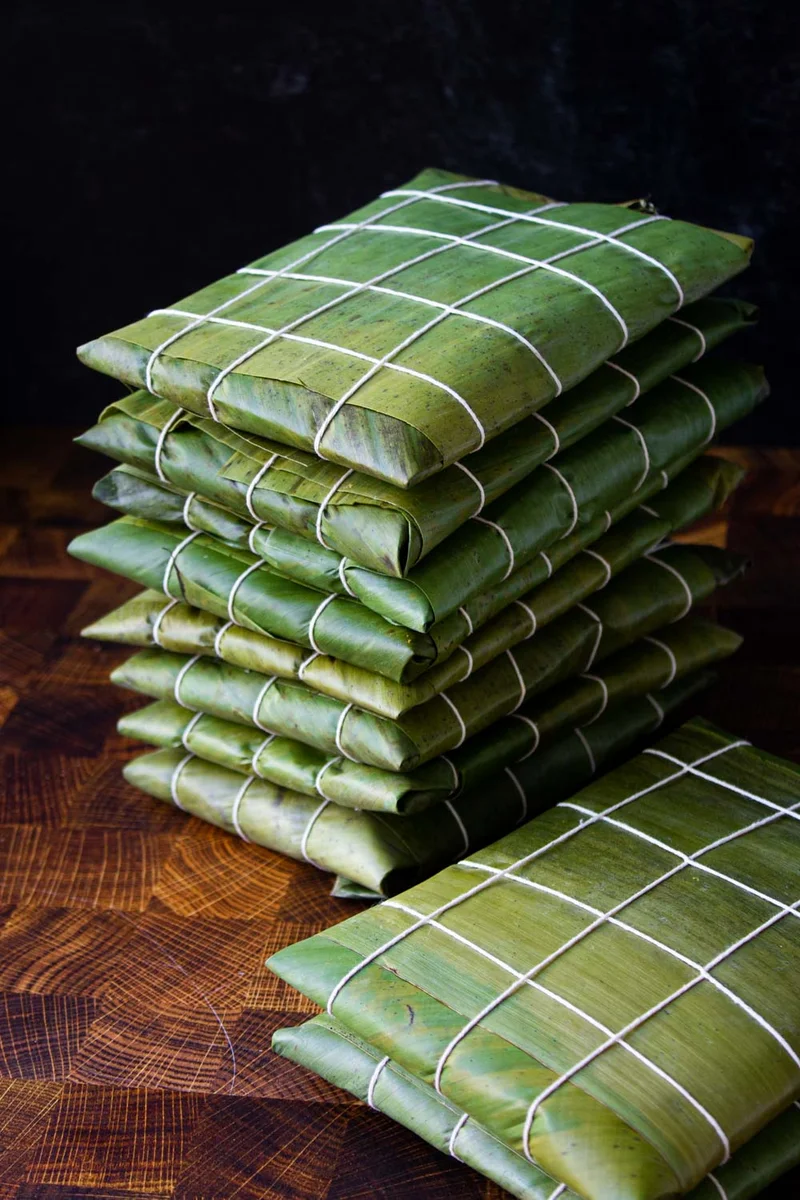
Caracas-style beef hallacas are Venezuelan parcels of seasoned beef filling wrapped in banana leaves with hallaca dough, decorated with chicken, olives, raisins, almonds and capers. They take time to assemble, but the large batch is well suited to festive cooking and sharing.
Ingredients
- 2.72 kg (6 lb)lean beef, cut into 6 mm dice
- 840 ml (3½ cups)onions, chopped
- 6 clovesgarlic, chopped
- 480 ml (2 cups)leek, chopped
- 240 ml (1 cup)spring onions, chopped
- 600 ml (2½ cups)red pepper, deseeded and chopped
- 6sweet chillies, deseeded and chopped
- 600 ml (2½ cups)peeled tomatoes, deseeded and chopped
- 240 ml (1 cup)Worcestershire sauce
- 80 ml (⅓ cup)red wine vinegar
- 120 ml (½ cup)mustard pickles
- 240 ml (1 cup)cooking wine
- 240 ml (1 cup)papelón, panela or piloncillo
- 6 teaspoonssea salt
- 1 teaspoonfreshly ground black pepper
- 6 teaspoonsground cumin
- 4 tablespoonstomato purée
- 480 ml (2 cups)cooked chicken breasts, shredded into 2.5 cm lengths
- 480 ml (2 cups)small Manzanilla olives stuffed with piquillo pepper
- 360 ml (1½ cups)raisins
- 360 ml (1½ cups)golden raisins
- 360 ml (1½ cups)blanched almonds, cut into slivers
- 240 ml (1 cup)baby capers
- 7.3–9.1 kg (16–20 lb)smoked banana leaves
- 2 recipes, divided into 44 ballshallaca dough
- 1 rollcooking twine
Instructions
- 1
Process the vegetables
Process the onions, garlic and leek in a food processor. Process the red pepper and sweet chillies next, then process the tomatoes.
- 2
Cook the beef
Put the processed vegetables, beef, Worcestershire sauce, mustard pickles, cooking wine, papelón, salt, pepper and cumin in a large pan over medium heat. Cook for 1½ hours, stirring frequently, until the beef is fully cooked.
- 3
Rest the filling
Turn off the heat and leave the filling covered overnight. The source method says to leave it at room temperature; for food safety, cool it promptly and refrigerate it overnight instead.
- 4
Season the filling
The next morning, stir in the tomato purée, taste the filling and adjust the seasoning.
- 5
Prepare the worktop
Cover the work surface with a plastic tablecloth, preferably a disposable one.
- 6
Set out equipment
Have a rolling pin, a sturdy 30 × 30 cm piece of plastic, cooking twine and scissors ready for shaping and tying the hallacas.
- 7
Arrange the ingredients
Sort the banana leaves by size and set out the dough balls, filling and garnishes on the table.
- 8
Roll the dough
Place a dough ball on a base or rolling banana leaf and cover it with the plastic. Roll it into a circle about 25 cm across and 3–4 mm thick.
- 9
Add the filling
Remove the plastic and put about 3 generous tablespoons of filling in the centre of the dough.
- 10
Add the garnishes
Top the filling with 2 strips of chicken, 2 olives, 2 almonds, raisins and capers.
- 11
Fold the dough
Carefully bring two opposite edges of the rolling leaf together over the filling. Fold those edges over again and tuck them down, then fold the other two edges down.
- 12
Wrap the parcel
Place the hallaca, folded side down, on a wrapping leaf set diagonally. Wrap it like a parcel, bringing one point together with its opposite, then folding the remaining two points down together.
- 13
Tie the hallaca
Secure the parcel with a binding leaf, then tie it with cooking twine.
- 14
Boil the water
Bring about 3 litres of water to the boil in a large pan over high heat.
- 15
Cook the hallacas
Once the water boils, reduce the heat to medium-high. Add the hallacas, cover the pan and cook for 20 minutes.
- 16
Drain the parcels
Lift the hallacas out and drain them on a tray, keeping them as flat as possible.
- 17
Cool and chill
Leave the hallacas to set for at least 1 hour. Once cool, refrigerate them until ready to eat.
- 18
Reheat and serve
Before serving, reheat the hallacas covered in boiling water for 10 minutes. Remove and drain them, cut the twine, take off the binding and wrapping leaves, and serve on a piece of the base leaf.
What are hallacas?
Hallacas are Venezuelan festive parcels made with seasoned filling enclosed in dough and wrapped in banana leaves. Their exact fillings and garnishes vary by family and region.
This Caracas-style version uses beef rather than pork, with chicken and a mix of olives, raisins, almonds and capers. The long-cooked filling is made ahead, leaving assembly as the main task on the day.
Nutrition and macros by portion
The nutrition label shows one serving as written: 135 calories, 14g protein, 10g carbs, 3g fat.
| Portion | Adjustment | kcal | Protein | Carbs | Fat |
|---|---|---|---|---|---|
| Lighter | Serve with extra vegetables | 95 kcal | 10g | 7g | 2g |
| This serving | As written | 135 kcal | 14g | 10g | 3g |
| Hungry | Add another hallaca | 203 kcal | 21g | 15g | 5g |
The dough and papelón provide most of the carbohydrates, while the beef and chicken contribute protein. The filling also gets fat from the meat, almonds and olives; pair a hallaca with vegetables or salad to add freshness and balance the plate.
Build a balanced filling
Aromatic base: processing the onion, garlic, leek, spring onion, pepper, chilli and tomato makes a cohesive vegetable mixture for the beef to cook in.
Sweet and savoury: papelón, wine, vinegar, Worcestershire sauce and mustard pickles bring contrasting flavours. Stir in the tomato purée the next morning, then taste and adjust the seasoning.
Shape without tearing
Even dough: the plastic helps the rolling pin spread each ball into a 25 cm circle without sticking. Aim for an even 3–4 mm thickness so the filling is enclosed consistently.
Neat folds: keep the filling in the centre and fold the dough and leaf carefully around it. Tie each parcel securely so it stays closed during boiling.
Look for these cues
Cooked filling: the beef should be fully cooked after the stated 1½ hours. Stir frequently while it simmers so the mixture cooks evenly.
Set parcels: drain the boiled hallacas flat and let them rest for at least an hour before chilling. The resting time allows them to firm up for serving.
Plan the long preparation
Make-ahead filling: the method rests the guiso overnight before adding tomato purée and final seasoning. Cool it promptly and refrigerate it during that rest rather than leaving cooked beef at room temperature.
Assembly line: arrange the leaves, dough balls, filling and garnishes within reach before shaping. This helps keep the repeated filling, folding and tying stages organised.
Choose accompaniments
A simple salad or steamed vegetables bring freshness alongside the rich, sweet-and-savoury filling. Keep sides lightly seasoned, as the hallacas already contain several salty and briny ingredients.
For a more substantial meal, serve a hallaca with a modest portion of rice or another favourite side. The leaf is for wrapping and presentation, not eating.
Recipe notes & tips
- Keep the filling and garnishes close at hand before you begin shaping.
- Use the plastic sheet between the rolling pin and dough to help prevent sticking.
- Keep the dough circle centred on the base leaf so there is room to fold it closed.
- Tie the parcels firmly, but take care not to tear the banana leaves.
- Drain the cooked hallacas flat before their resting time.
- For the overnight rest, cool the guiso promptly and keep it refrigerated.
Variations
- Adjust the garnishes: Keep the listed filling and vary the number of raisins or capers on each parcel to suit your taste.
- Use a different sweet chilli: Choose another mild sweet chilli if the specified ají dulce is unavailable.
- Change the olives: Use plain small green olives if piquillo-stuffed Manzanilla olives are hard to find.
- Make smaller parcels: Divide the filling and dough into smaller portions, keeping each parcel securely wrapped.
- Serve with salad: Add a crisp, simply dressed salad alongside each hallaca.
Common mistakes to avoid
- Leaving the guiso out overnight: Cool it promptly and refrigerate it rather than holding cooked beef at room temperature.
- Overfilling the dough: Keep the filling centred and leave enough dough around it to fold the parcel closed.
- Rolling unevenly: Aim for an even 3–4 mm thickness so the dough cooks consistently.
- Loose wrapping: Fold the leaf securely and tie the parcel so it stays closed in the pan.
- Skipping the rest: Let the hallacas set for at least an hour after draining before chilling or serving.
- Eating the leaf: Remove the twine and wrapping leaves before serving; the leaf is only the wrapper.
How to store
Once cooled, refrigerate the hallacas in a covered container and eat within 3–4 days. Reheat covered in boiling water for 10 minutes, as directed, until hot throughout; keep the leaves on while reheating and remove them before serving.
Frequently asked questions
Can I make the filling ahead?
Yes. The method prepares the guiso the day before assembly. Cool it promptly and refrigerate it overnight, then add the tomato purée and check the seasoning the next morning.
How do I know when the beef filling is cooked?
Cook it for 1½ hours over medium heat, stirring frequently, until the beef is fully cooked. If unsure, check a piece in the centre of the pan.
How thick should I roll the dough?
Roll each ball into a circle about 25 cm across and 3–4 mm thick. The plastic sheet helps you roll it evenly without sticking.
How long do the hallacas boil?
Cook them covered for 20 minutes in boiling water, reducing the heat to medium-high once the water has come to the boil.
Can I freeze hallacas?
Freezing is a practical option for a large batch. Cool them fully, wrap and freeze; thaw in the fridge before reheating covered in boiling water until hot throughout.
Which leaves should I remove before eating?
Remove the twine, binding leaf and wrapping leaf before serving. The hallaca can be presented on part of the base leaf, but the leaf itself is not eaten.
Cook it from the original
This recipe comes from enrilemoine.com. Their page has the author’s own photos, notes and tips — the best place to cook it from.
Open the recipe on enrilemoine.com