
No Knead Cranberry-Walnut Bread Recipe
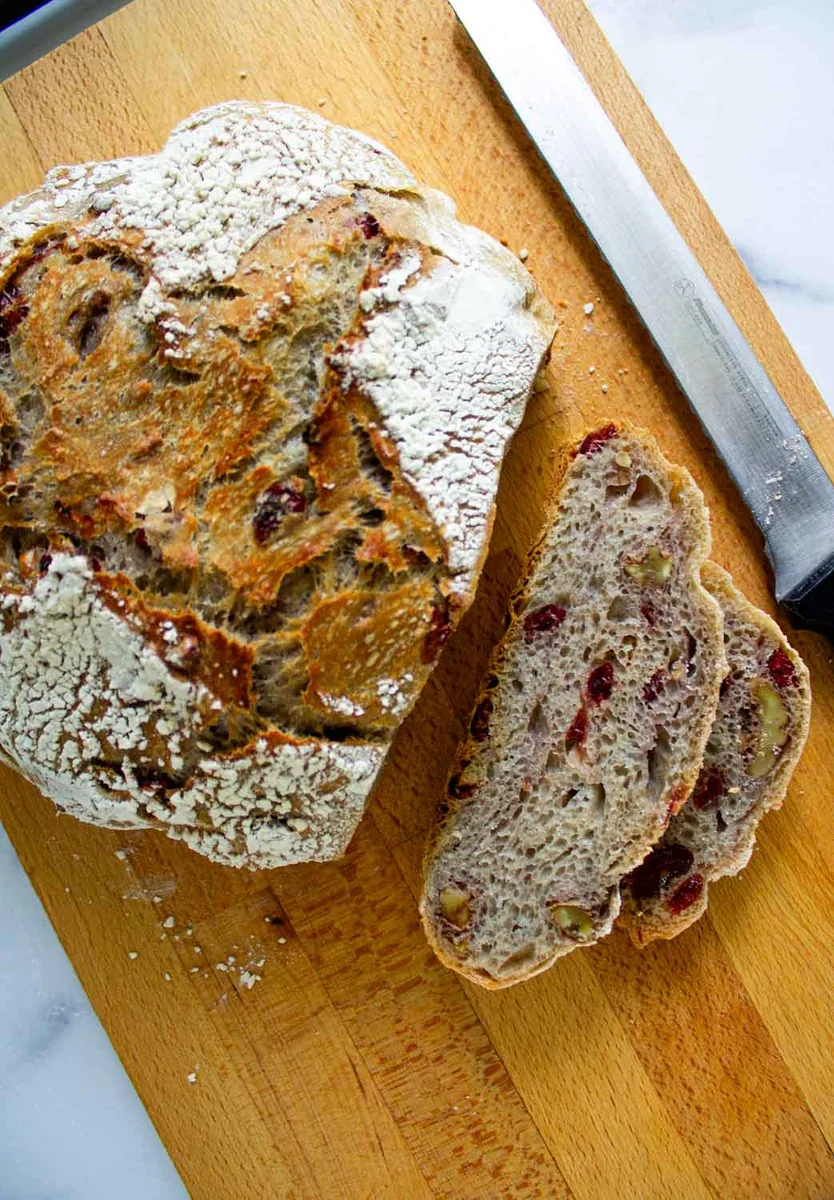
This no-knead cranberry-walnut bread has a tender, slightly sweet crumb and a crusty, rustic exterior. A long first rise builds flavour with very little hands-on work, making it a satisfying loaf to bake ahead.
Ingredients
- 516 g (4 cups plus 2 tablespoons), plus extra for dustingbread flour
- 150 g (1 cup)dried cranberries
- 120 g (1 cup), roughly choppedwalnuts
- 10 g (2 teaspoons)coarse sea salt
- 3 g (1 teaspoon)instant yeast (or active dry yeast)
- 28 g (4 teaspoons)honey
- 475 ml (2 cups, including the honey)lukewarm water
Instructions
- 1
Combine dry ingredients
Put the flour, dried cranberries, walnuts, yeast and salt in a large bowl. Stir until evenly combined.
- 2
Measure the liquid
Add the honey to a measuring jug, then top up with lukewarm water until the combined liquid measures 475 ml (2 cups).
- 3
Mix the dough
Pour the liquid into the flour mixture and stir with a dough whisk until everything is incorporated. Use a rubber spatula to scrape dough from the sides of the bowl towards the centre.
- 4
Keep it sticky
Once the dough is sticky, resist adding more flour; it should remain wet.
- 5
Let it rise
Cover the bowl with plastic wrap and leave the dough in a warm place, such as the kitchen counter, for 12–18 hours.
- 6
Check the rise
After the first rise, the dough should have doubled in size and show air bubbles.
- 7
Shape the loaf
Lightly flour your hands and turn the dough onto a floured surface. Shape it into a rustic loaf; it will be messy, and it does not need to be a perfect ball.
- 8
Set on parchment
Place the shaped dough on a large piece of parchment paper.
- 9
Support the dough
Put the parchment and dough into a bowl so the dough holds its shape.
- 10
Score and rest
Dust the top with flour and use a sharp knife to make two cuts forming a cross. Leave the dough to rest for 30 minutes for its second rise.
- 11
Heat the oven
Preheat the oven with a lidded cast-iron Dutch oven inside for 30 minutes at 230°C (450°F). If using an enamelled Dutch oven, heat it to 245°C (475°F).
- 12
Bake covered
Carefully remove the hot pot lid. Lift the parchment and dough into the Dutch oven, replace the lid and bake for 25 minutes.
- 13
Brown the crust
Raise the oven temperature to 245°C (475°F), uncover the Dutch oven and bake for a further 12 minutes, until the loaf is golden brown.
- 14
Remove from pot
Carefully take the hot pot out of the oven. Wait 5 minutes before lifting the bread from the Dutch oven.
- 15
Cool before slicing
Leave the loaf to cool for at least 15 minutes before slicing.
What is cranberry-walnut bread?
This is a rustic American-style artisan loaf studded with dried cranberries and chopped walnuts. Its no-knead method relies on a long rise rather than prolonged hand-mixing.
The wet dough and covered Dutch oven help give the loaf a tender interior and crusty outside. Honey adds a gentle sweetness that suits the tart fruit and nutty walnuts.
Nutrition and macros by portion
The nutrition label shows one serving as written: 3068 calories, 83g protein, 507g carbs, 87g fat.
| Portion | Adjustment | kcal | Protein | Carbs | Fat |
|---|---|---|---|---|---|
| Lighter | Smaller slice | 2148 kcal | 58g | 355g | 61g |
| This serving | As written | 3068 kcal | 83g | 507g | 87g |
| Hungry | Larger slice | 4602 kcal | 125g | 761g | 131g |
The bread's carbohydrates mainly come from the flour, dried cranberries and honey; the walnuts contribute much of its fat, while the flour and walnuts provide protein. Balance a slice with eggs, yoghurt or another protein-rich food and fresh fruit.
Why the dough stays wet
Sticky dough: the recipe deliberately keeps the dough wet, so avoid adding flour during mixing. Extra flour can make the loaf denser than intended.
Floured hands: use a little flour on your hands and work surface when shaping, but keep it to a light dusting.
The long first rise
Time: allow 12–18 hours for the first rise, then look for dough that has doubled and developed visible bubbles. The bowl can sit on the kitchen counter if the spot is warm.
Second rise: after shaping, let the dough rest for 30 minutes in a bowl on its parchment. This short rest gives it a chance to puff before baking.
Shaping and scoring
Rustic shape: the dough is meant to be messy, so form it into a loaf without trying to make a perfectly smooth ball. The bowl supports it while it rests.
Cross cuts: dust the top with flour, then make two cuts that cross. Use a sharp knife and take care not to press the dough flat.
Using a Dutch oven
Preheat: heat the lidded Dutch oven in the oven for 30 minutes at the specified temperature for your pot. It will be extremely hot, so handle it cautiously.
Covered bake: bake for 25 minutes with the lid on, then remove the lid and bake for another 12 minutes at 245°C (475°F) to brown the crust.
When the loaf is ready
Colour: the recipe's cue for the final bake is a golden-brown loaf after the uncovered 12 minutes. Remove the pot carefully and wait 5 minutes before taking out the bread.
Cooling: give the loaf at least 15 minutes to cool before slicing. This helps the crumb settle rather than squashing under the knife.
How to serve it
The sweet-tart fruit and crunchy nuts make this loaf well suited to breakfast or an afternoon snack. Serve slices plain or with butter.
For a more substantial plate, pair a slice with eggs or yoghurt and some fresh fruit. The bread also works alongside a savoury soup or a cheese board.
Recipe notes & tips
- Measure the honey and water together so the total liquid is 475 ml (2 cups).
- Keep the dough sticky during mixing rather than working in extra flour.
- Use parchment paper to transfer the shaped dough into the hot Dutch oven.
- Preheat the Dutch oven for the full 30 minutes before baking.
- Let the loaf cool for at least 15 minutes before cutting.
Variations
- More fruit: replace some of the walnuts with extra dried cranberries.
- Other dried fruit: swap some cranberries for another dried fruit, keeping the overall amount similar.
- Seeded loaf: replace part of the walnuts with seeds for a different crunch.
- Bolder spice: add a little ground cinnamon to the dry ingredients.
- Toast the walnuts: lightly toast them and cool before mixing them into the dough.
Common mistakes to avoid
- Adding extra flour: the dough is meant to be wet and sticky, so use flour only for dusting your hands and surface.
- Rushing the first rise: allow 12–18 hours and check for doubled dough with air bubbles.
- Over-shaping: handle the dough gently and accept its rustic form rather than trying to make a perfect ball.
- Skipping the second rise: give the shaped dough its full 30-minute rest before baking.
- Handling the pot carelessly: use oven gloves when moving the preheated Dutch oven and removing its lid.
- Slicing too soon: wait at least 15 minutes after baking so the loaf can cool before cutting.
How to store
Once fully cool, store the loaf in a bread bag or wrapped at room temperature and use within 2–3 days. Reheat slices briefly in a toaster or warm oven; freeze extra slices well wrapped for longer storage.
Frequently asked questions
Can I use active dry yeast instead of instant yeast?
The ingredient list gives active dry yeast as an alternative. The method adds the yeast with the dry ingredients, so follow that method and allow the dough to rise until doubled and bubbly.
Why is my dough so sticky?
A wet, sticky dough is intentional for this recipe. Flour your hands and work surface lightly when shaping rather than adding more flour to the bowl.
How long should the dough rise?
The first rise takes 12–18 hours in a warm place. After shaping, let it rest for another 30 minutes.
Can I bake it in an enamelled Dutch oven?
Yes. The recipe specifies preheating an enamelled Dutch oven to 245°C (475°F) for 30 minutes.
How do I know when the bread is done?
After 25 minutes covered, bake it uncovered for 12 minutes at 245°C (475°F), until the loaf is golden brown.
Can I slice the bread while it is hot?
Wait at least 15 minutes before slicing. The loaf needs a little time to cool after baking.
Cook it from the original
This recipe comes from enrilemoine.com. Their page has the author’s own photos, notes and tips — the best place to cook it from.
Open the recipe on enrilemoine.com