
Breaded chicken cutlets
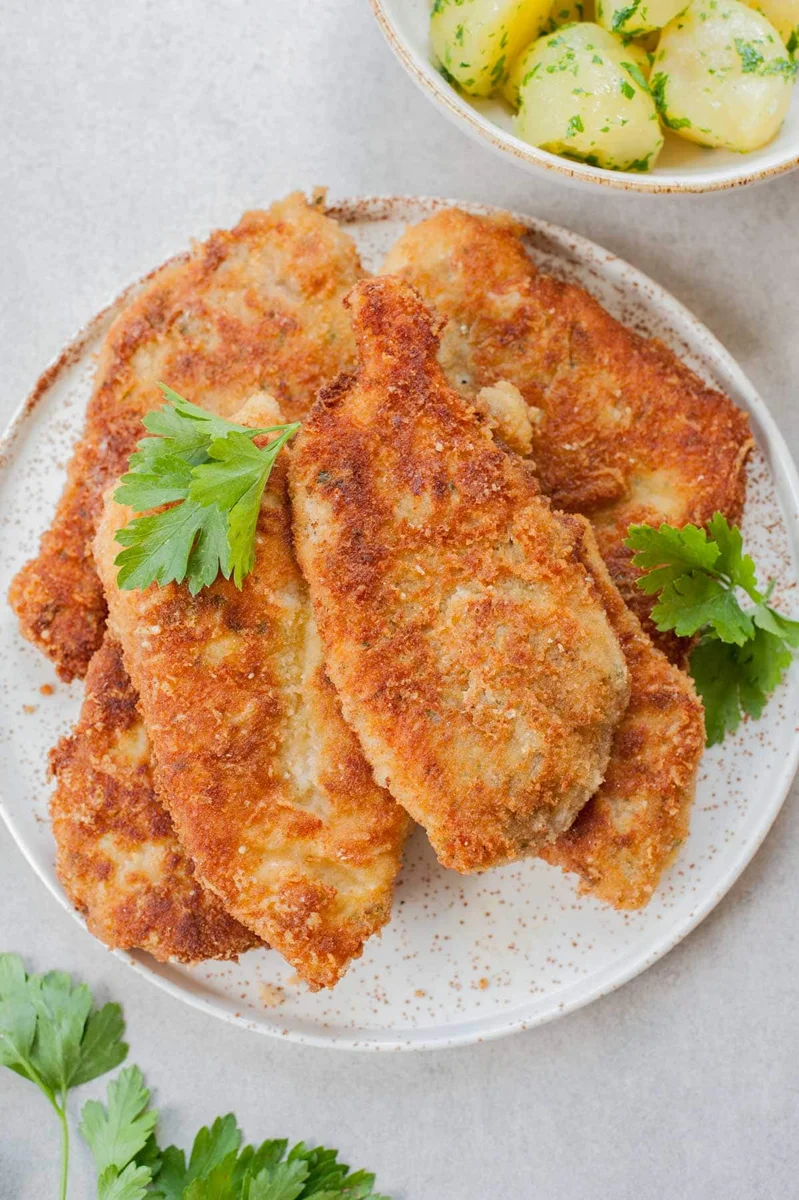
These American-style breaded chicken cutlets are thin, pan-fried chicken coated in crisp breadcrumbs, with Parmesan, lemon zest and parsley for extra savoury flavour. They make a straightforward main course that cooks quickly once the cutlets are evenly pounded.
Ingredients
- 450 g (1 lb)chicken breast (2 medium/large chicken breasts or 4 large / 6 small chicken cutlets)
- 30 g (¼ cup; 1 oz)flour
- 2eggs
- 55 g (½ cup; 2 oz)breadcrumbs
- 45 g (½ cup; 1.6 oz), optionalgrated Parmesan cheese
- 1 heaped teaspoon, optionalgrated lemon zest
- 2 tablespoons, optionalchopped parsley
- to tastesalt and pepper
- 90 ml (6 tablespoons)frying oil
Instructions
- 1
Prepare the chicken
Slice each chicken breast horizontally to make cutlets. Cover each with a thick zip-lock bag and pound the thickest areas until the pieces are an even 0.5–0.75 cm (¼–⅓ inch) thick.
- 2
Set up the breading
Put the flour in the first shallow plate. In a second, deeper plate, beat the eggs with the grated lemon zest and chopped parsley. Mix the breadcrumbs and grated Parmesan together in a third shallow plate.
- 3
Coat the cutlets
Pat the chicken dry with paper towels and season both sides with salt and pepper. Coat each piece in flour, shaking off the excess, then dip it in the egg mixture and let excess egg drip back into the plate. Press it into the breadcrumb and Parmesan mixture until coated all over, then set it on a clean plate.
- 4
Fry until golden
Heat the oil in a large frying pan over medium-high or high heat until hot. Cook the cutlets on both sides until golden and cooked through in the middle.
- 5
Serve the cutlets
Enjoy the cutlets.
What are breaded chicken cutlets?
Chicken cutlets are thin pieces of breast meat, coated in a crisp breading and fried in a pan. The style is common in American home cooking, with close relatives in dishes such as Italian cotoletta and chicken schnitzel.
This version layers flour, egg and breadcrumbs, with Parmesan for savoury depth and optional lemon zest and parsley for a fresh note. Pounding the chicken evenly helps it cook at a similar rate from edge to centre.
Nutrition and macros by portion
The nutrition label shows one serving as written: 266 calories, 0g protein, 0g carbs, 0g fat.
| Portion | Adjustment | kcal | Protein | Carbs | Fat |
|---|---|---|---|---|---|
| Lighter | Use less frying oil | 186 kcal | 0g | 0g | 0g |
| This serving | As written | 266 kcal | 0g | 0g | 0g |
| Hungry | Add another cutlet | 399 kcal | 0g | 0g | 0g |
The chicken provides most of the protein, while the flour and breadcrumbs contribute carbohydrates. The frying oil and Parmesan contribute much of the fat; serve a cutlet with vegetables or salad to balance the plate with a fresh side.
Why the three-stage coating works
Flour: a light coating gives the egg something to cling to, so shake off any loose excess before dipping.
Egg: beat it well and let surplus drip away; a thin layer helps the crumbs adhere without leaving wet patches.
Breadcrumbs: mix them with the Parmesan before coating so the cheese is distributed throughout the crust.
Pound the chicken evenly
Thickness: aim for 0.5–0.75 cm across each cutlet, taking care not to make the edges paper-thin. Even pieces are less likely to overcook at the edges while the centre finishes.
Protection: cover the chicken with a thick zip-lock bag while pounding. This contains splashes and helps prevent the meat from tearing.
Frying and doneness cues
Hot oil: heat the oil over medium-high or high heat before adding the chicken. If the pan is not hot enough, the coating can absorb oil instead of turning golden.
Doneness: look for a golden crust and check that the thickest part of the chicken is cooked through. The recipe gives no fixed frying time, so use the cutlets’ thickness and the pan’s heat as your guide.
Lemon, parsley and Parmesan
Parmesan: its savoury flavour complements the breadcrumbs, but it is optional if you prefer a simpler coating.
Lemon zest and parsley: both are optional additions mixed into the egg. Zest brings a bright citrus aroma, while parsley adds a fresh herbal flavour.
Serving ideas
A crisp salad, steamed green vegetables or roasted vegetables make easy sides for the fried coating. For a more substantial plate, serve with potatoes, rice or bread.
Add lemon wedges at the table if you like a sharper finish. Keep the cutlets uncovered briefly after frying if you want the crust to stay crisp.
Recipe notes & tips
- Set out the three coating plates before you start breading.
- Use one hand for the dry coatings and the other for the egg to reduce clumping on your fingers.
- Shake off excess flour and let extra egg drip away before adding the breadcrumbs.
- Avoid crowding the pan so the cutlets have room to brown.
- Use a wide spatula to turn the cutlets without scraping off the coating.
Variations
- Add garlic: mix a little finely grated garlic into the beaten egg.
- Use panko: swap in panko breadcrumbs for a coarser, crunchier coating.
- Skip the cheese: leave out the Parmesan for a simpler breadcrumb crust.
- Boost the herbs: add finely chopped herbs to the breadcrumb mixture.
- Add a citrus finish: serve with lemon wedges for squeezing over the cutlets.
Common mistakes to avoid
- Uneven thickness: pound the thickest sections so the chicken cooks more evenly.
- Wet chicken: pat the cutlets dry before seasoning and coating so the breading adheres better.
- Loose flour: shake off the extra flour before dipping the chicken in egg.
- Clumpy coating: let excess egg drip back into the plate before pressing on the crumbs.
- Cool oil: wait until the oil is hot before adding the cutlets, or the coating may turn greasy.
How to store
Refrigerate leftover cutlets in an airtight container for up to 3 days. Reheat in a pan or oven until hot; a microwave works too, though the coating may soften.
Frequently asked questions
Can I leave out the Parmesan?
Yes. The recipe marks it as optional, and the cutlets will still have a breadcrumb coating without it.
Do I need to use the lemon zest and parsley?
No, both are optional. You can omit either or both and follow the same coating method.
How thick should the chicken cutlets be?
Pound them to an even 0.5–0.75 cm (¼–⅓ inch) thickness, as specified in the method.
How can I tell when the cutlets are cooked?
The coating should be golden and the chicken should be cooked through in the middle. Check the thickest part of a cutlet.
Can I prepare the cutlets ahead?
You can pound and bread them ahead, then keep them covered in the fridge until ready to fry. For the best texture, cook them just before serving.
Cook it from the original
This recipe comes from everyday-delicious.com. Their page has the author’s own photos, notes and tips — the best place to cook it from.
Open the recipe on everyday-delicious.com