
Pasta alla puttanesca
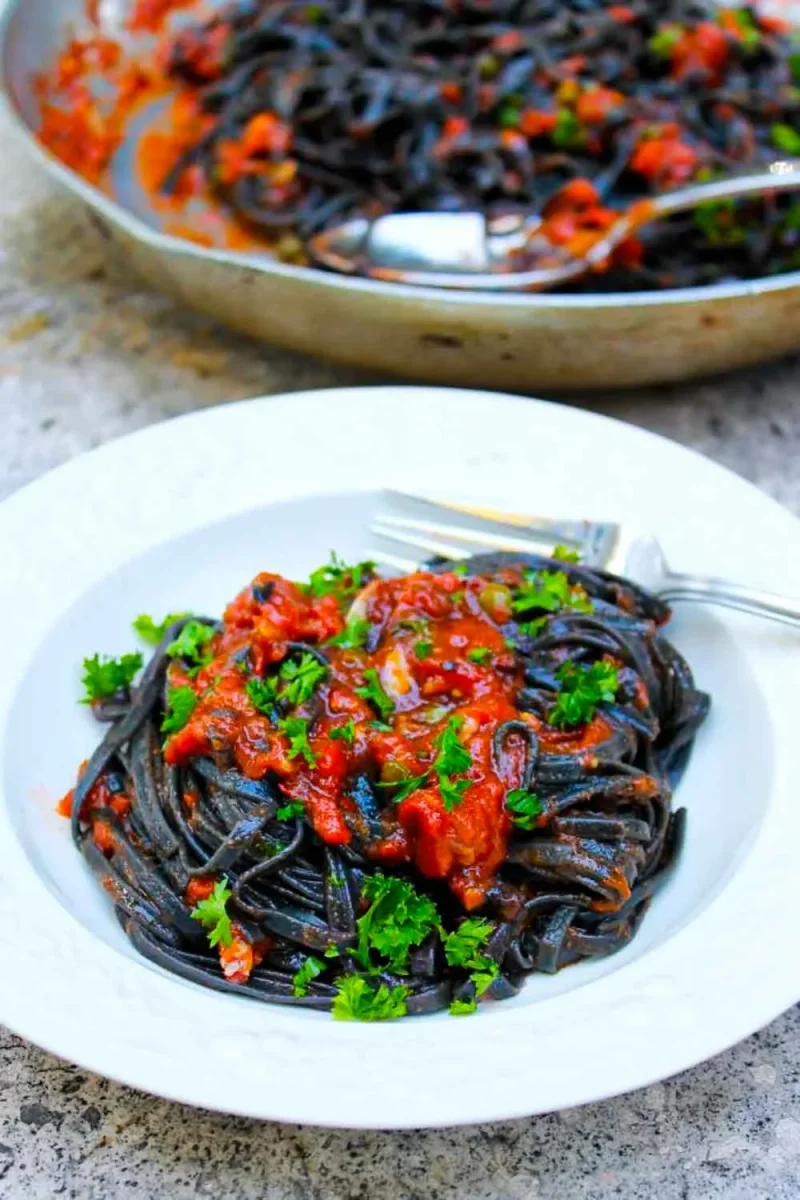
Pasta alla puttanesca is a punchy Italian pasta dish with a savoury tomato sauce, olives, capers and anchovies. This version comes together in about 20 minutes using mostly store-cupboard ingredients.
Ingredients
- 450 gblack linguine
- 60 mlolive oil
- 20 ggarlic, thinly sliced
- 400 gtin of peeled tomatoes with their juice
- 60 g (⅓ cup)pitted black olives, chopped
- 60 g (4 tablespoons)baby capers
- 50 gtin of anchovy fillets, finely chopped
- 5 g (1 teaspoon)dried oregano
- To tastepeperoncino or red pepper flakes
- To servefresh parsley, finely chopped
Instructions
- 1
Fry the garlic
Warm the olive oil in a deep frying pan over a medium heat. Fry the garlic until it starts to turn golden, then add the anchovies and cook for 5 minutes in total.
- 2
Add the tomatoes
Tip in the tomatoes with all their juice and crush them with a fork. Cook for a further 5 minutes.
- 3
Thicken the sauce
Add the olives, capers, anchovies, oregano and peperoncino. Cook over a medium heat for 8–10 minutes, until the sauce thickens.
- 4
Cook the pasta
Meanwhile, cook the pasta al dente in salted water.
- 5
Toss and serve
Turn off the heat under the sauce, add the pasta and toss well. Serve straight away with chopped parsley scattered over the top.
What is pasta alla puttanesca?
Pasta alla puttanesca is a southern Italian pasta dish, closely associated with Naples. Its tomato sauce is recognised for the savoury, salty combination of anchovies, olives and capers.
This version uses black linguine and a short simmer, so the sauce clings to the pasta without requiring a long cooking time.
Nutrition and macros by portion
The nutrition label shows one serving as written: 389 calories, 12g protein, 57g carbs, 12g fat.
| Portion | Adjustment | kcal | Protein | Carbs | Fat |
|---|---|---|---|---|---|
| Lighter | Less pasta, more vegetables | 272 kcal | 8g | 40g | 8g |
| This serving | As written | 389 kcal | 12g | 57g | 12g |
| Hungry | Larger pasta portion | 584 kcal | 18g | 86g | 18g |
The linguine supplies most of the carbohydrates, while olive oil contributes much of the fat. Anchovies provide some protein, with smaller amounts also coming from the pasta. Serve with a generous side of vegetables or salad to round out the plate.
The store-cupboard sauce
Tomatoes: Tinned peeled tomatoes and their juice form the base. Crush them in the pan for a rustic sauce rather than blending them smooth.
Olives and capers: These bring briny, salty notes, so taste the finished sauce before adding any extra salt.
Building the savoury flavour
Garlic and anchovies: Let the sliced garlic begin to colour in the oil, then add the anchovies as directed. The anchovies contribute savouriness as they cook into the sauce.
Peperoncino: Add it to suit your preference; a small amount gives the sauce warmth without taking over the other flavours.
Getting the sauce texture right
The sauce is ready when it has thickened after its 8–10 minute simmer. If it still looks very loose, let it cook for the full time before combining it with the pasta.
The recipe calls for tossing the pasta directly into the sauce off the heat. Mix thoroughly so the linguine is coated.
Cooking the linguine
Cook the pasta in salted water while the sauce simmers, following the packet’s timing and checking for an al dente bite. The method does not give a separate pasta cooking time.
Have the sauce ready when the pasta is done, as the dish is intended to be served immediately after tossing.
Serving ideas
Finish with the chopped fresh parsley just before serving. Its fresh, herbaceous flavour contrasts with the salty sauce.
A simple green salad or steamed vegetables make an easy accompaniment. Since olives, capers and anchovies are already quite salty, keep additional seasoning on the side.
Recipe notes & tips
- Slice the garlic evenly so the pieces colour at a similar rate.
- Keep the heat at medium while frying the garlic to help prevent it from burning.
- Use the tomatoes’ full contents, including their juice, as the recipe directs.
- Taste the sauce before serving, as the olives, capers and anchovies add saltiness.
- Check the linguine for an al dente texture rather than relying on an unspecified cooking time.
- Chop the parsley shortly before serving for a fresh finish.
Variations
- Adjust the heat: Use more or less peperoncino to suit your preference.
- Use regular linguine: Swap in plain linguine if black linguine is unavailable.
- Try another pasta shape: Choose a shape that holds the chunky sauce well.
- Add extra herbs: Scatter additional fresh parsley over each serving.
- Change the olives: Use another pitted olive variety while keeping the measured amount.
Common mistakes to avoid
- Browning the garlic too far: Take care once it starts to colour, as burnt garlic can taste bitter.
- Leaving the tomato sauce thin: Simmer it for the stated 8–10 minutes, until it thickens.
- Overcooking the linguine: Check it during cooking and drain it when it is al dente.
- Adding salt without tasting: The anchovies, capers and olives are already salty, so taste first.
- Letting the finished pasta stand: Toss it with the sauce and serve immediately as directed.
How to store
Refrigerate leftovers in a sealed container and eat within 3 days. Reheat gently in a pan or microwave until piping hot; add a small splash of water if the pasta seems dry.
Frequently asked questions
Can I use regular linguine instead of black linguine?
Yes. Regular linguine will work in the same way; the black linguine mainly changes the dish’s appearance.
Do I need to rinse the capers?
The recipe does not specify rinsing them. If yours are especially salty, you can rinse and drain them before adding.
How spicy should the sauce be?
That is up to you. Add peperoncino to taste, starting with a small amount and adjusting as needed.
How can I tell when the sauce is ready?
After simmering for 8–10 minutes, it should look thicker than it did when the tomatoes first went in.
Can I make the sauce ahead?
You can prepare the sauce ahead and refrigerate it, then reheat it before tossing with freshly cooked pasta. The recipe is designed to be served straight away once combined.
Is this dish very salty?
Anchovies, olives and capers all contribute salty flavour. Taste the sauce before adding any extra salt.
Cook it from the original
This recipe comes from enrilemoine.com. Their page has the author’s own photos, notes and tips — the best place to cook it from.
Open the recipe on enrilemoine.com