
Cream Cheese Mashed Potatoes
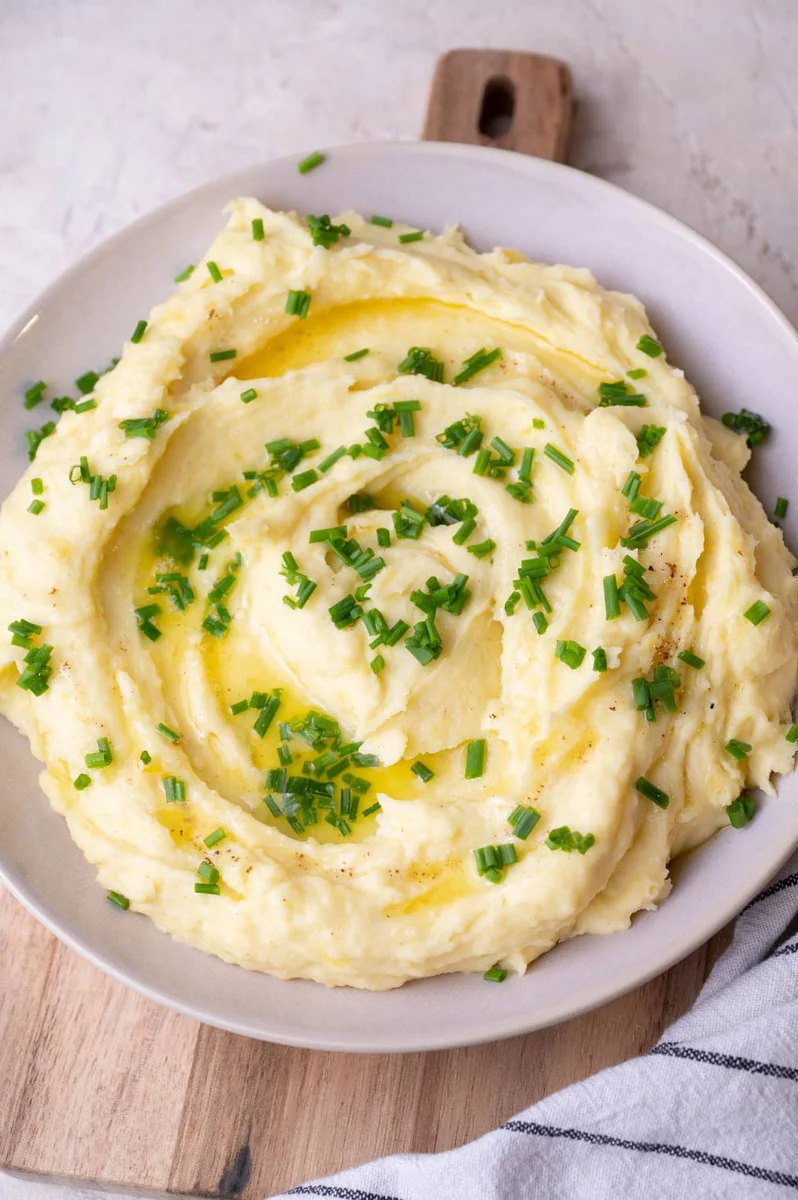
These American-style mashed potatoes combine fluffy, starchy potatoes with cream cheese, butter and a little garlic powder for a creamy, tangy side. A final drizzle of nutty brown butter and a sprinkle of chives make them feel special without adding much fuss.
Ingredients
- 900 g (2 lb)potatoes, preferably a mealy or starchy variety such as Russets
- 60 g (¼ cup)milk
- 115 g (4 oz)full-fat cream cheese
- 57 g (4 tablespoons), plus more for servingbutter
- 1 teaspoongarlic powder
- to tastesalt and pepper
- to garnishchives
Instructions
- 1
Boil the potatoes
Peel the potatoes and cut any larger ones into pieces so they are a similar size. Put them in a large pot, cover with cold water and salt the water generously. Cook for about 15 minutes, until a fork passes easily through the potatoes.
- 2
Dry the potatoes
Drain the potatoes and return them to the pot. Set the pot over low heat for 1 minute to let excess moisture evaporate.
- 3
Warm the dairy
Heat the milk and butter in a saucepan. Once hot, add the cream cheese and warm the mixture until very warm and combined.
- 4
Combine the mixture
Pour the warm milk mixture over the hot potatoes and add the garlic powder.
- 5
Mash and season
Mash the potatoes, then season with salt and pepper. Transfer them to a serving bowl.
- 6
Brown the butter
Heat some additional butter in a small pot until it turns light brown and smells nutty. Pour it over the mashed potatoes and scatter chopped chives on top.
- 7
Serve the potatoes
Enjoy!
What are cream cheese mashed potatoes?
Mashed potatoes are a familiar American side dish, made by cooking potatoes until tender and crushing them with rich additions. This version folds in cream cheese for a gentle tang and a smooth, creamy finish.
Starchy potatoes help keep the mash fluffy, while the browned butter on top adds a toasted, nutty note. Chives provide a fresh, savoury contrast.
Nutrition and macros by portion
The nutrition label shows one serving as written: 279 calories, 0g protein, 0g carbs, 0g fat.
| Portion | Adjustment | kcal | Protein | Carbs | Fat |
|---|---|---|---|---|---|
| Lighter | Use less finishing butter | 195 kcal | 0g | 0g | 0g |
| This serving | As written | 279 kcal | 0g | 0g | 0g |
| Hungry | Serve a larger portion | 419 kcal | 0g | 0g | 0g |
The potatoes provide most of the carbohydrates, while butter and full-fat cream cheese contribute much of the fat. The dish includes some protein from the dairy, but it is best served with a protein-rich main and vegetables to round out the plate.
Choose the right potatoes
Starchy potatoes: Russets or another mealy variety break down readily when mashed, giving the dish its light texture. Cut larger potatoes to a similar size so they cook evenly.
Cold water: Start the potatoes submerged in cold, generously salted water. This gives the pieces time to heat through evenly as the pot comes to a boil.
Keep the mash fluffy
Dry the potatoes: After draining, return them to the pot over low heat for 1 minute. Letting excess moisture evaporate helps avoid a watery mash.
Mash gently: Crush the potatoes until they reach the texture you like, then stop. Overworking them can make the mash dense or gluey.
Warm the dairy first
Milk and butter: Heat them together before adding the cream cheese. The warm mixture blends more readily into the hot potatoes than cold dairy would.
Cream cheese: Stir it into the warm milk and butter until the mixture is combined and very warm. Add this mixture to the potatoes while they are still hot.
Watch the brown butter
Nutty aroma: Heat the extra butter until it becomes light brown and smells toasted. It can change colour quickly, so keep an eye on the pot as it heats.
Finish at the table: Pour the browned butter over the mash just before serving, then add chopped chives. This keeps the topping distinct from the creamy potatoes beneath.
Make it a complete side
Serve these potatoes alongside roasted meat, poultry or vegetables, using the mash to catch any juices or gravy. Their creamy, tangy flavour also pairs well with simply seasoned greens.
For a balanced plate, add a generous portion of vegetables and a protein-rich main. Keep extra butter as an optional finishing touch at the table.
Recipe notes & tips
- Cut the potatoes into similarly sized pieces so they become tender at roughly the same time.
- Salt the cooking water generously to season the potatoes from within.
- Let the drained potatoes steam-dry over low heat for 1 minute before adding the dairy.
- Warm the milk, butter and cream cheese mixture before stirring it into the potatoes.
- Stop mashing once the potatoes are smooth enough for your liking.
- Keep the extra butter for the topping where you can judge how much to use.
Variations
- Add roasted garlic: Swap the garlic powder for soft roasted garlic, mashed into the potatoes.
- Use spring onions: Replace the chives with finely sliced spring onions for a sharper finish.
- Add black pepper: Grind extra pepper over the bowl just before serving.
- Make it herby: Stir chopped parsley into the finished mash alongside the chives.
- Skip the brown butter: Serve with a small knob of plain melted butter instead.
Common mistakes to avoid
- Uneven potato pieces: Cut larger potatoes down so they cook at the same pace as the smaller ones.
- Watery mash: Return the drained potatoes to low heat for 1 minute to evaporate excess moisture.
- Cold dairy: Warm the milk, butter and cream cheese mixture before adding it to the potatoes.
- Over-mashing: Mash only until the texture is right, as continued mashing can make potatoes gluey.
- Burnt brown butter: Watch the butter closely and take it off the heat once it is light brown and nutty-smelling.
How to store
Refrigerate leftovers in a covered container for up to 3 days. Reheat gently in a saucepan or microwave, stirring in a splash of milk if needed to loosen the mash.
Frequently asked questions
Can I make these mashed potatoes ahead?
Yes. Make the mash ahead and refrigerate it covered, then reheat gently before serving. Prepare the brown butter close to serving time for the best nutty aroma.
Can I leave the potato skins on?
You can, though the texture will be less smooth and the skins will be visible. The method as written uses peeled potatoes.
How do I know when the potatoes are cooked?
They are ready when a fork passes through a piece easily, which should take about 15 minutes. If the pieces are not tender, continue cooking and check again.
Can I use a different kind of potato?
Yes, but a mealy or starchy variety such as Russets gives the fluffiest result. Waxy potatoes tend to make a firmer, less fluffy mash.
How can I tell when the butter is browned?
Look for a light-brown colour and a nutty smell. Remove it from the heat once it reaches that point so it does not burn.
What can I serve with these potatoes?
They work well with roasted meat or poultry, gravy and vegetables. Add a protein-rich main and vegetables for a more complete plate.
Cook it from the original
This recipe comes from everyday-delicious.com. Their page has the author’s own photos, notes and tips — the best place to cook it from.
Open the recipe on everyday-delicious.com