
Tuna Pasta
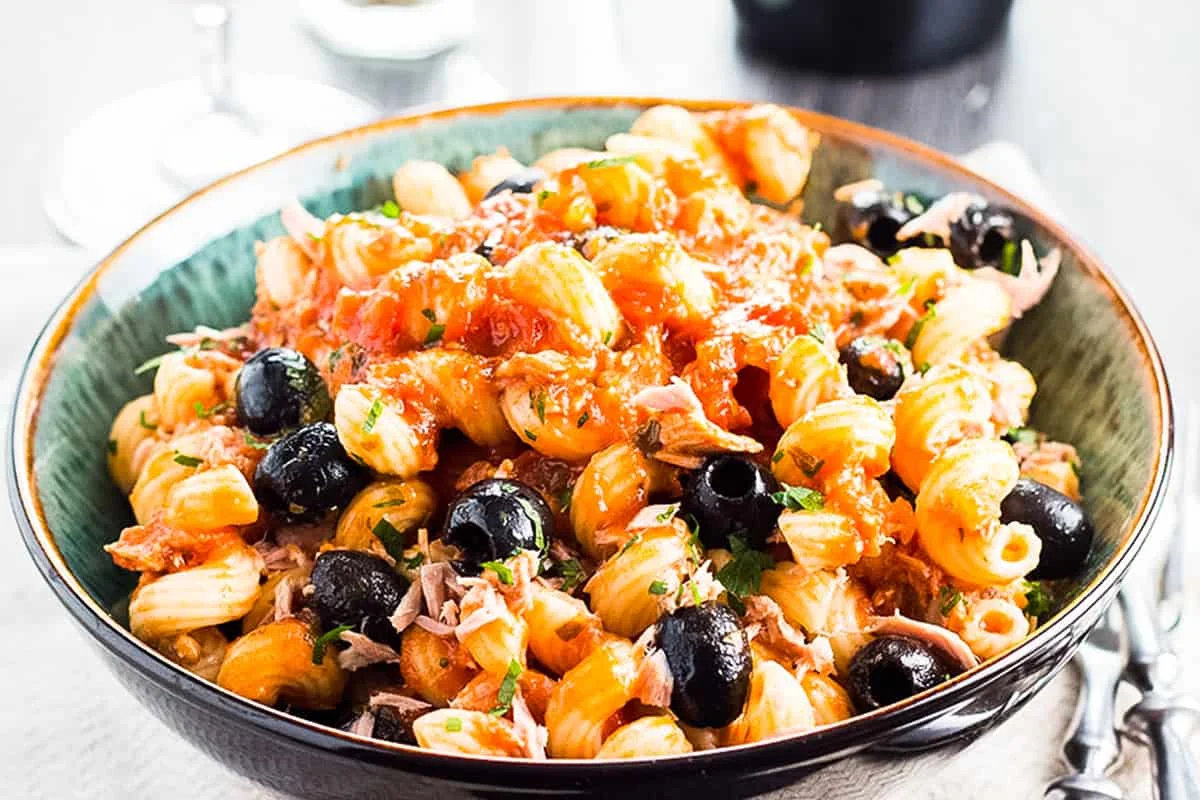
This quick Italian-style tuna pasta pairs tomato sauce with canned tuna, black olives and pantry staples. It is an easy weeknight meal, with the pasta finishing in the sauce to pick up its flavour.
Ingredients
- 30 ml (2 tablespoons)olive oil
- 184 g (6.5 oz; 1 can, drained)tuna
- 1onion, chopped
- 3garlic cloves, minced
- 397 g (14 oz; 1 can)chopped tomatoes
- 30 ml (2 tablespoons)flat-leaf parsley, chopped
- to tastesalt and freshly ground pepper
- 2.5 ml (1/2 teaspoon), optionaldried red pepper flakes
- 120 ml (1/2 cup)pitted black olives, such as Kalamata
- 454 g (1 pound)pasta
Instructions
- 1
Cook the pasta
Bring a large pot of salted water to the boil and cook the pasta until just underdone. Before draining, reserve 60 ml (¼ cup) of the cooking water.
- 2
Soften the onion
Meanwhile, warm the olive oil in a medium skillet over medium heat. Add the onion and cook until translucent, then add the garlic and stir just until fragrant before adding the tomatoes.
- 3
Add the parsley
Stir the chopped parsley into the tomato mixture.
- 4
Season the sauce
Season to taste with salt and add pepper and the red pepper flakes, if using.
- 5
Simmer with tuna
Stir in the olives and tuna. Bring the sauce to the boil, cover, and simmer for 10 to 15 minutes while the pasta cooks.
- 6
Finish the pasta
Add the pasta and toss to coat it in the sauce. Cook until the pasta is done, adding the reserved cooking water to loosen the sauce if needed. Taste and add more salt as needed before serving.
What is tuna pasta?
Tuna pasta is a familiar Italian-style combination of pasta, fish and a simple sauce. This version uses canned tuna, tomatoes and olives for a savoury, pantry-friendly meal.
The sauce simmers while the pasta cooks, giving the flavours time to come together. Finishing the pasta in the sauce helps it take on the tomato and tuna flavour.
Nutrition and macros by portion
The nutrition label shows one serving as written: 540 calories, 16g protein, 93g carbs, 12g fat.
| Portion | Adjustment | kcal | Protein | Carbs | Fat |
|---|---|---|---|---|---|
| Lighter | Less pasta, more vegetables | 378 kcal | 11g | 65g | 8g |
| This serving | As written | 540 kcal | 16g | 93g | 12g |
| Hungry | Larger pasta portion | 810 kcal | 24g | 140g | 18g |
Most of the carbohydrates come from the pasta, while olive oil and olives contribute much of the fat. Tuna provides protein, with smaller amounts also coming from the pasta. Pair a serving with a salad or vegetables for a more balanced plate.
Why these ingredients work
Canned tuna: Drain it before adding so excess liquid does not thin the sauce. Stir it in gently to keep some larger flakes intact.
Black olives: Their briny flavour adds contrast to the tomatoes. Pitted olives make the finished dish easier to eat.
Build the tomato sauce
Onion and garlic: Cook the onion until translucent, then stir in the garlic only until fragrant. This gives the sauce a savoury base without letting the garlic burn.
Tomatoes and parsley: Once the tomatoes go in, mix in the parsley and season the sauce. Red pepper flakes are optional if you want a little heat.
Keep the pasta slightly firm
First cook: Boil the pasta until it is just underdone, as it will cook further in the sauce. Reserve some cooking water before draining.
Final texture: Toss the pasta with the sauce until done. Add the reserved water a little at a time if the sauce needs loosening.
Make the timing work
Start the pasta water first, then prepare the sauce while it heats and the pasta cooks. The sauce simmers for 10 to 15 minutes, which fits alongside the pasta cooking time.
If the pasta is ready before the sauce, drain it after reserving the cooking water and set it aside briefly. Combine the two when the sauce is ready.
Serving ideas
Serve the pasta hot, with extra chopped parsley if you have some left. A simple green salad or steamed vegetables make a fresh side.
Taste the finished sauce before serving, as the olives and tuna can contribute saltiness. Adjust the seasoning only after everything has been combined.
Recipe notes & tips
- Reserve the pasta water before draining so it is ready to loosen the sauce.
- Use a large pot so the pasta has room to cook evenly.
- Add the garlic after the onion has softened to reduce the chance of burning it.
- Drain the tuna well before adding it to the sauce.
- Add reserved pasta water gradually so the sauce does not become too thin.
- Taste for salt after stirring in the olives and tuna.
Variations
- Add capers: Stir them in with the olives for another briny note.
- Use wholemeal pasta: Cook it according to its packet directions and finish it in the sauce.
- Add extra chilli: Increase the red pepper flakes to taste.
- Include spinach: Stir in a handful near the end and cook until wilted.
- Use green olives: Swap them for the black olives for a different savoury flavour.
Common mistakes to avoid
- Overcooking the pasta: Stop at just underdone, as it cooks further in the sauce.
- Burning the garlic: Add it after the onion and stir only until fragrant.
- Skipping the pasta water: Reserve it before draining to help adjust the sauce.
- Adding too much water at once: Pour it in gradually until the sauce loosens.
- Oversalting early: Taste again after adding the olives and tuna before adjusting.
How to store
Refrigerate leftovers in a covered container for up to 3 days. Reheat gently in a pan or microwave, adding a splash of water if the pasta seems dry.
Frequently asked questions
Can I use a different pasta shape?
Yes. Use any pasta shape you like and follow its packet cooking time, stopping just before it is fully done.
Do I need to use the red pepper flakes?
No, they are optional. Leave them out for a milder sauce.
Can I use tuna in water?
Yes. Drain it well before stirring it into the sauce.
Why reserve pasta water?
It helps loosen the sauce as the pasta finishes cooking. Add it gradually so you can control the consistency.
Can I make the sauce ahead?
You can prepare the sauce ahead and refrigerate it in a covered container. Reheat it, then add freshly cooked pasta and finish the dish as directed.
Cook it from the original
This recipe comes from errenskitchen.com. Their page has the author’s own photos, notes and tips — the best place to cook it from.
Open the recipe on errenskitchen.com